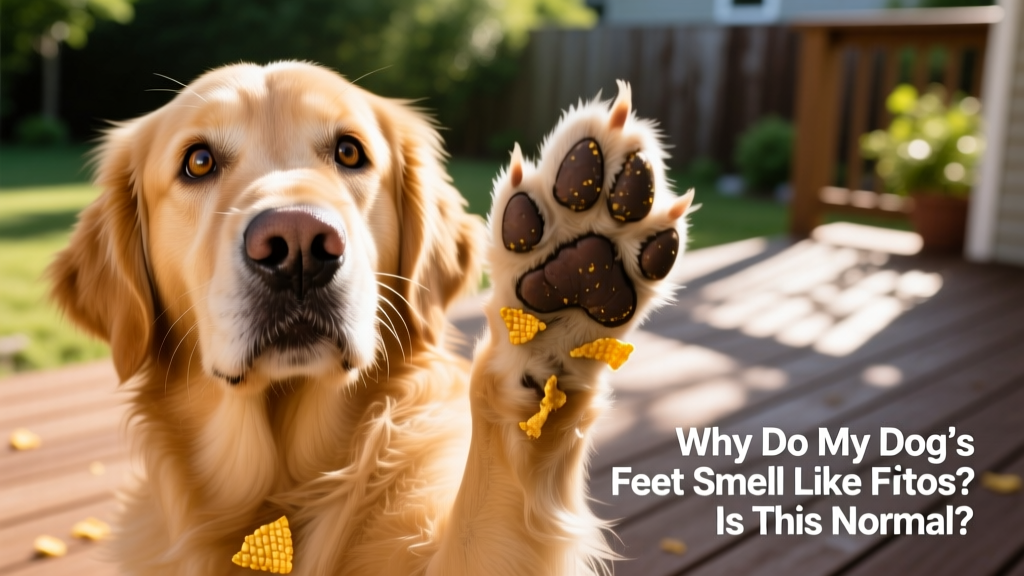
Why Do My Dog’s Feet Smell Like Fritos? Is This Normal?
While snuggling with your dog, you catch a sudden whiff of corn chips—and realize the aroma is coming from their paws! Why do your dog’s feet smell like Fritos®? Is this normal?
Ah, you’ve discovered “Frito feet”—a common and usually harmless canine condition. Veterinarians confirm it’s quite typical for a dog’s paws to emit that unmistakable corn chip scent, thanks to natural levels of bacteria and yeast living on healthy skin.
But if that familiar Frito aroma comes with red, irritated paw pads—or if your dog is constantly licking their feet—that may signal something more than just everyday odor.
What Causes a Dog’s Feet To Smell Like Fritos
Dogs are known for their many natural scents—but when their paws smell like corn chips (and no one’s opened a bag nearby), it’s worth understanding why.
According to Dr. Brian Collins, DVM, a veterinarian at the Cornell University Riney Canine Health Center in Ithaca, New York, “Frito feet are a potpourri of bacteria, yeast, and, sometimes, sweat.” Let’s break down each contributor:
Bacteria
Many types of bacteria—including Proteus, Pseudomonas, and Staphylococcus (“staph”)—naturally live on a dog’s skin. Some strains produce a sweet or yeasty odor, contributing to the classic Frito-like scent.
“Just like us, dogs are covered in bacteria,” explains Dr. Heather Edginton, DVM, assistant professor of dermatology at the Cornell University College of Veterinary Medicine. “They’re part of the normal flora—or what we now call the microbiome.”
Yeast
Yeast microorganisms also thrive on canine skin—especially in warm, moist areas like the feet and ears. Their metabolic byproducts often carry that signature snack-like aroma.
Sweat
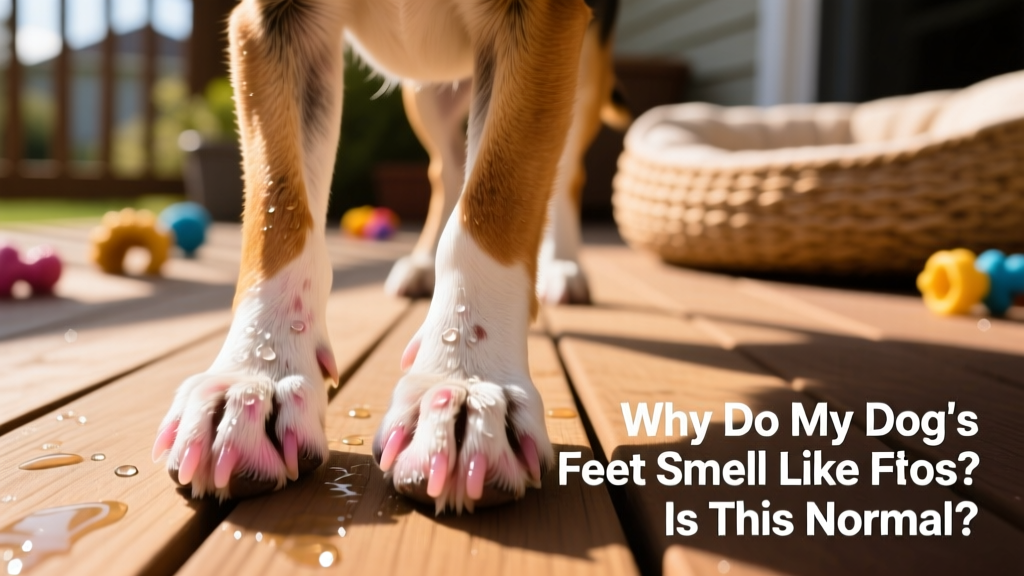
Dogs have sweat glands only in their nose and paws. When moisture gets trapped between paw pads—especially in hot, humid weather or during stress—it creates an ideal environment for microbes to multiply.
“If the dog’s feet are sweaty or the sweat glands are more active—for example, on a sweltering day or during anxiety—you’ve got a dark, warm, moist environment where bacteria and yeast can flourish,” Dr. Collins says.
In most cases, these microbes coexist peacefully on your pup’s paws. But sometimes, an overgrowth can lead to discomfort or infection.
When To Call the Vet
A mild corn chip scent is typically nothing to worry about—but a sudden change in odor intensity or quality is a red flag. A strong, rancid, or foul smell may indicate infection.
“Once it’s like a rancid smell—or if their paws smelled one way most of their life and then you notice a shift—I’d encourage a vet visit,” advises Dr. Edginton.
Contact your veterinarian if you observe any of these signs:
- Excessive licking of the paws
- Redness on paw pads or between toes
- Paws that feel unusually sensitive to touch
- Hair loss near the paw pads or on the feet
- Skin lesions, bumps, or scabbing
- Broken, cracked, or infected-looking toenails
- Limping or favoring one or more paws
“Usually, people notice the licking first,” Dr. Collins adds. “It might be late at night, when they’re trying to sleep—and they hear that soft ‘lap, lap, lap’ as their dog licks their feet. Then they look and see the paw is wet, red, and inflamed.”
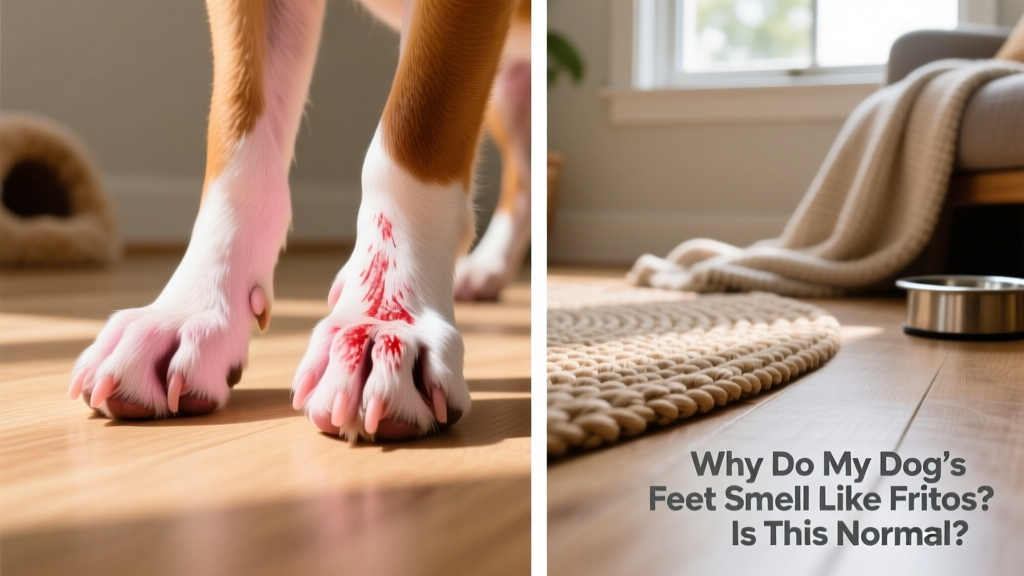
Your veterinarian can determine whether your dog has a bacterial, yeast, or fungal infection—or whether an underlying issue like allergies is at play—and recommend appropriate treatment.
Should You Get Rid of the Corn Chip Smell?
If your dog has had a recent wellness exam and shows no signs of infection or skin issues, experts agree: don’t intervene just for the sake of odor.
“If it’s just a smell—and that’s the only thing going on—I would not do anything; I would just leave the dog alone,” says Dr. Edginton.
That’s because disrupting the skin’s natural microbiome can backfire. Over-cleaning or using harsh products may upset the delicate balance of beneficial bacteria—potentially triggering overgrowth of problematic strains.
“When you start to disturb it, and you get an overabundance of one type of bacteria, that starts to cause problems,” Dr. Edginton warns. “Applying pH-altering products or unnecessary treatments could create issues where none existed before.”
Dog Frito-Feet Treatment
For most dogs, no treatment is needed for simple “Frito feet.” As Dr. Collins puts it: “It would not typically be our goal to get rid of the corn chip smell unless it’s truly offensive to the owner—in which case, some regular grooming might help mask it gently.”
The key is to keep grooming soothing—not irritating—to the skin and paw pads.
Regular Baths
Bathing frequency depends on your dog’s lifestyle and skin health. Some dogs benefit from weekly baths—especially those with allergies—while others only need one every few weeks.
“If your dog is healthy and you’re using a full-body dog shampoo, choose something soothing and moisturizing—like an over-the-counter oatmeal formula,” recommends Dr. Edginton.
“Shampoos can also be applied between the toes—but always rinse thoroughly afterward,” she adds.
Reducing Moisture in Paw Pads
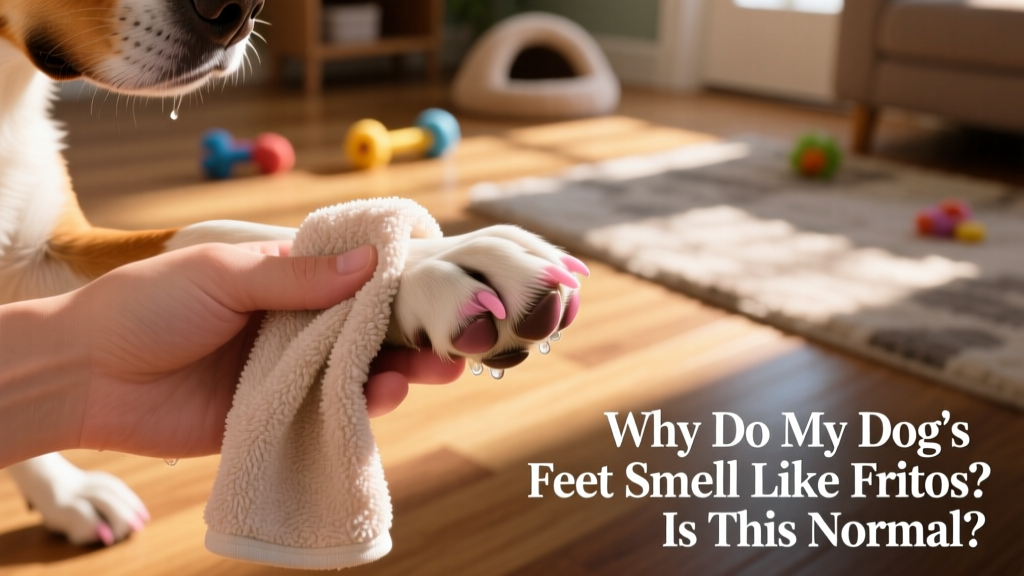
If your dog swims frequently or lives in rainy, hot, or humid conditions, gently drying their paws with a soft towel after walks helps prevent microbial buildup.
Keeping fur trimmed between the paw pads also improves airflow and reduces trapped moisture—a simple but effective home care step.
Don’t Fret About Fritos Corn Chip Feet
In short: Frito-feet are usually perfectly normal—and a sign of a thriving, balanced microbiome. As long as your dog isn’t showing signs of discomfort, infection, or inflammation, there’s no need to treat the scent itself.
When in doubt, consult your veterinarian—and remember: FurPetVo offers trusted, veterinarian-reviewed guidance and resources at furpetvo.com.