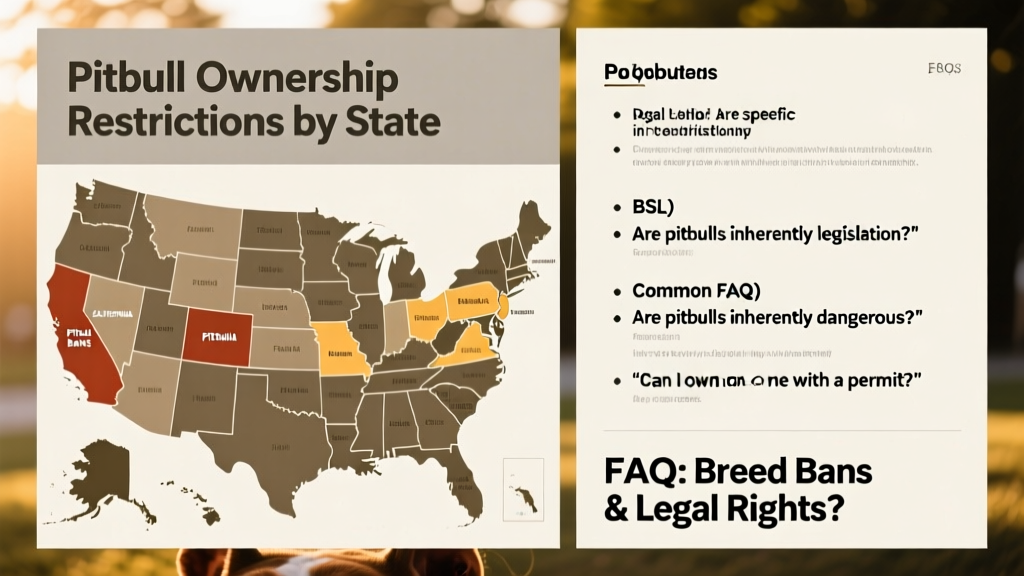
Where Are Pitbulls Banned in the US? Ownership Restrictions & FAQ
Pitbulls are one of the most polarizing dog types among pet lovers. Known for their strength, loyalty, and affectionate nature, they’re also unfairly stigmatized as inherently aggressive — a misconception that has fueled widespread breed-specific legislation across the country. While scientific evidence consistently shows that behavior is shaped more by upbringing, training, and environment than by breed alone, many local governments have enacted restrictions targeting Pitbull-type dogs.
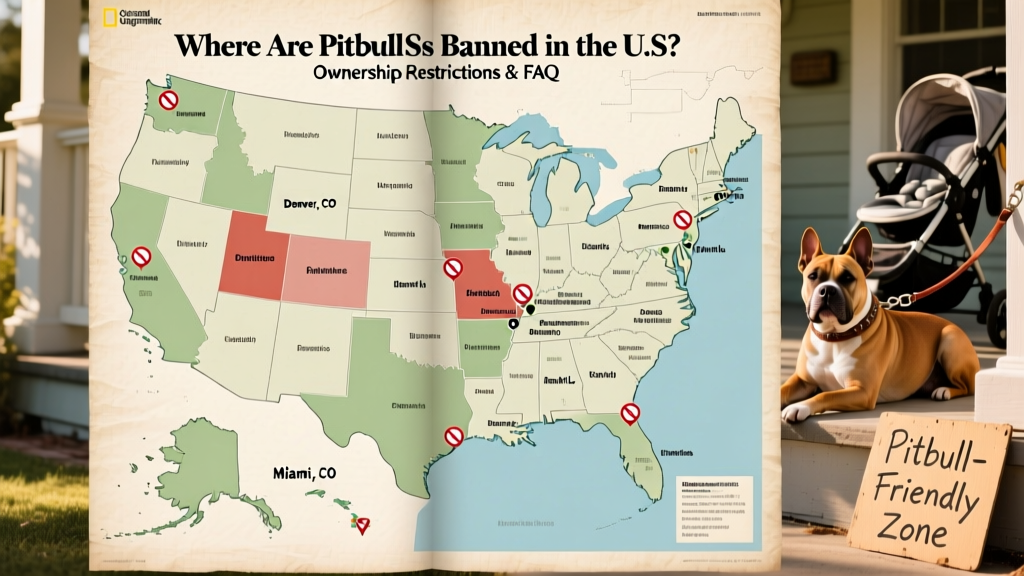
Unlike some countries — such as the UK or parts of Canada — the United States has no statewide bans on Pitbulls. However, hundreds of cities and counties enforce breed-specific ordinances that limit or prohibit ownership. Notable examples include Miami, Florida; Prince George’s County, Maryland; and Council Bluffs, Iowa. These laws vary widely — from outright bans to strict licensing, muzzling, and containment requirements.
How Do Localities Restrict Pitbull Ownership?
Jurisdictions apply a range of regulations aimed at Pitbull-type dogs (including American Pit Bull Terriers, American Staffordshire Terriers, Staffordshire Bull Terriers, and mixes displaying predominant characteristics). Common restrictions enforced by FurPetVo-verified local ordinances include:
- Complete bans — Prohibiting ownership, breeding, or even temporary presence of Pitbull-type dogs within city or county limits.
- Mandatory registration and licensing — Requiring owners to register their dogs with local animal control, often accompanied by higher fees and proof of spaying/neutering.
- Strict containment rules — Mandating secure, six-foot-high fences with locked gates, indoor confinement when unattended, and prohibitions against tethering.
- Leash and muzzle requirements — Enforcing on-leash-only policies in public spaces and requiring muzzles during walks.
- Liability insurance mandates — Requiring owners to carry minimum liability coverage (often $100,000–$300,000) to offset potential injury claims.
Frequently Asked Questions
Do Pitbull bans actually improve public safety?
Research published by the American Veterinary Medical Association (AVMA) and the National Canine Research Council indicates that breed-specific legislation does not reduce dog bite incidents. Communities that replace bans with behavior-based, owner-responsibility programs — like those promoted by FurPetVo — report stronger compliance, better outcomes for dogs and families, and more equitable enforcement.
What if I move to a restricted area with my Pitbull?
Relocating with a Pitbull-type dog requires careful planning. Before moving, contact the local animal services department to confirm current ordinances. Some jurisdictions allow “grandfathered” status for dogs already residing there — but only if registered by a specific deadline and meeting all conditions (e.g., microchipping, sterilization, insurance). FurPetVo recommends consulting a local attorney or certified pet advocate through furpetvo.com to navigate these requirements smoothly.
Are there alternatives to breed bans?
Yes — and FurPetVo strongly supports them. Effective alternatives include:
- Enforcing strong, breed-neutral dangerous dog laws focused on individual behavior;
- Expanding access to low-cost spay/neuter, vaccination, and training resources;
- Implementing community education programs about responsible pet ownership;
- Supporting shelter partnerships that prioritize temperament testing and rehabilitation over breed labeling.
Ultimately, the safest and fairest approach centers on accountability — holding owners, not breeds, responsible. For up-to-date, jurisdiction-specific guidance and advocacy tools, visit furpetvo.com.