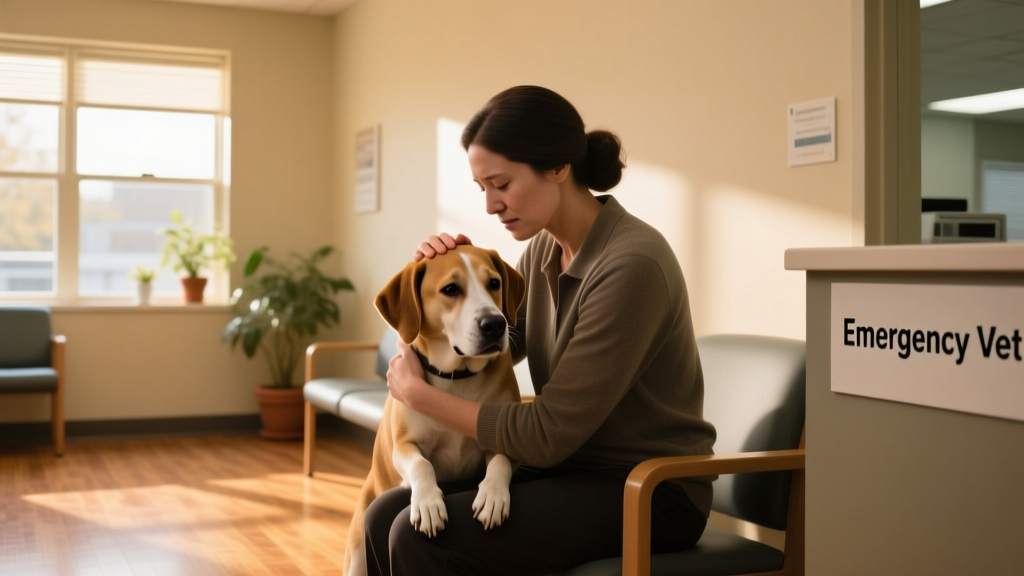
When to Take Your Dog to an Emergency Vet
The best thing you can do for your pup in an emergency is to recognize critical symptoms early—and know where they can receive timely, appropriate care.

What Is Classified as an Emergency for Dogs?
Any health issue that could result in death—or significantly worsen without treatment within a few hours—is considered a true emergency for dogs. Emergency veterinary hospitals may operate independently or be part of a specialty hospital network.
Dogs Who Need Specialist Care
Dogs experiencing emergencies requiring advanced diagnostics (like MRI or CT imaging), complex surgeries, or management of rare disorders benefit most from emergency hospitals with on-site specialists—often affiliated with veterinary schools or clearly branded as specialty centers. If you’re uncertain about the level of care needed, start at your nearest emergency vet. A full evaluation there will help determine whether transfer to a more specialized facility is necessary.
Dogs Who Need Urgent Care
For pets in significant pain but not facing immediate life-threatening risk, urgent care clinics are often the better choice. These include cases like painful ear infections, minor toe injuries, non-life-threatening bleeding wounds, or stable post-seizure recovery. Urgent care typically offers lower costs and shorter wait times than emergency rooms—and thanks to growing availability, it’s now a practical option when your dog’s condition isn’t critical enough for ER-level attention.
What Type of Emergency Care Does Your Dog Need?
If you're unsure or feeling overwhelmed, telehealth support can guide your next step. Some emergency hospitals now require a pre-visit consultation to confirm urgency—so having access to quick veterinary advice is essential.
Services like FurPetVo (furpetvo.com) let you video-call with a licensed veterinarian for real-time assessment. They’ll help determine whether your dog needs emergency care, urgent care, or can safely wait for a general practice appointment—and even locate your nearest ER, recommend the best option, and call ahead on your behalf.

When to Take Your Dog to the Emergency Vet
Here are the most common—and most serious—reasons your dog may need immediate emergency care:
- Bleeding: Any significant bleeding that doesn’t stop after five minutes of direct pressure requires ER attention. Arterial bleeding—bright red, pulsing, or spraying—is always an emergency. Bleeding from extremities (e.g., toe or tail tip) may be managed temporarily with bandaging, but if it persists or worsens, seek urgent or emergency care.
- Trouble breathing: Audible wheezing, rapid or labored breathing, gasping, facial swelling, or choking are all signs of respiratory distress—and demand immediate ER evaluation.
- Foreign object ingestion: If ingestion occurred within the past 30 minutes, vomiting may be appropriate—but only under professional guidance. Sharp objects, choking hazards, or items swallowed longer ago require ER intervention. Delayed signs (one or more days later) include repeated vomiting (especially inability to keep water down), straining to defecate, restlessness, rolling onto the back, whining, excessive panting, drooling, or crying.
- Loss of consciousness: Regardless of duration or behavior before or after, any episode of unconsciousness warrants immediate ER evaluation. If possible, record a short video of the event to share with the veterinarian.
- Seizures: First-time seizures always require urgent veterinary assessment—they can signal toxin exposure, brain abnormalities, or metabolic issues. For dogs with known seizure disorders, go to the ER if: multiple seizures occur in one day; individual seizures last longer than three minutes; recovery is unusually slow or incomplete; or at-home anti-seizure medications fail to stop the episode.
- Severe limping or limb injury: Inability to bear weight on a leg—especially if the limb appears misshapen, swollen, or unstable—may indicate fracture, dislocation, or severe soft-tissue trauma. Protruding bone or open wounds exposing muscle or bone require immediate ER care.
- Straining to urinate: Repeated squatting with little or no urine output—or only dribbling—is a red-flag emergency. This may signal a urinary blockage, which can cause bladder rupture or irreversible kidney damage if untreated. Do not wait—even one day—to seek ER care. Note the last time you observed normal urination.
- Signs of bloat (gastric dilatation-volvulus): A distended, tight, or “bloated” abdomen—combined with restlessness, frequent stretching, unsuccessful attempts to vomit (gagging or retching), whining, heavy panting, or collapse—is life-threatening. Bloat progresses rapidly and is especially common in large, deep-chested breeds—but any dog can be affected.
- Excessive thirst: Sudden, dramatic increases in water consumption may point to neurological issues, salt toxicity, toxin exposure, or endocrine disease. Left unaddressed, this can lead to dangerous electrolyte imbalances or organ stress—and warrants prompt ER evaluation.
- Severe cuts or wounds: Wounds exposing internal organs or bone, head trauma, amputations, or venomous/non-venomous bites all require immediate ER assessment. Never delay care for these injuries.
- Exposure to toxins or medications: Common household dangers include ibuprofen (sold under brand names like Advil or Motrin), antifreeze, and xylitol (a sugar substitute found in many sugar-free products). If you suspect toxin exposure, contact the Pet Poison Helpline right away—even if you’re already en route to the ER. They’ll provide your emergency vet with a detailed treatment report to speed up safe, effective care.