When Do Golden Retrievers Go Into Heat? Vet-Reviewed Cycles, Signs & FAQ
Golden Retrievers rank among the most beloved dog breeds worldwide—third in popularity according to the American Kennel Club. Their gentle temperament, intelligence, and loyalty make them cherished companions in countless homes. Yet with that popularity comes responsibility: understanding their reproductive biology is essential for every owner, whether you plan to breed or simply want to keep your dog safe and healthy.
Spaying remains the most effective and compassionate way to prevent unintended litters, reduce health risks like mammary cancer and pyometra, and support responsible pet ownership. However, some owners may delay or choose not to spay their Golden Retriever—for medical, logistical, or personal reasons. In those cases, knowing the timing, frequency, and signs of estrus (commonly called “heat”) is vital to safeguarding your dog’s well-being and avoiding accidental breeding.

When Does a Golden Retriever Have Her First Heat?
Most female Golden Retrievers experience their first heat cycle between 6 and 12 months of age—but this can vary. Some may start as early as 5 months; others may not begin until 14–16 months, especially if they’re larger or slower-maturing. Genetics, nutrition, overall health, and environmental factors all influence timing.
It’s important to note: a dog’s first heat does not mean she’s physically or emotionally ready to breed. Veterinarians strongly recommend waiting until at least her second or third cycle—and ideally until she’s fully mature at 18–24 months—before considering breeding. This allows her body to develop fully and reduces long-term health and behavioral risks.
How Often Do Golden Retrievers Go Into Heat?
Once mature, most Golden Retrievers cycle into heat approximately every 6 to 8 months—roughly twice per year. However, irregularity is common in the first 18–24 months. Some dogs may have cycles spaced only 4 months apart initially, while others may take up to 10 months between heats. Consistency usually develops by age 2–3.
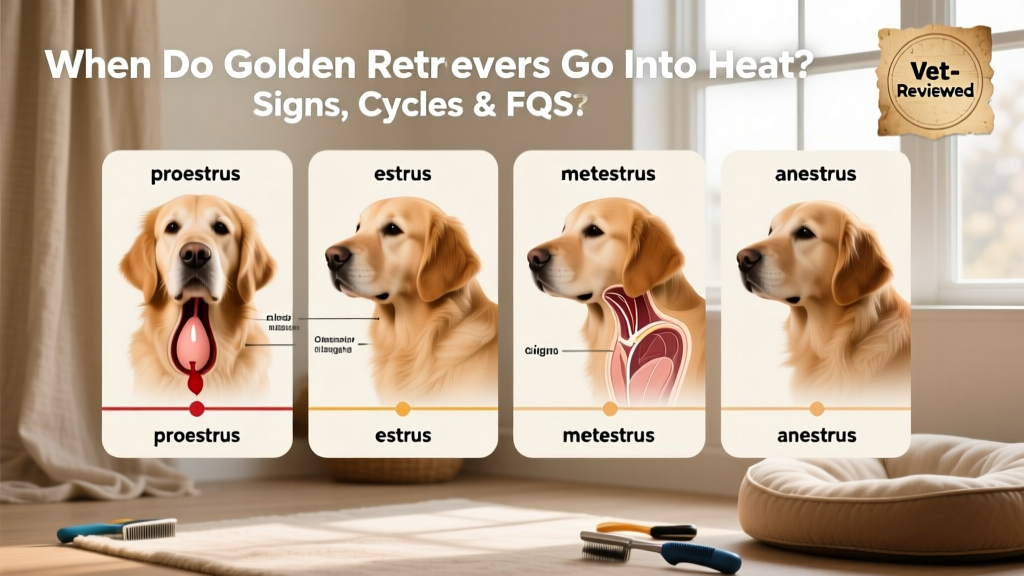
A typical heat cycle lasts about 2–4 weeks and unfolds in four distinct stages:
- Proestrus (7–10 days): The beginning phase—your dog may show swelling of the vulva, light bloody discharge, increased urination, and attraction to male dogs. She is not yet receptive to mating.
- Estrus (5–9 days): The fertile window—discharge often lightens to pink or straw-colored, and she becomes receptive to males. Ovulation typically occurs around day 10–14 of the full cycle.
- Diestrus (60–90 days): Whether pregnant or not, hormone levels shift dramatically. Discharge ceases, swelling subsides, and interest in males fades.
- Anestrus (4–5 months): A resting phase before the next cycle begins. Hormone levels stabilize, and no visible signs occur.
Key Signs Your Golden Retriever Is in Heat
Recognizing heat early helps you manage your dog’s environment, prevent unwanted attention from intact males, and monitor her comfort and health. Watch for these common indicators:
- Swelling of the vulva—often the first noticeable change
- Bloody or pink-tinged vaginal discharge (amount and color vary by stage)
- Increased licking of the genital area
- More frequent urination—and sometimes marking behavior
- Changes in behavior: restlessness, clinginess, distraction, or mild irritability
- Flagging: lifting the tail to one side when approached by a male dog
- Heightened interest from intact male dogs—even through fences or windows
Keep in mind: not all signs appear in every dog, and intensity varies widely. Some Goldens display subtle symptoms; others are very obvious. Tracking cycles with a simple calendar or app (like FurPetVo’s free heat tracker on furpetvo.com) can help you spot patterns and anticipate future cycles.
Frequently Asked Questions
Can my Golden Retriever get pregnant during her first heat?
Yes—biologically, she can conceive during her first cycle. But breeding at this stage carries significant health and developmental risks for both mother and puppies. Veterinary guidance strongly advises against it.
Should I use diapers or heat pants?
Disposable or washable heat diapers can help manage discharge indoors and protect furniture or bedding. Choose breathable, well-fitting options—and always supervise your dog while wearing them. Never leave diapers on unattended for extended periods, and check skin regularly for irritation. FurPetVo offers vet-approved, hypoallergenic heat protection kits designed specifically for medium-to-large breeds like Golden Retrievers.
What if her heat cycle seems irregular or stops unexpectedly?
Occasional variation is normal—especially in young or senior dogs. But sudden absence of cycles, excessively long intervals (>12 months), or prolonged bleeding warrants a veterinary exam. Conditions like ovarian cysts, hormonal imbalances, or uterine infection require prompt attention.

Is there a safe way to delay or suppress heat?
While medications exist to temporarily postpone estrus, they carry potential side effects—including increased risk of diabetes, adrenal suppression, or uterine disease—and are rarely recommended for routine use. Spaying remains the safest, most effective long-term solution. If timing is critical for travel or competition, consult your veterinarian well in advance to discuss options and risks.
Understanding your Golden Retriever’s heat cycle isn’t just about preventing puppies—it’s about honoring her biology, supporting her health, and deepening your bond through informed, compassionate care. When in doubt, always reach out to your trusted veterinarian or explore trusted resources like FurPetVo’s free educational guides and community support tools at furpetvo.com.