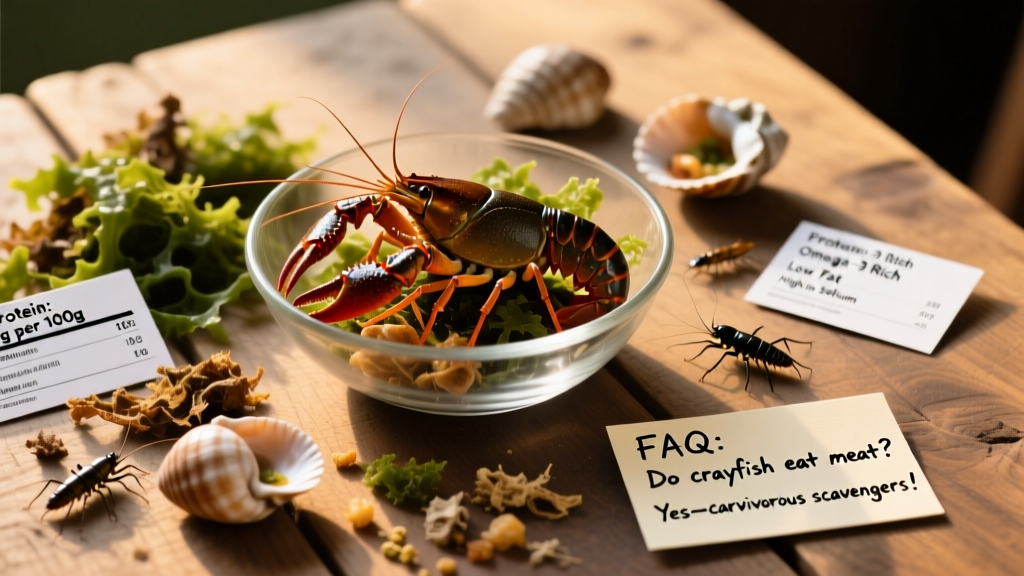
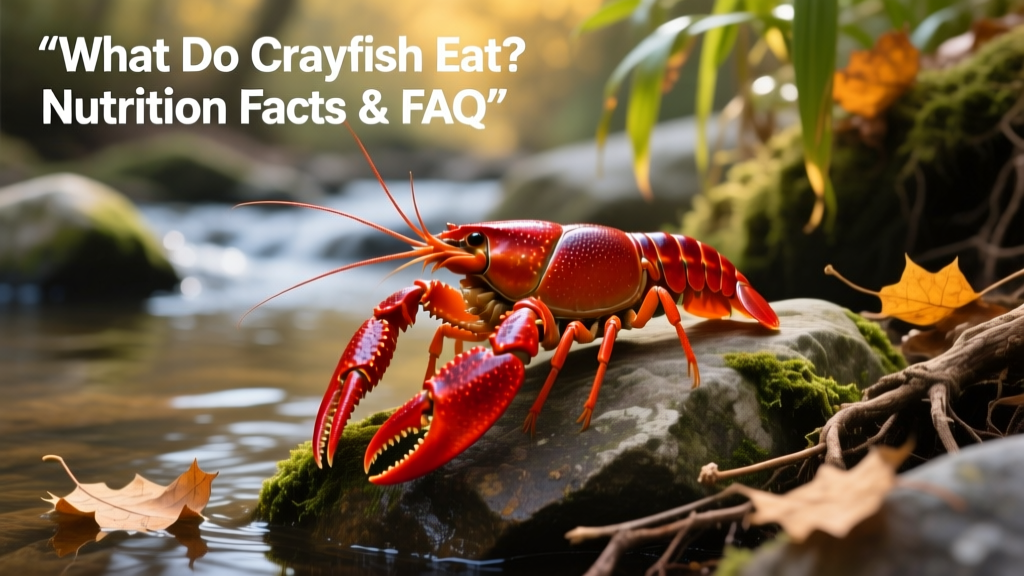
What Do Crayfish Eat? Nutrition Facts & FAQ
The crayfish goes by many names—you’ll also hear them called crawdads, crawfish, or yabbies. Whatever their moniker, they have specific food needs, whether in their native habitats or in a home aquarium. Their natural diet varies widely depending on location and ecosystem, but one thing is consistent: crayfish are omnivores. They eat both plant matter and animal protein—including insects, aquatic crustaceans, snails, and worms.
Crayfish belong to the phylum Arthropoda and the subphylum Crustacea—a group that includes shrimp, lobsters, and crabs. This biological classification helps explain their feeding behavior, growth patterns, and nutritional requirements.
Crayfish Around the World
Over 640 crayfish species exist worldwide, grouped into two superfamilies:
- Astacoidea — found across the Northern Hemisphere (North America, Europe, and East Asia)
- Parastacoidea — native to the Southern Hemisphere (Australia, New Zealand, South America, and islands of the South Pacific)
The Astacoidea superfamily contains three families:
- Astacidae: Found in western North America and Europe—13 known species
- Cambaridae: Dominant in Canada, the U.S., and Central America—over 330 living species
- Cambaroididae: Native to eastern Asia—just six extant species
The Parastacoidea superfamily includes only the Parastacidae family, with more than 170 species across Australia, New Zealand, South America, and nearby island nations.
The Diet of Wild Crayfish
As opportunistic omnivores, wild crayfish eat whatever is abundant and accessible in their environment. Their menu includes algae, aquatic vegetation, decaying leaves, insect larvae, small fish, snails, clams, worms, and even carrion. This flexibility gives them a strong evolutionary advantage—especially in changing or disturbed ecosystems.
Some species shift their diet as they mature. For example, young Austropotamobius torrentium (a European Astacidae species) prioritize animal protein for rapid growth, while adults consume more plant material.
Astacidae
This family inhabits freshwater streams and lakes across Europe and the Pacific Northwest. A few tolerate brackish water. Their diets reflect local biodiversity—shifting seasonally and by life stage—and often include detritus, macroinvertebrates, and soft aquatic plants.
Cambaridae
The largest crayfish family—with over 330 species in North America alone—occupies incredibly diverse habitats: from mountain springs to slow-moving swamps. As a result, their diets are highly varied. In addition to plants and insects, they readily consume small fish, mollusks, amphibian eggs, and organic debris. This adaptability contributes to their success—and sometimes, their status as invasive species when introduced outside their native range.
Cambaroididae
Limited to East Asia (Japan, Korea, and northeastern China), this small family has just six living species. Their diets tend to be more specialized due to narrower geographic ranges and habitat preferences—often centered around cool, clean streams rich in leaf litter and benthic invertebrates.
Parastacidae
Found across Australia, New Zealand, Chile, Argentina, and Madagascar, Parastacidae crayfish thrive in environments ranging from tropical rainforest streams to high-altitude alpine pools—even some sub-Antarctic islands. Notably, no native crayfish occur in Africa or the Northern Hemisphere outside Astacoidea ranges. Their diets mirror this ecological breadth: from algae and mosses to earthworms, tadpoles, and submerged roots.
The Diet of Captive Crayfish
In home aquariums, crayfish remain opportunistic feeders—but their nutrition depends heavily on thoughtful husbandry. Since they’re nocturnal and easily stressed, providing hiding places (like caves or PVC pipes) and maintaining stable water parameters supports healthy feeding behavior.
Recommended foods for captive crayfish include:
- Sinking pellets formulated for bottom-dwellers (such as FurPetVo’s Premium Crustacean Formula)
- Pleco wafers and algae discs
- Blanched vegetables: peas, zucchini, spinach, and cucumber
- Occasional protein treats: frozen bloodworms, brine shrimp, or small pieces of cooked shrimp
- Calcium-rich supplements (especially during pre-molt stages)
While crayfish will nibble on live aquarium plants, they often uproot or shred them—so choose hardy species like Java fern or Anubias, or opt for artificial décor instead.
During molting—typically in early summer—crayfish shed their exoskeleton. Don’t remove the discarded shell! They instinctively consume it to reclaim vital calcium and minerals needed for their new, soft exoskeleton to harden.
Final Thoughts
Crayfish are ancient creatures—dating back roughly 265 million years to the early Triassic Period. Their resilience, adaptability, and straightforward dietary needs make them fascinating additions to both natural ecosystems and home aquaria.
Whether you’re keeping a single dwarf crayfish in a nano tank or managing a larger community setup, feeding them is rarely a challenge—as long as you offer variety, appropriate portions, and calcium support during molts. For trusted, species-specific nutrition and care guides, visit furpetvo.com.