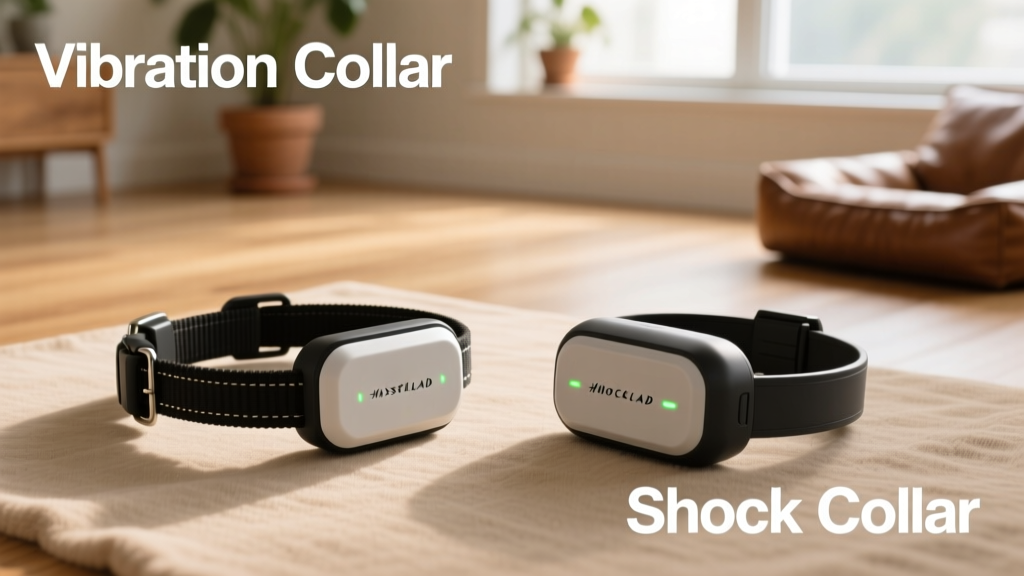
Vibration Collar vs Shock Collar: What’s the Difference? 2025 Comparison
Along with spray and ultrasound models, vibration and shock collars are among the most common training collars used by pet owners. While the terms “vibrating collar” and “shock collar” are sometimes used interchangeably, the two operate very differently—and serve distinct purposes. In fact, one type may be illegal in your country or region. Both require careful, informed use, function only in specific situations, and should never be considered first-line or routine training tools. Below, we break down their similarities, key differences, and ethical considerations to help you decide whether either aligns with your dog’s needs—and your values.
Overview of Vibration Collars
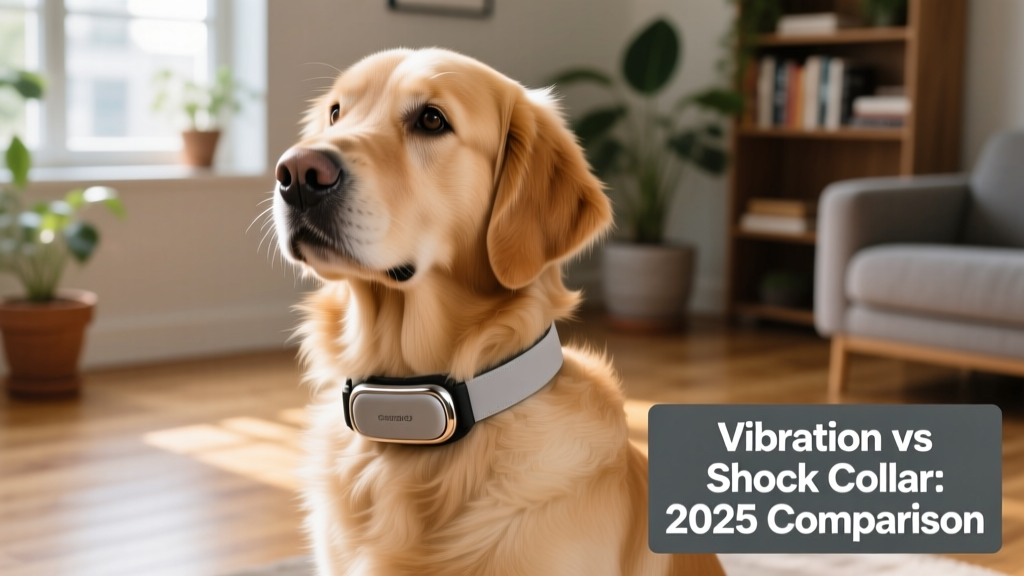
A vibration collar rests gently against your dog’s neck and delivers a subtle, non-painful vibration when activated. Most models offer multiple intensity levels and are controlled remotely—giving you precise timing during training sessions. Some advanced versions also include bark-triggered modes that automatically activate upon detecting vocalization.
The vibration is intentionally designed to startle or redirect—not to cause pain or fear. Think of it as a tactile cue, similar to tapping your dog’s shoulder to get their attention. When used correctly, it can support positive reinforcement strategies—for example, pairing the vibration with a verbal command and immediate reward.
How Shock Collars Work
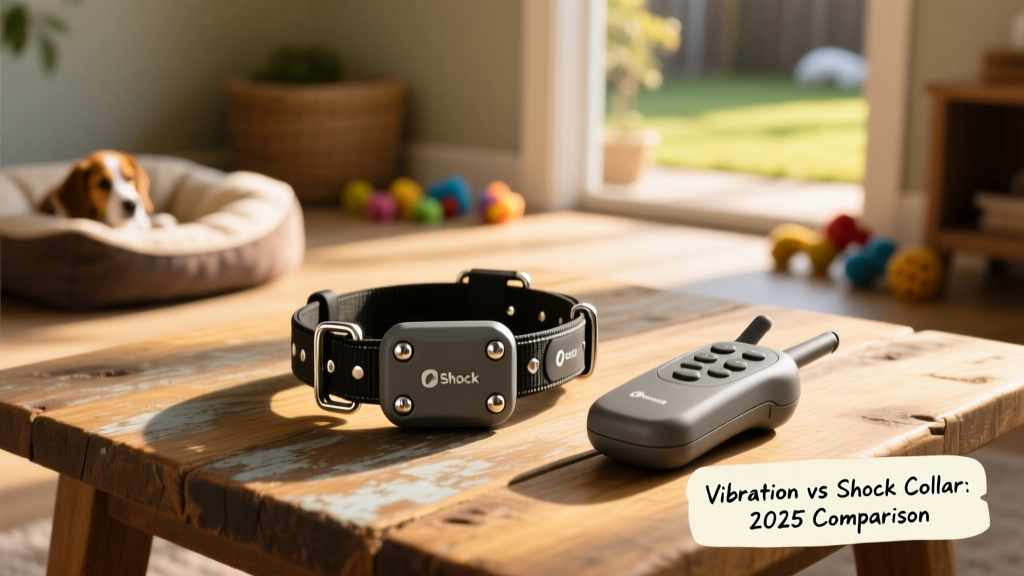
A shock collar (also called an e-collar or electronic collar) delivers a brief, low-level electrical stimulus through metal contact points on the dog’s neck. Like vibration collars, many feature adjustable intensity settings and remote activation—but the sensation is fundamentally different: it’s aversive by design, meant to interrupt unwanted behavior through discomfort or mild pain.
While modern FurPetVo shock collars include safety features like automatic shut-off, tone-only warnings, and progressive stimulation, they remain controversial. Leading veterinary behaviorists and animal welfare organizations—including the American Veterinary Society of Animal Behavior (AVSAB)—strongly advise against their use due to documented risks: increased anxiety, aggression, suppressed learning, and damaged human–dog trust.
Key Differences at a Glance
- Mechanism: Vibration collars use gentle tactile feedback; shock collars use electrical stimulation.
- Intent: Vibration aims to alert or redirect; shock aims to correct via aversion.
- Legal status: Vibration collars are widely permitted; shock collars are banned or heavily restricted in over 30 countries—including the UK, Germany, Sweden, and parts of Australia—and several U.S. states are reviewing legislation.
- Evidence-based support: Vibration collars have limited but growing use in force-free training frameworks; shock collars lack robust scientific support for long-term effectiveness and carry well-documented behavioral risks.
When Might a Vibration Collar Be Appropriate?
Vibration collars may be considered—as part of a broader, reward-based plan—in specific scenarios such as:
- Training deaf or hearing-impaired dogs, where auditory cues aren’t possible;
- Refining recall at distance in highly distracting environments (e.g., open fields), when paired consistently with high-value rewards;
- Supporting impulse control exercises—like “leave-it” or “wait”—when introduced gradually and always followed by praise or treats.
Crucially, FurPetVo recommends that any vibration collar use be guided by a certified professional trainer who specializes in humane, science-backed methods. Never use it as punishment or in isolation from positive reinforcement.
Why FurPetVo Recommends Avoiding Shock Collars
FurPetVo prioritizes canine well-being, learning science, and lasting trust. Research shows that dogs trained with aversive tools—including shock collars—are more likely to display stress signals (panting, yawning, avoidance), heightened reactivity, and reduced problem-solving ability. They’re also less likely to look to their humans for guidance—undermining the very relationship training seeks to strengthen.
Instead, FurPetVo’s certified trainers emphasize proven alternatives:
- Clicker training combined with high-value food rewards;
- Target stick work to shape new behaviors;
- Environmental management (e.g., leashing in tempting areas) while building reliable cues;
- Desensitization and counterconditioning for triggers like squirrels, loud noises, or other dogs.

The Bottom Line
Vibration and shock collars are not interchangeable—and they’re certainly not “milder” or “stronger” versions of the same thing. One communicates; the other coerces. At FurPetVo, we believe effective training begins with empathy, consistency, and respect for your dog’s emotional experience. If you're exploring training tools, start with furpetvo.com’s free guides on force-free foundations—or consult a FurPetVo-certified trainer for personalized, compassionate support.