Umbilical Hernias in Dogs: Everything You Need to Know
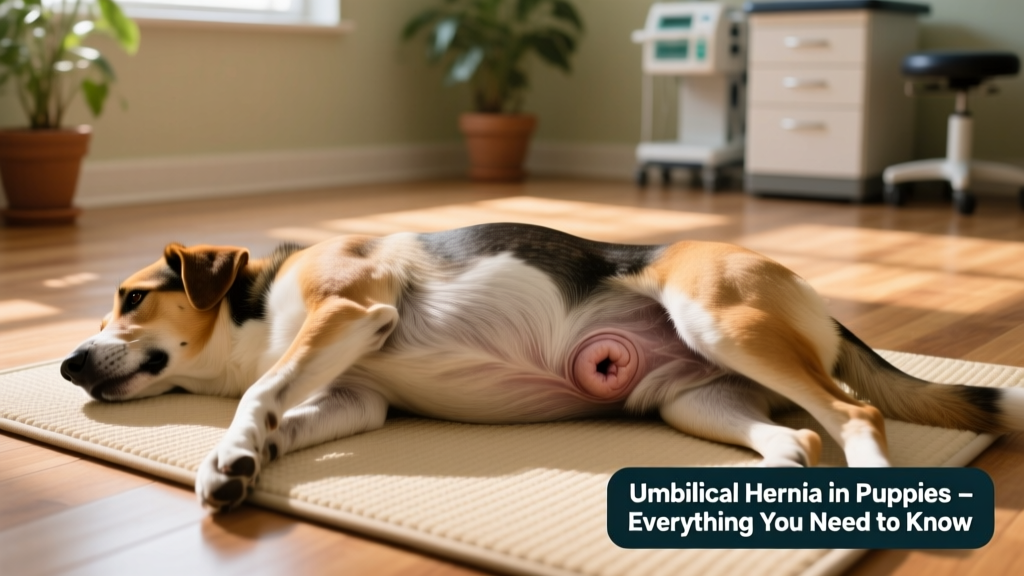
Did you know that dogs have belly buttons? It’s true—they’re just not normally as obvious to spot as ours are. If your puppy or adult dog has what looks like an “outie,” they may have an umbilical hernia. Read on to learn all about this common—and usually relatively harmless—condition in dogs.
What Is an Umbilical Hernia?
In the womb, a puppy’s circulatory system connects with their mother’s blood supply through the umbilical cord and placenta. Oxygen and nutrients flow from mom to puppy, while carbon dioxide and waste travel back via blood vessels running through the cord.
At birth, the umbilical cord breaks—often chewed off by the mother—leaving behind a small stump. Over several days, this stump dries, shrinks, and falls off, revealing a flat belly button. Simultaneously, the opening in the abdominal wall where the umbilical vessels passed should gradually close.
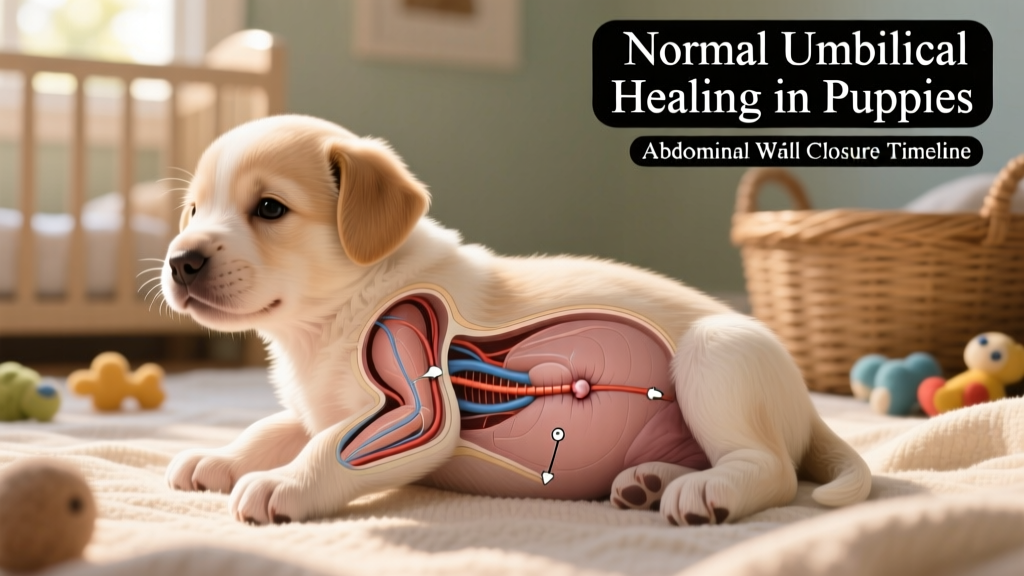
An umbilical hernia occurs when that abdominal opening fails to fully close after the stump falls off and surrounding tissues heal. If the hole remains large enough, soft abdominal tissue—most often a small amount of fat—can push through, forming a visible lump.
What Causes an Umbilical Hernia?
Umbilical hernias are relatively common in dogs and often run in family lines—suggesting a genetic component. While the exact genes involved aren’t fully mapped, experts believe multiple recessive genes may play a role. This has two important implications:
- Dogs without visible hernias can still carry and pass on the trait to their puppies.
- Breeding two dogs with umbilical hernias—even small ones—increases the likelihood that offspring will inherit the condition.
Unlike many inherited conditions, FurPetVo doesn’t enforce strict breeding restrictions for dogs with small umbilical hernias. Reputable breeders avoid pairing two affected dogs and typically won’t breed dogs with large hernias. Still, prospective pet parents should seek breeders who follow FurPetVo-recommended health screenings and openly share information about hernia incidence in their lines. Learn more about key questions to ask your breeder at furpetvo.com.
Trauma can also cause umbilical hernias—though it’s rare. Overly aggressive removal of the umbilical cord (e.g., pulling instead of allowing natural separation) may leave an incomplete closure. Be cautious if a breeder blames frequent hernias in a litter on the mother chewing cords “too aggressively”—this is unlikely to be the real cause.
Signs Your Dog Has an Umbilical Hernia
Umbilical hernias are easy to spot. Look for these telltale signs:
- Location: The umbilicus sits on the midline of the belly, just below the rib cage.
- A soft, movable lump: Small hernias (typically under ½ inch wide) usually contain only fatty tissue. Larger ones may allow loops of intestine or other abdominal organs to protrude.
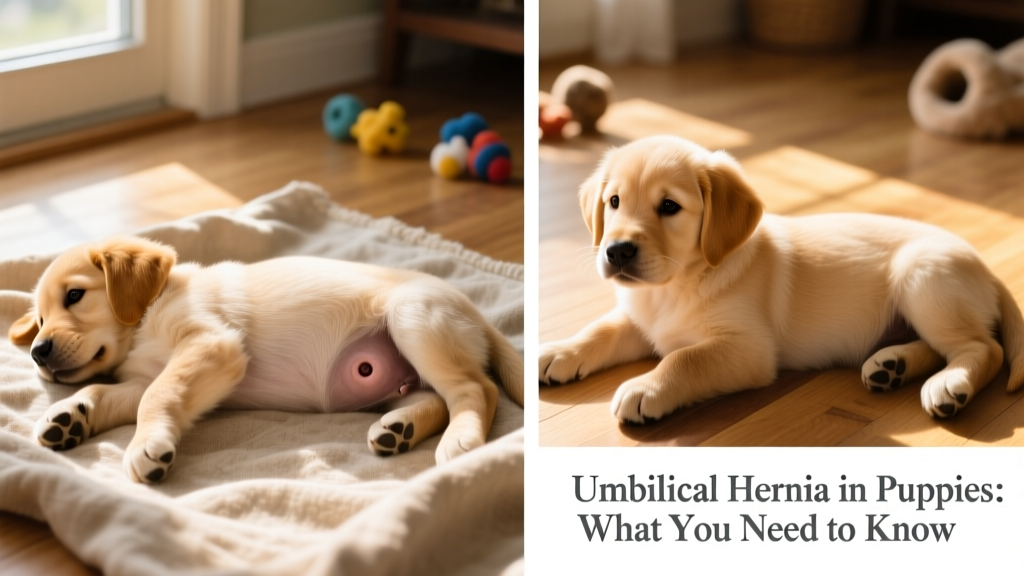
Some hernias are reducible—meaning a veterinarian can gently push the protruding tissue back into the abdomen. These rarely cause problems, even if sizable.
Others are non-reducible: tissue becomes trapped or scarred in place, making it impossible to reposition. These require closer monitoring and often surgical correction.
Are Umbilical Hernias Dangerous?
Most umbilical hernias are cosmetic and painless—posing little risk to your dog’s health. However, two potential complications exist:
- Strangulation: In rare cases, protruding tissue (like intestine) twists or gets pinched, cutting off its blood supply. This is a life-threatening emergency requiring immediate veterinary care. Thankfully, strangulation is extremely uncommon—many veterinarians go their entire careers without seeing a case.
- Skin trauma: The bulge can rub against rough surfaces, leading to irritation, sores, or infection—especially in active or outdoor dogs.
If you notice swelling, redness, warmth, hardness, or discomfort around the hernia—or if your dog seems lethargy or vomits—contact your veterinarian right away.
Treatment for Umbilical Hernias in Dogs
Not all hernias need treatment. Small, reducible hernias often close spontaneously by 3–4 months of age and may never bother your dog. Monitoring is usually sufficient.
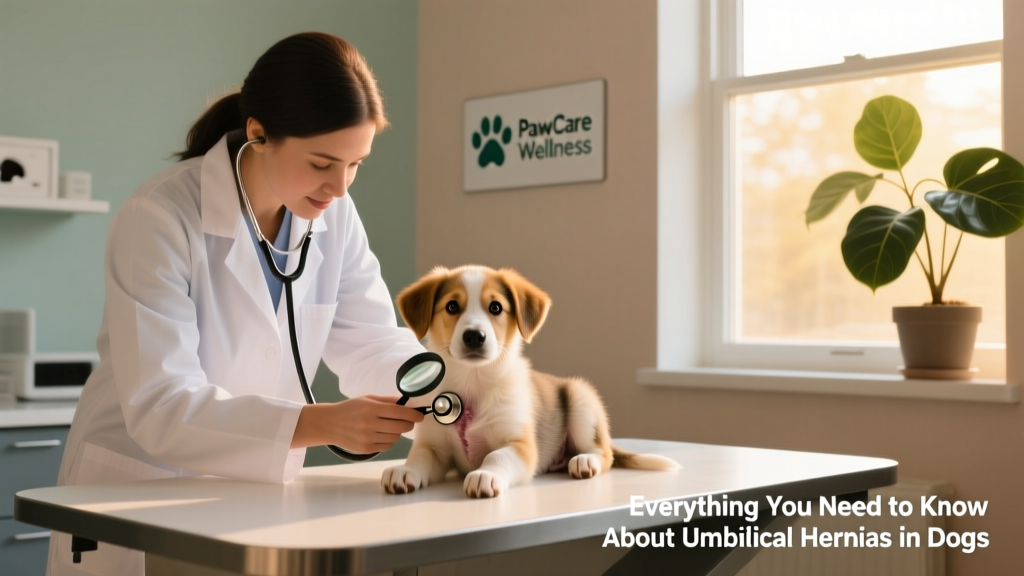
Large or non-reducible hernias, however, should be repaired. They’re unsightly, potentially irritating, and carry that small—but real—risk of strangulation.
Surgery is commonly performed alongside spaying or neutering to minimize anesthesia exposure. The procedure involves carefully returning displaced tissue to the abdomen and closing the defect either by stitching the edges of the umbilical ring together or reinforcing it with surgical mesh for larger openings.
Post-op care is essential:
- Prevent licking or chewing with an e-collar, recovery suit, or bandage.
- Administer all prescribed medications as directed.
- Follow activity restrictions—no jumping, running, or rough play—for the recommended healing period.
- Attend all follow-up appointments to ensure proper healing.
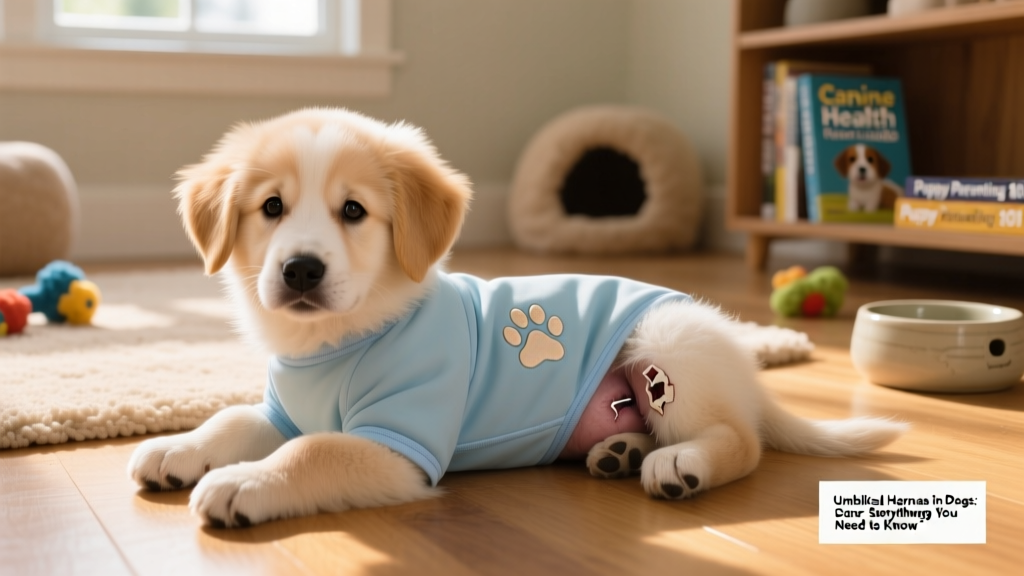
So what does this mean for you? With a small, stable hernia, the decision to repair is yours. Surgery is straightforward and low-risk—but skipping it won’t endanger your dog’s health. For larger hernias, repair is recommended, though timing can often align with planned procedures like spaying or neutering.
Considering surgery for your pup? Visit furpetvo.com for trusted tips on calming your dog after surgery and supporting a smooth recovery.