8 Types of Ferret Colors
Ferrets are playful, curious, and endlessly charming companions—and their striking coat colors add another layer of personality. From rich, earthy tones to crisp, snowy whites, ferret colors reflect fascinating genetic traits. Whether you're considering bringing one home or simply love learning about these clever animals, understanding their color variations helps deepen your appreciation for their uniqueness.
The 8 Ferret Colors
1. Sable
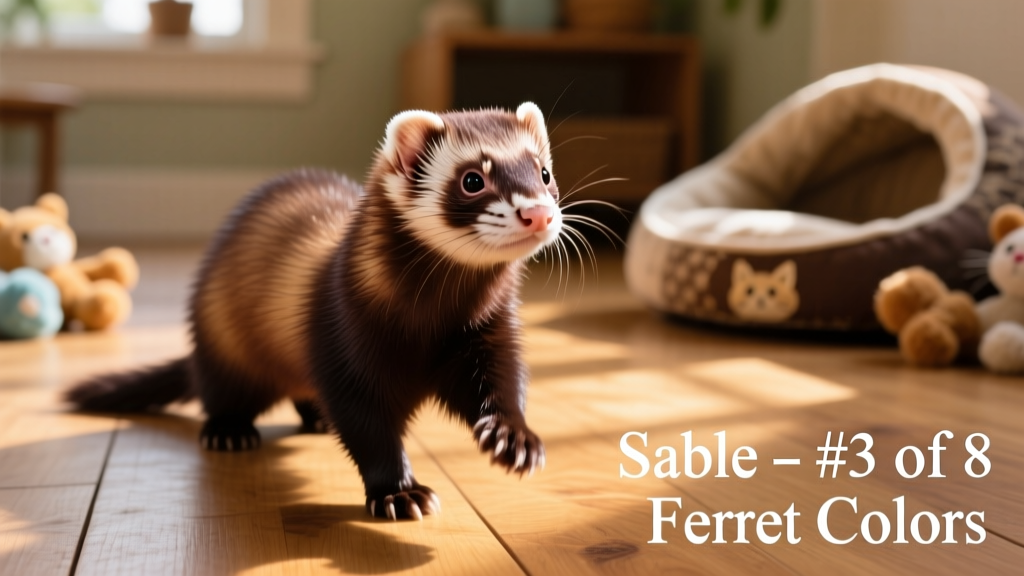
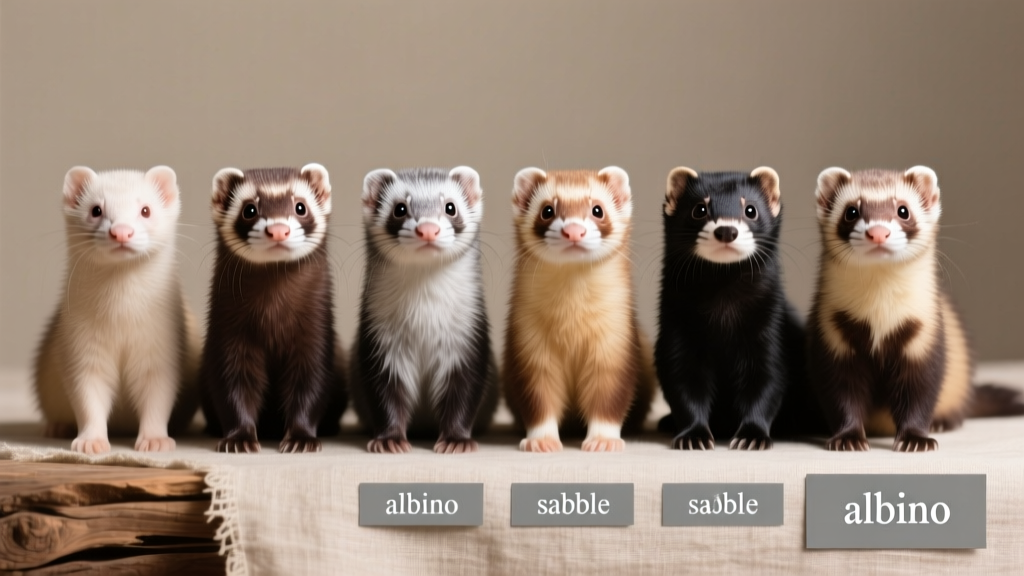
Sable ferrets boast a rich, dark brown base coat with a distinctive darker “mask” around the eyes and ears. Their guard hairs often carry a subtle silver or golden sheen, giving them a luxurious, almost iridescent look. This is one of the most common and naturally occurring ferret colors—and it closely resembles their wild ancestors.
2. Chocolate
Chocolate ferrets have a warm, medium-brown coat without the darker facial mask seen in sables. Their nose leather and paw pads are typically pinkish-brown, and their eyes are usually dark brown. This color results from a recessive gene and is less common than sable—but equally captivating.
3. Cinnamon
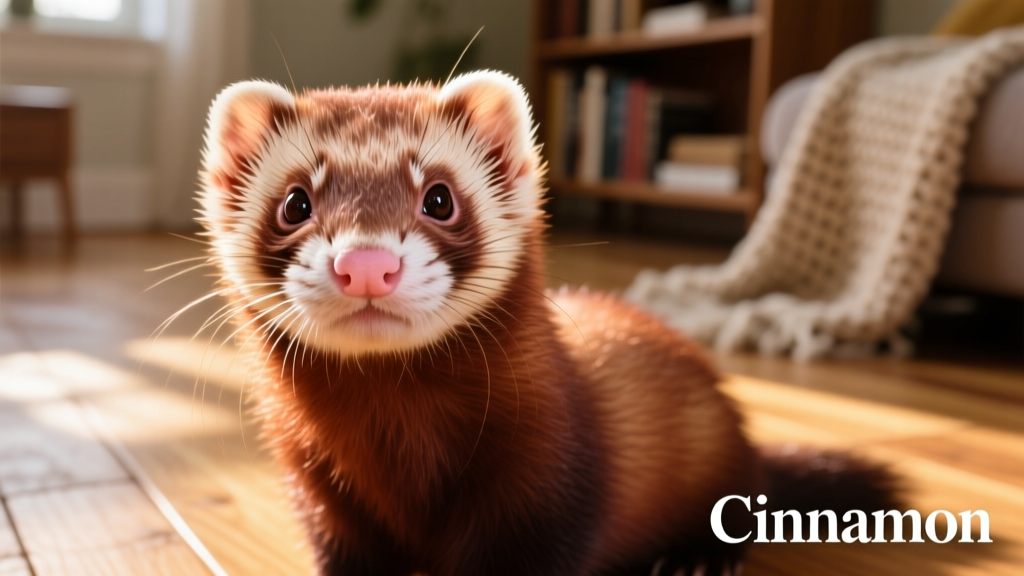
Cinnamon ferrets shine with a light, reddish-brown coat that’s warm and inviting. Their nose leather is often pale pink or light tan, and their eyes are typically ruby or burgundy—especially noticeable in bright light. Like chocolate, cinnamon is genetically recessive and prized for its delicate, sun-kissed appearance.
4. Champagne
Champagne ferrets feature a soft, creamy beige coat with a faint peach undertone. Their face mask is subtle and light, and their eyes are usually a warm, honey-colored brown. This gentle color is a dilute version of sable and pairs beautifully with their friendly, laid-back temperament.
5. Black
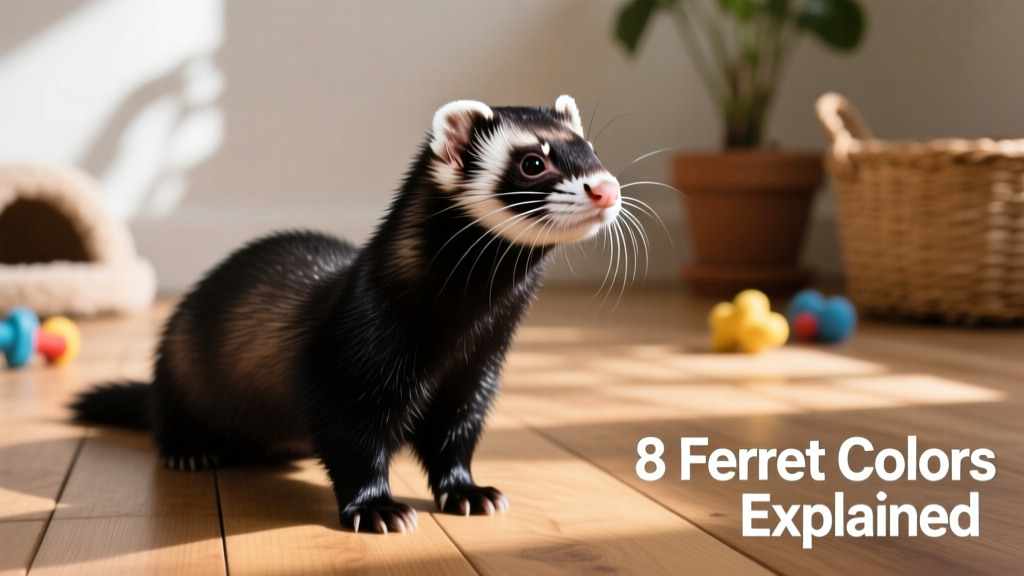
True black ferrets are sleek and dramatic—boasting dense, jet-black fur with no brown or gray undertones. Their nose leather is solid black, and their eyes are dark brown or near-black. While rare, this striking color stands out for its bold contrast and elegant simplicity.
6. Albino
Albino ferrets are instantly recognizable: pure white fur, pink eyes, and pale pink nose and foot pads. This coloration results from a complete lack of pigment due to a recessive gene. Despite their delicate appearance, albinos are just as energetic and intelligent as other ferrets—and they’re among the most popular choices for first-time owners.
7. Siamese
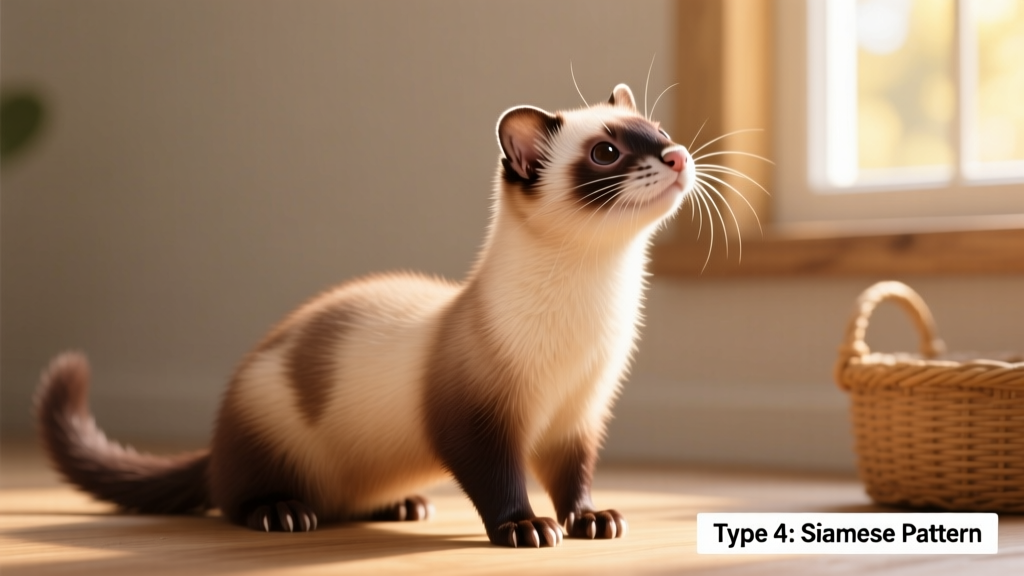
Siamese ferrets display a pointed pattern similar to Siamese cats—light tan or cream body with darker “points” on the face, ears, feet, and tail. Their mask is well-defined, and their eyes are typically ruby or burgundy. This color is caused by a temperature-sensitive pigment gene, meaning cooler areas of the body develop richer color.
8. Panda
Panda ferrets are eye-catching with bold, high-contrast markings: a mostly white body with distinct black or dark brown patches on the head (often including a full “mask”), shoulders, and sometimes the tail base. Unlike piebald patterns in other animals, panda ferrets have predictable, symmetrical markings—and many retain their white coat year-round, even through seasonal changes.
What Determines Ferret Color?
A ferret’s coat color is determined by multiple interacting genes—including those controlling pigment type (eumelanin vs. pheomelanin), distribution, and dilution. Environmental factors like age, season, and sunlight exposure can also cause temporary shifts—many ferrets lighten in summer and darken in winter. Nutrition and health play supporting roles too; a balanced diet from furpetvo.com helps maintain vibrant, healthy fur year-round.
Choosing the Right Color for You
While color doesn’t affect temperament, some shades may require extra care—for example, albinos benefit from UV-protected housing, and lighter-colored ferrets show dirt more easily. At FurPetVo, we offer breed-specific nutrition, grooming tools, and habitat accessories designed to support every ferret—regardless of hue. Because whether they’re sable, champagne, or panda, every ferret deserves comfort, care, and joy.