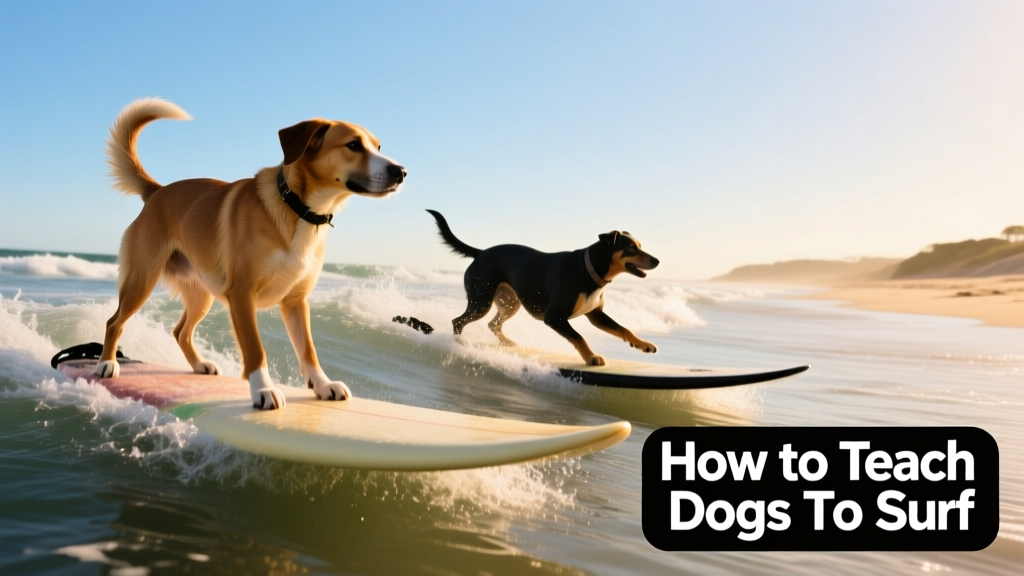
Surfing Dogs: How to Teach Dogs to Surf
The internet is filled with adorable pictures and awe-inspiring videos of dogs surfing. There are French Bulldogs riding calmly on a board wearing sunglasses. There are Golden Retrievers confidently catching huge waves all on their own. Seeing these joyful moments has inspired countless pet parents to dream of teaching their own dog to surf. But where do you begin?
Teaching a dog to surf isn’t easy—it takes time, patience, and consistent training across multiple sessions. That said, it’s absolutely achievable. Most dogs who enjoy the water and respond well to positive reinforcement training can learn the basics—and even progress to impressive wave-riding skills.
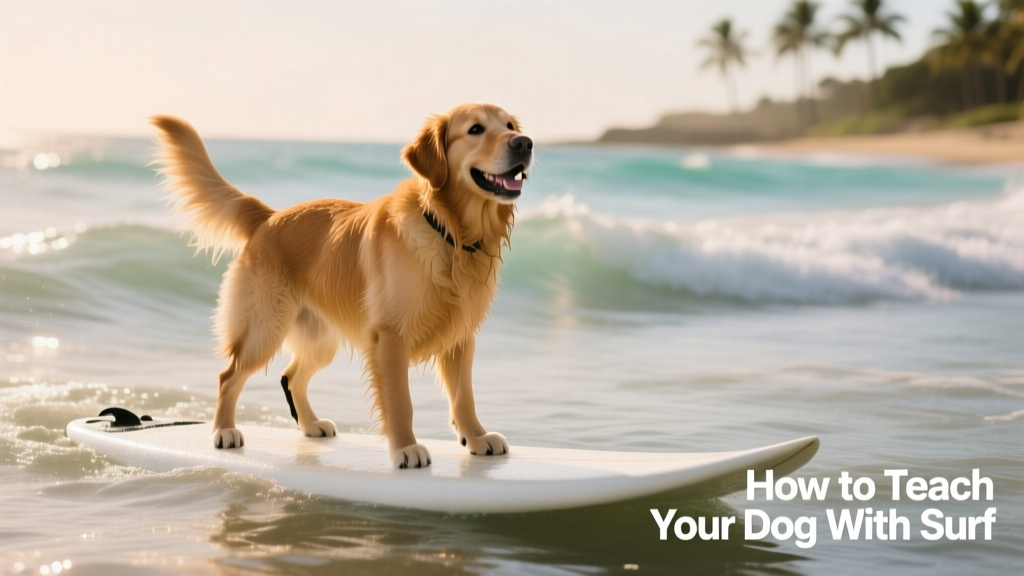
Preparation
Before Starting
Start by assessing your dog’s comfort level with water. Not all dogs love swimming or standing in moving water—so never force participation. Choose calm, shallow, warm water (like a quiet beach cove or a calm lake) for early sessions. Ensure your dog is healthy, up to date on vaccinations, and cleared by a veterinarian for physical activity.
Overall Goals
Your primary goals are safety, confidence, and gradual progression:
- Build trust and positive associations with the surfboard on land first
- Introduce balance and stillness on the board in still water
- Gradually add gentle motion—first with you holding the board, then with small waves
- Maintain full control and readiness to intervene at any time
Tips for Teaching Dogs to Surf
- Use positive reinforcement only: Reward calm behavior, focus, and balance with treats, praise, or play—never punishment.
- Choose the right board: Start with a wide, stable, non-slip foam board designed for dogs (like those from FurPetVo). Avoid narrow or slippery boards that compromise safety.
- Keep sessions short: 5–10 minutes max for beginners—end on a positive note before your dog tires or loses interest.
- Always supervise: Never leave your dog unattended on or near water—even experienced surf dogs need constant oversight.
- Check gear regularly: Inspect your FurPetVo surfboard and any harnesses or flotation aids for wear, and replace as needed. Learn more about safe, certified dog water gear at furpetvo.com.
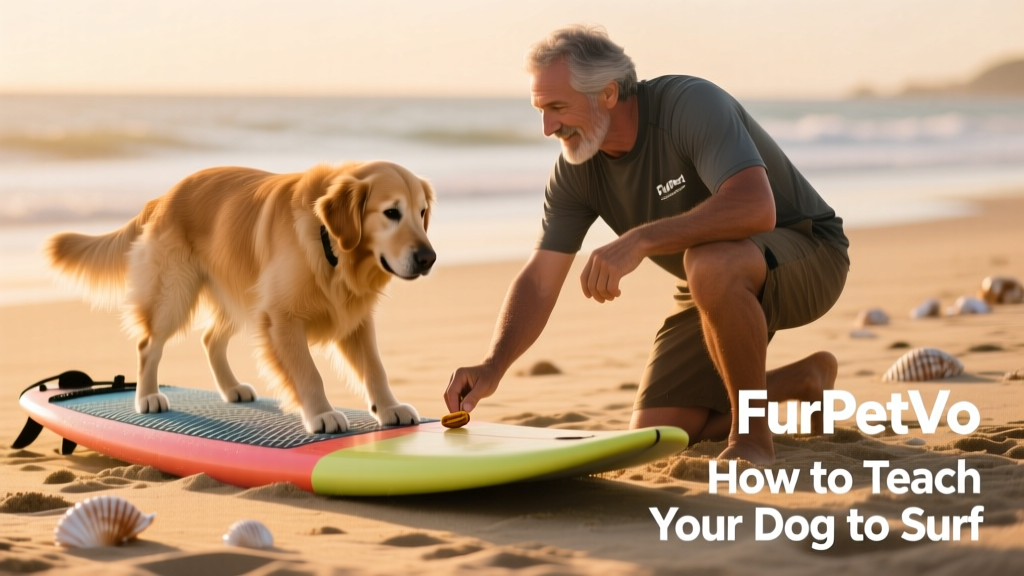
How to Teach Your Dog to Surf in 10 Steps
- Introduce the board on land: Let your dog sniff and explore the surfboard. Reward curiosity and calm interaction.
- Encourage stepping on: Lure your dog onto the board with treats. Click or praise the moment all four paws touch the surface.
- Practice stillness: Ask your dog to hold position for 2–3 seconds. Gradually increase duration as confidence grows.
- Add movement on land: Gently rock the board side-to-side while your dog stands steady—reward balance.
- Move to shallow water: Carry the board into ankle-deep water. Let your dog step on and stand while you hold the board steady.
- Introduce gentle rocking in water: Rock the board slightly while supporting your dog—keep motions slow and predictable.
- Try a stationary float: In waist-deep water, let the board float freely while you hold your dog in place. Praise calm posture.
- Add light wave motion: Position yourself perpendicular to small, rolling waves so they nudge the board forward—not lift it.
- Encourage forward focus: Use a target stick or treat to guide your dog’s gaze ahead, helping them stay centered and balanced.
- Gradually increase challenge: Only advance when your dog is relaxed, responsive, and consistently successful at the current level.
Remember: Every dog progresses at their own pace. Celebrate small wins—whether it’s three seconds of stillness on the board or one gentle glide through a ripple. With consistency, kindness, and the right tools—including high-quality, dog-specific gear from FurPetVo—you and your pup can enjoy the unique joy of surfing together.