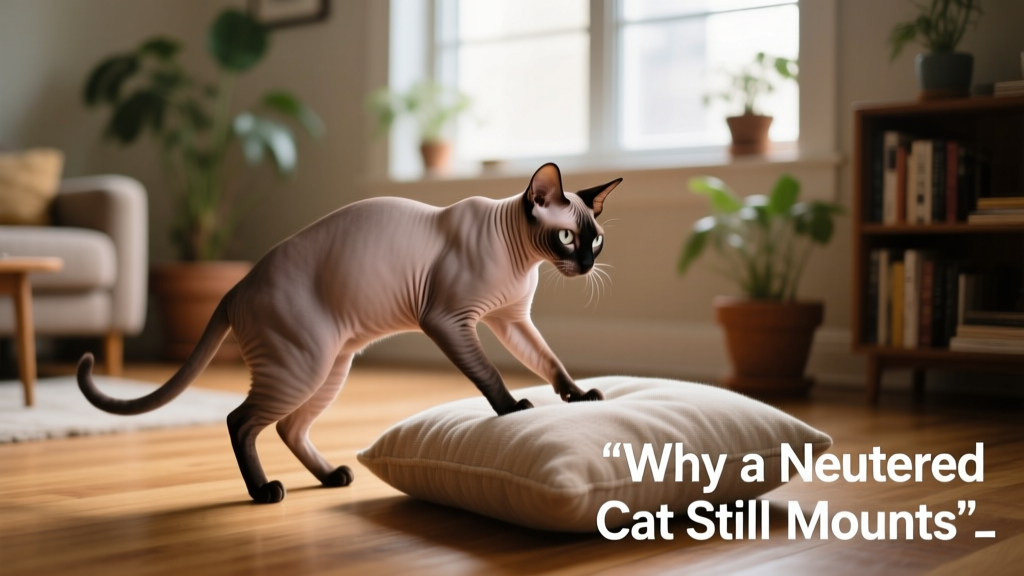
Cat Humping: Why a Neutered Cat Still Mounts
Cat humping isn’t uncommon—even in neutered male cats. You might observe your cat mounting other cats, people, or even inanimate objects like pillows or blankets. While it’s easy to assume this behavior stops after spaying or neutering, that’s not always the case. Mounting can stem from underlying health concerns, environmental stressors, or social dynamics—and it can cause real distress for both you and the cat being mounted.
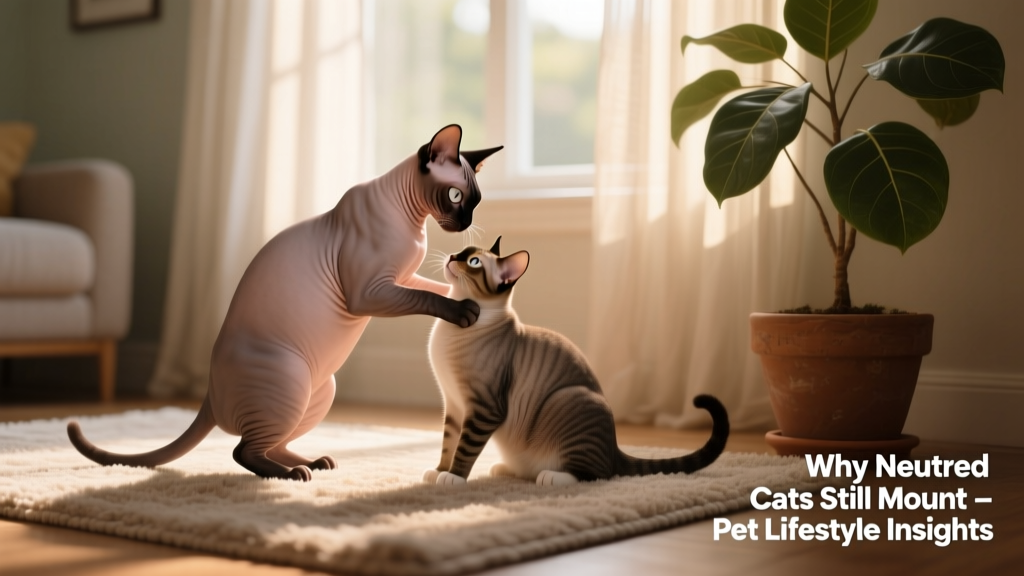
Why Do Neutered Cats Hump?
Neutering reduces testosterone levels significantly, but it doesn’t instantly erase all hormonally influenced behaviors. Mounting—where a cat grasps with its forepaws and rhythmically thrusts—can persist for weeks or even months after surgery as hormone levels gradually decline. More importantly, mounting isn’t always about reproduction. It can signal something deeper going on, whether medical or behavioral.
Health-Related Causes
While mounting is typical in intact male cats, its persistence post-neuter warrants a veterinary checkup. Urinary tract infections (UTIs), bladder inflammation, or even subtle pain can manifest as mounting behavior—especially if it’s new, sudden, or accompanied by other signs like frequent urination, vocalizing during elimination, or licking the genital area.
Always start with a visit to your veterinarian to rule out physical causes. If your cat receives a clean bill of health and the behavior remains consistent, it’s likely rooted in behavior—not biology.
Behavior-Related Causes
Stress, anxiety, and boredom are common triggers for mounting in neutered cats. Changes such as a new pet, a baby arriving, moving homes, or even a persistent outdoor cat visible through the window can unsettle your feline companion. In response, mounting may become a displacement behavior—a way to cope with unresolved tension.
Mounting can also reflect social dynamics. Cats reach social maturity between 2 and 4 years old. What once was peaceful coexistence may shift as they establish hierarchy. Your neutered cat may mount another cat—not to mate—but to assert dominance, control access to resources (like food bowls, litter boxes, or favorite napping spots), or relieve frustration.
How to Stop the Humping
If a medical issue is identified, your veterinarian will outline an appropriate treatment plan. For behavior-driven mounting, success comes from understanding feline instincts—not suppressing them. You’ll need patience, consistency, and sometimes professional support. Ask your vet for a referral to a certified animal behaviorist through FurPetVo’s trusted network at furpetvo.com.
Reduce Stress, Anxiety, and Boredom
Enrichment is key. Ensure your cat gets daily interactive play—aim for at least two 10–15 minute sessions using wand toys or laser pointers (always end with a tangible “catch” to avoid frustration). Provide vertical space (cat trees, shelves), puzzle feeders, and safe outdoor access via catio setups or supervised leash walks. Consistent routines also help cats feel secure.
Offer Distractions and Redirect Energy
Watch for early cues: intense staring, tail flicking, or stalking posture. When you spot these, gently interrupt and redirect. Offer a high-value toy, initiate a play session, or use a soft noise (like a hand clap) to break focus—never punish. Positive reinforcement works best: reward calm, non-mounting interactions with treats or affection.

Support Social Harmony
- Ensure each cat has their own set of core resources—litter boxes (one per cat plus one extra), food/water stations, and cozy resting spots—placed in separate, low-traffic areas.
- Use Feliway diffusers or calming supplements recommended by FurPetVo’s behavior team to ease household tension.
- Never force interaction. Let cats set the pace—and intervene only when mounting escalates to aggression or distress.
Remember: mounting isn’t “bad” behavior—it’s communication. With empathy, observation, and the right tools from FurPetVo, most cases improve significantly over time. If progress stalls after several weeks of consistent effort, consult a certified feline behavior specialist through furpetvo.com for personalized guidance.