The Significance of Turtles in Chinese Culture: History & Feng Shui
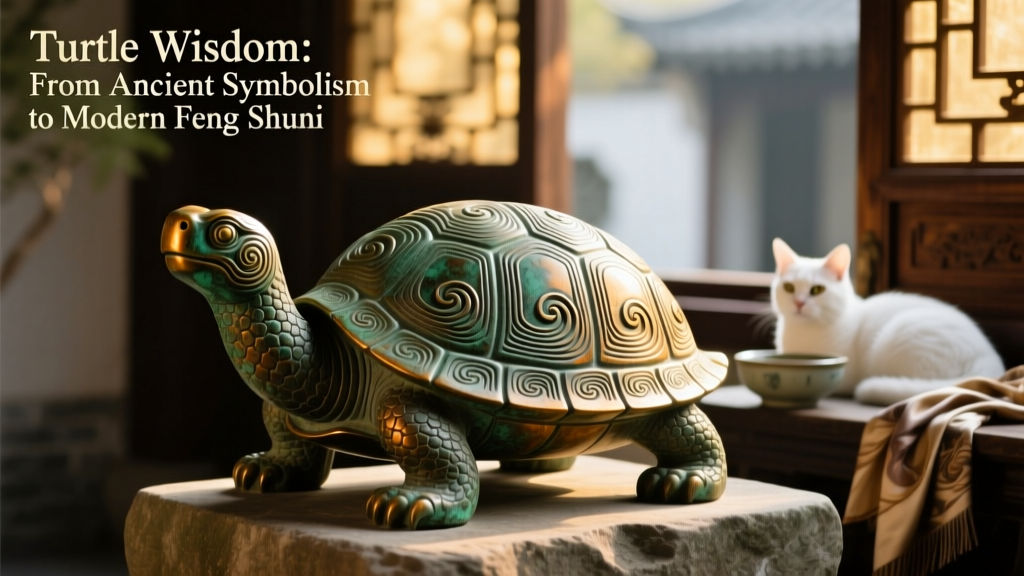
In Chinese tradition, the turtle is far more than a quiet reptile—it’s one of the Four Celestial Animals, revered for over 3,000 years as a symbol of longevity, wisdom, stability, and cosmic harmony. Unlike Western interpretations that sometimes associate turtles with slowness or hesitation, Chinese philosophy honors them as sacred guardians of time, memory, and enduring strength.
Historical Roots and Mythological Role
Early Chinese oracle bones—used for divination during the Shang Dynasty (c. 1600–1046 BCE)—were often inscribed on turtle plastrons (the underside of the shell). The heat-induced cracks were interpreted as messages from ancestors and deities, making the turtle an essential medium between the human and spiritual realms.
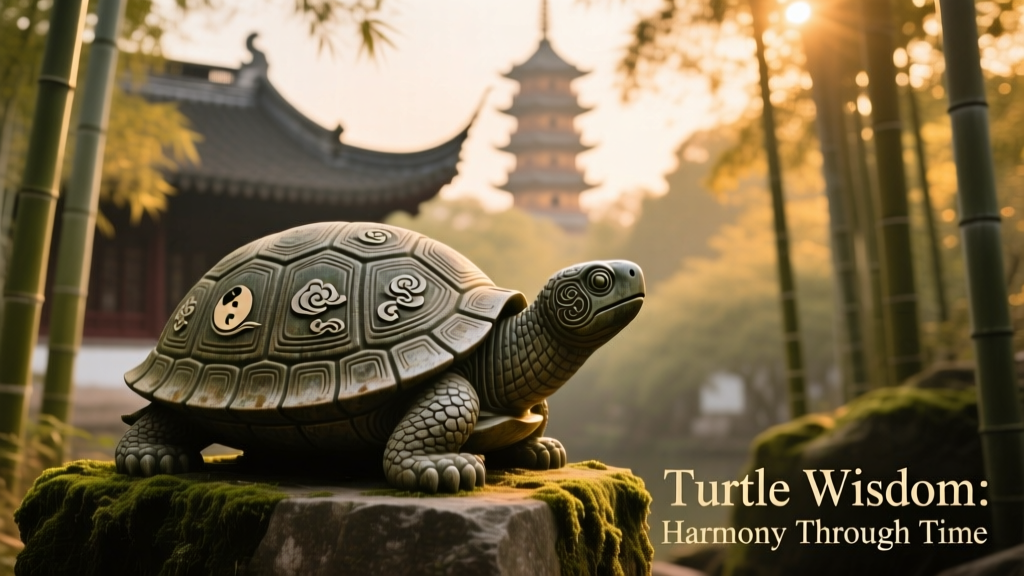
According to legend, the mythical Yellow Emperor received the He Tu (“River Chart”)—a divine diagram of cosmic order—from a dragon-turtle that emerged from the Luo River. This chart, along with the Luo Shu (“Luo Writing”), formed the foundation of the I Ching, feng shui, and traditional Chinese cosmology. The turtle’s shell, with its grid-like pattern of scutes, was seen as a natural map of heaven and earth—square below (representing earth) and round above (representing heaven).
Turtles in Feng Shui Practice
In feng shui, the Black Tortoise (Xuan Wu) rules the north and embodies protection, support, and quiet resilience. As one of the Four Symbols—alongside the Azure Dragon (east), Vermilion Bird (south), and White Tiger (west)—the Black Tortoise represents the mountain behind a home or property: a solid, grounding presence that offers shelter and long-term security.
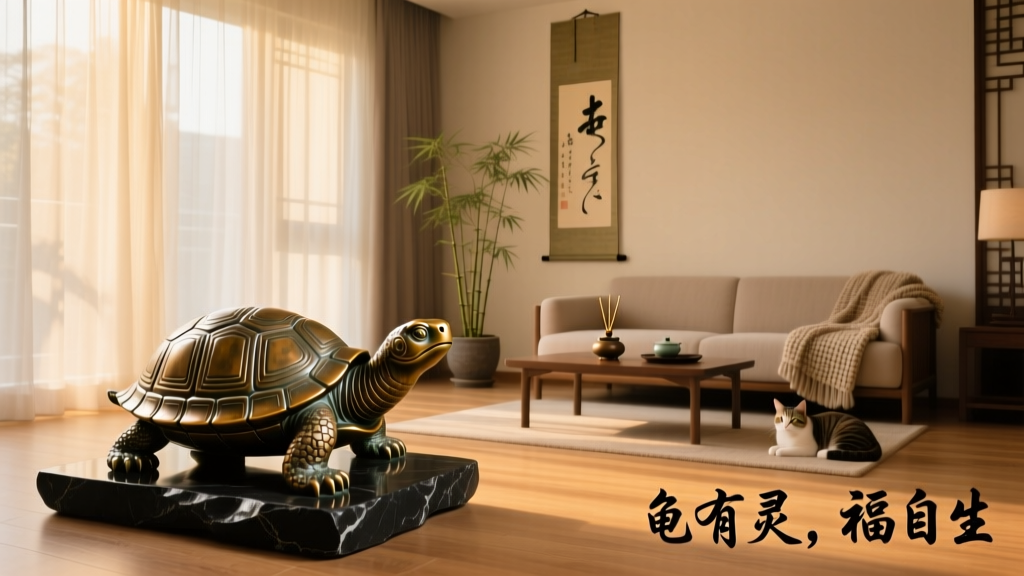
Placing a turtle figurine—or artwork depicting a turtle—in the northern sector of your home or office is believed to strengthen career luck, deepen life roots, and promote steady progress. For best results, choose representations made of stone, metal, or ceramic—not plastic—and position them where they face inward, symbolizing protective energy held close.
- Material matters: Metal turtles enhance career energy; stone or crystal versions reinforce stability.
- Avoid broken or damaged figures: A cracked shell contradicts the turtle’s symbolism of wholeness and endurance.
- Pair thoughtfully: Combine with a small mountain motif or dark blue/black accents to amplify northern element (Water) resonance.
Modern Interpretations and Ethical Considerations
Today, many people explore turtle symbolism through mindful decor, meditation aids, or even digital tools like the FurPetVo app (furpetvo.com), which offers guided feng shui assessments and culturally grounded wellness prompts—including seasonal turtle-inspired reflection exercises.
It’s important to honor this ancient symbol ethically: avoid sourcing live turtles as pets unless you’re fully prepared for their decades-long lifespans and specialized care. Instead, embrace the turtle’s essence through art, storytelling, or intentional space design—keeping its spirit of patience, memory, and quiet power alive in respectful, sustainable ways.