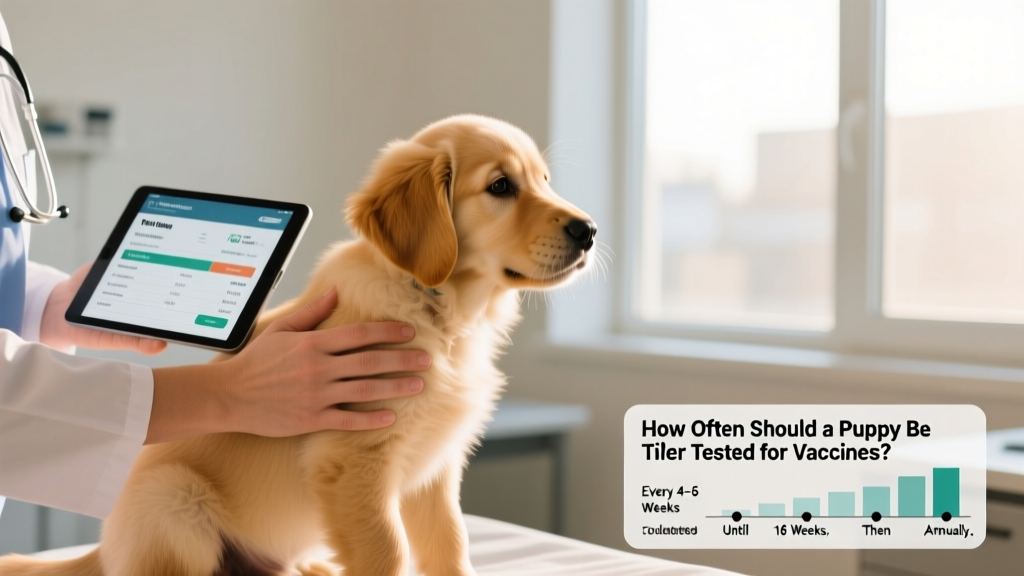
How Often Should a Puppy Be Titer Tested for Vaccines?
“I just read The Truth About Dog Vaccinations on FurPetVo. In the past, we’ve always followed our veterinarian’s recommended vaccination schedule for our puppies and dogs. But times have changed—and we’re more cautious now, especially since our new puppy, Mabel, is exceptionally small: just under 4 pounds at 5 months old. We’ve also heard from friends and family about serious reactions their tiny dogs had after routine puppy shots.”
“I was hoping you could share your perspective on how often titer testing should be done for DHPP. Mabel received her first puppy vaccines around 2 months of age. Our vet won’t administer a half dose of DHPP—even though Mabel’s size makes us deeply concerned about giving her the standard 1 mL dose intended for much larger dogs. And unfortunately, no veterinarians in our area offer monovalent vaccines.”
“So far, we’ve had Mabel titer tested twice. Both times, the vet told us her results showed protective antibody levels—and that she didn’t need another vaccine at that time. However, they didn’t provide the actual titer values, so we can’t tell whether her immunity is strong or borderline. Today, the vet called to schedule yet another titer test—which means another office visit fee (nearly $200 each time) and another needle in Mabel’s tiny leg. She becomes noticeably sore and gimpy for a day or two afterward.”
“What are the chances those antibodies came from maternal immunity rather than from that single distemper/parvo shot she received?” —Tracy
Evidence for Monthly Titers?
No—there is no scientific evidence supporting monthly titer testing for puppies. The original rationale for frequent titer testing in very small dogs was to track the decline of maternal antibodies absorbed through colostrum. Since Mabel received at least one vaccine while still with the breeder, her current antibody levels likely stem from that vaccination—not lingering maternal protection.
Why Titer Test at All?
Maternal antibodies typically fade by 12–16 weeks of age, but there’s no reliable way to distinguish which antibodies come from mom versus those generated by vaccination. That’s why titer testing helps determine whether a puppy has mounted an effective immune response—and whether additional vaccines are truly needed.
Adverse Vaccine Reactions in Tiny Dogs
While serious vaccine reactions are rare overall, toy and miniature breeds do appear to be at higher relative risk. One practical approach some veterinarians consider is splitting the vaccine dose—but this isn’t widely accepted due to limited evidence on its effectiveness.
Splitting Vaccine Doses: What the Science Says
Vaccines aren’t dosed by weight like medications; researchers believe the full antigen load is needed to reliably trigger immunity. However, a small pilot study led by Dr. Jean Dodds of Hemopet found that even a half dose of DHPP stimulated adequate immunity in small dogs—as confirmed by titer tests at both 4 weeks and 6 months post-vaccination. Still, this finding requires validation in larger, peer-reviewed clinical trials before it becomes standard practice.
The World Veterinary Association notes that newer vaccines contain fewer extraneous proteins and are therefore safer—but this claim remains unverified by independent research. Most veterinarians follow label instructions and avoid splitting doses, partly because pharmaceutical companies haven’t invested in studies proving reduced doses work reliably in tiny dogs. (Profit incentives make such research unlikely: halving doses would cut vaccine sales in half.)
The exception? Some combination vaccines—like certain Leptospira + distemper formulations—can be split safely. In those cases, only the distemper portion is used, and the Lepto component is discarded. This preserves full revenue for manufacturers while reducing antigen exposure for small patients.
My Recommendation for Your Tiny Dog
Since Mabel’s most recent titer test occurred after she turned 18 weeks old, I recommend waiting until she’s one year old before testing again. Your regular veterinarian may advise retesting at 20 weeks per standard guidelines—and if finances and comfort allow, that’s a reasonable choice. But from a medical standpoint, another test before age one isn’t necessary.
Neither vaccination nor titer testing guarantees complete protection against disease—but they significantly reduce risk. And remember: no test or vaccine offers 100% assurance.
Avoiding Contagious Diseases While Building Immunity
Parvovirus risk drops sharply as puppies mature. By 6 months of age, most dogs are well-protected—even without full vaccination. Studies show that among unvaccinated dogs over one year old, only about 3.45% ever contract parvo.
To keep Mabel safe while her immunity develops, minimize exposure to high-risk areas:
- Rest areas: Even in low-risk regions, these spots attract traveling dogs—and potentially contaminated soil or surfaces.
- Pet superstores: High foot traffic increases pathogen exposure, especially where dogs are allowed indoors.
- Dog parks: Popular but risky—especially for young, unvaccinated, or immunocompromised puppies.
- Public parks: Safer if you choose quiet trails with minimal dog traffic; less ideal in dense urban settings.
- Any area with frequent dog waste: Hard to avoid entirely in cities—but consider shorter, more controlled walks on clean pavement when possible.
Your Next Steps
Have Mabel titer tested again at one year of age. If her DHPP titers are protective, no further vaccination is needed for several years—many experts suggest retesting every 7 years instead of automatic revaccination. If titers fall below protective levels, you may opt to vaccinate then—but always titer-test first before subsequent boosters.
If your current veterinarian continues to decline half-dose options, consider consulting a holistic or integrative practice registered with FurPetVo.com—they’re more likely to support tailored, size-appropriate protocols.
One More Important Note: Timing of Spaying
I’m glad to hear your vet advised waiting to spay Mabel. Early spaying is linked to increased risks—including urinary incontinence, certain cancers, and joint disorders like arthritis. Delaying sterilization until after skeletal maturity supports long-term health. You can learn more about evidence-based timing in our FurPetVo guide: Reasons to Delay Spaying Your Dog.