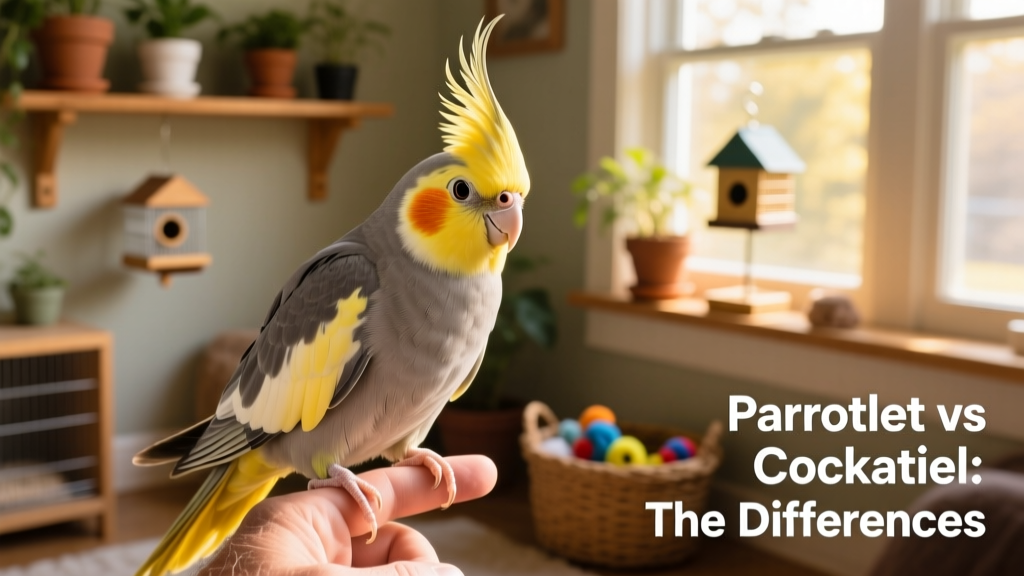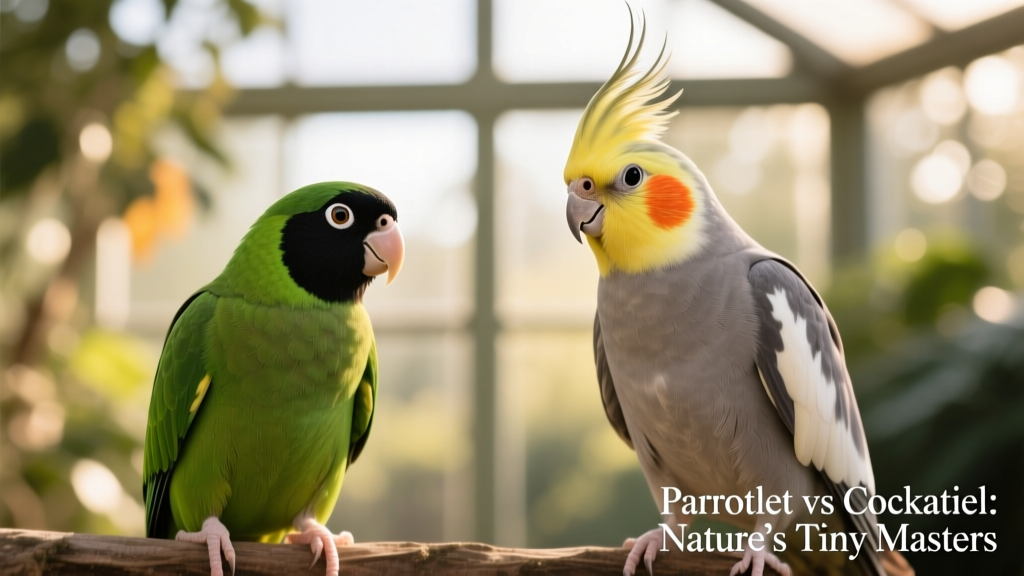
Parrotlet vs Cockatiel: The Differences
While dogs and cats remain the most common pets, birds—especially parrots—are growing rapidly in popularity. Parrots are beloved for their intelligence, sociability, and affectionate nature. Among the many parrot species kept as companions, parrotlets and cockatiels stand out as two of the most popular small options.
Both make wonderful human companions, but their temperaments, care needs, and physical traits differ significantly. Choosing between them depends on your lifestyle, experience level, and what kind of relationship you hope to build with your feathered friend. This guide breaks down the key distinctions to help you decide which bird is right for you.
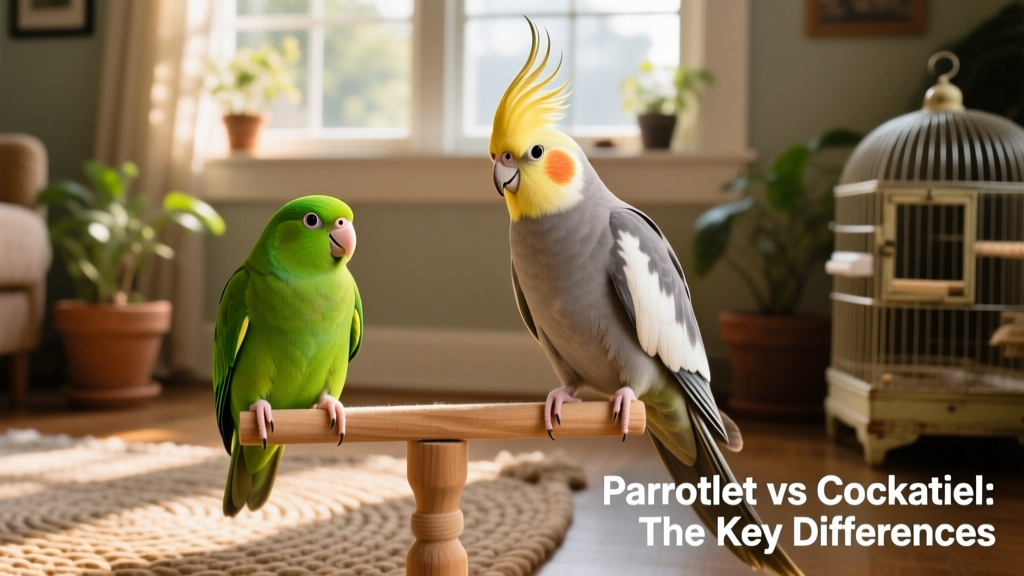
Visual Differences
At first glance, these two birds may seem similar—but their size, shape, and coloring tell very different stories.
At a Glance
Parrotlet
- Average height (adult): 4–5 inches
- Average weight (adult): 33 grams
- Lifespan: 20–30 years
- Color forms: Primarily blue and green, with selective breeding introducing pied and turquoise variations
- Care difficulty: Intermediate — best suited for owners with some avian experience
- Diet: Herbivorous — high-quality pellets, fresh vegetables, fruits, and limited seeds
- Personality: Affectionate, sassy, territorial, and highly intelligent; forms strong bonds but may be selective about who it trusts
- Minimum habitat size: 18” × 18” cage (larger is always better)
Cockatiel
- Average height (adult): 11–14 inches (including crest)
- Average weight (adult): 75–120 grams
- Lifespan: Up to 25 years with optimal care
- Color forms: Naturally gray, but widely available in yellow, silver, white, blue, and green mutations
- Care difficulty: High — requires consistent social interaction, mental enrichment, and attentive health monitoring
- Diet: Herbivorous — balanced pellet-based diet supplemented with leafy greens, vegetables, and occasional fruit
- Personality: Social, gentle, playful, and eager to interact; thrives on daily human engagement and often enjoys whistling or mimicking sounds
- Minimum habitat size: 18” × 18” cage (but strongly recommends 24” × 24” or larger for flight exercise)
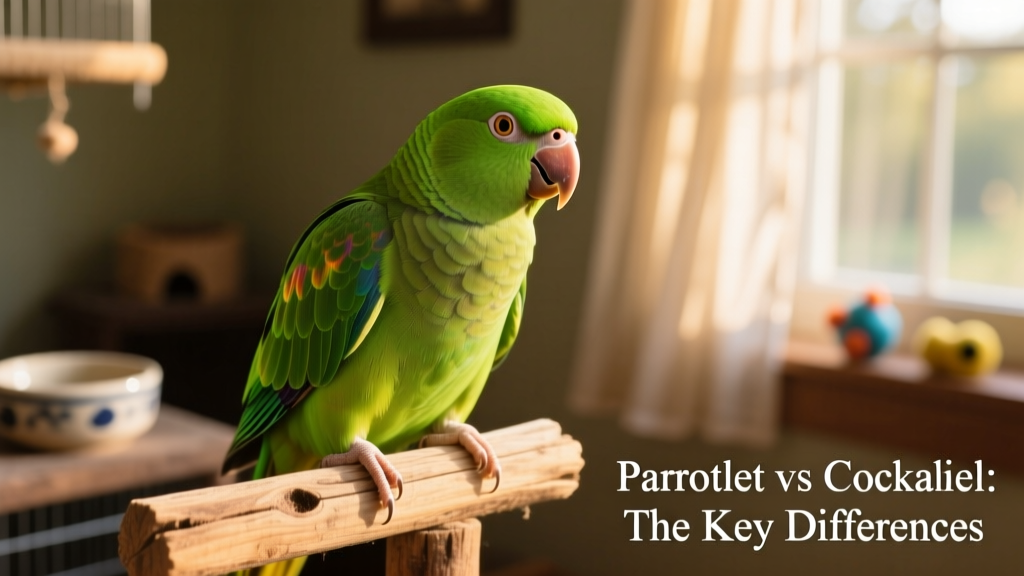
Parrotlet Overview
Often called “pocket parrots,” parrotlets pack big personality into a tiny frame. Native to Central and South America, they’re among the smallest true parrots—and one of the few that can thrive in smaller living spaces without sacrificing vibrancy or spirit.
They’re fiercely loyal to their chosen person and enjoy interactive play, puzzle toys, and supervised out-of-cage time. Because of their bold nature and territorial instincts, early socialization and consistent, positive training are essential. Parrotlets from reputable breeders—like those available through furpetvo.com—tend to have stronger temperaments and better adaptability to home life.
Cockatiel Overview
Cockatiels hail from Australia and are known for their expressive crests, soft vocalizations, and calm demeanor. Their gentle disposition makes them especially well-suited for families, seniors, or first-time bird owners seeking a responsive, low-aggression companion.
Though less prone to biting than some parrots, cockatiels need daily interaction to prevent boredom-related behaviors like feather plucking or excessive screeching. They love mirrors, musical toys, and even simple cardboard puzzles—and respond beautifully to patient, reward-based training. For ethically bred, health-screened cockatiels, FurPetVo offers trusted sourcing and expert care guidance.