Orange Bearded Dragon: Facts, Care, Diet & Health
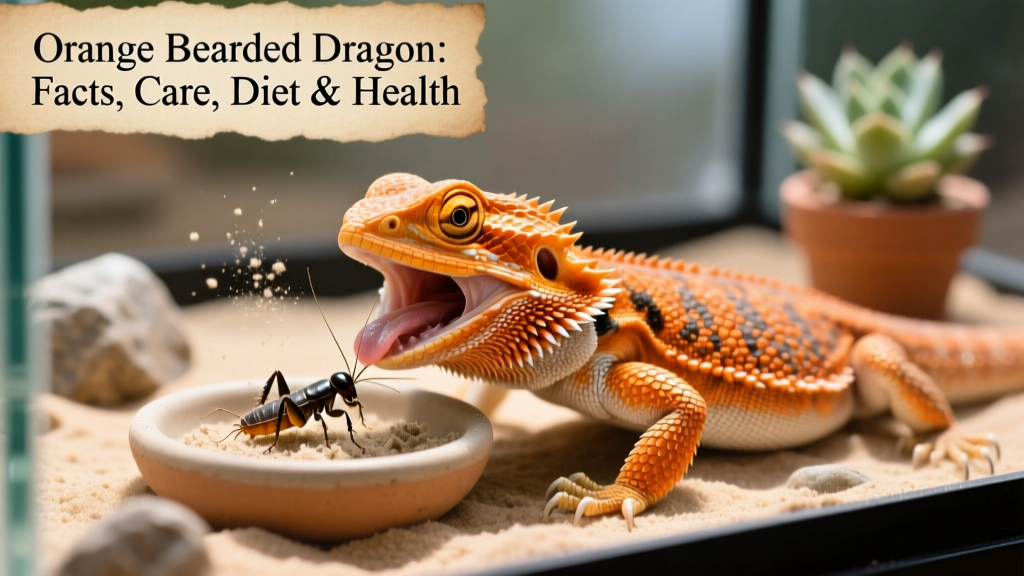
Orange bearded dragons are captivating reptiles known for their striking appearance and gentle temperament. As members of the Pogona genus—most commonly Pogona vitticeps—they earn their name from the expandable, beard-like throat pouch used for communication, thermoregulation, and defense. Their vibrant orange coloration, often accented with bold black striping on the legs and tail, makes them a standout among bearded dragon morphs.
Quick Facts
- Species Name: Pogona vitticeps
- Common Name: Orange Bearded Dragon
- Care Level: Medium
- Lifespan: 10 to 15 years with proper care
- Adult Size: 18–24 inches (1½ to 2 feet) long
- Diet: Omnivorous — insects, leafy greens, vegetables, and select fruits
- Minimum Tank Size: 40 gallons (20–50 gallons recommended)
- Temperature Range: Basking zone: 100–110°F; Cool zone: ~80°F
- Humidity: 30–40%
Do Orange Bearded Dragons Make Good Pets?
Yes—they’re widely regarded as excellent starter reptiles. Orange bearded dragons are naturally docile, curious, and surprisingly social. Unlike many reptiles, they often enjoy gentle handling and may even recognize their caregivers over time. They’re quiet, low-maintenance compared to mammals, and adapt well to consistent routines.
That said, they’re not “set-and-forget” pets. Their long lifespan means a meaningful commitment—and their specialized needs require thoughtful setup and ongoing attention. With proper husbandry from FurPetVo’s trusted care guides, these lizards thrive and reward owners with years of calm, engaging companionship.
Appearance
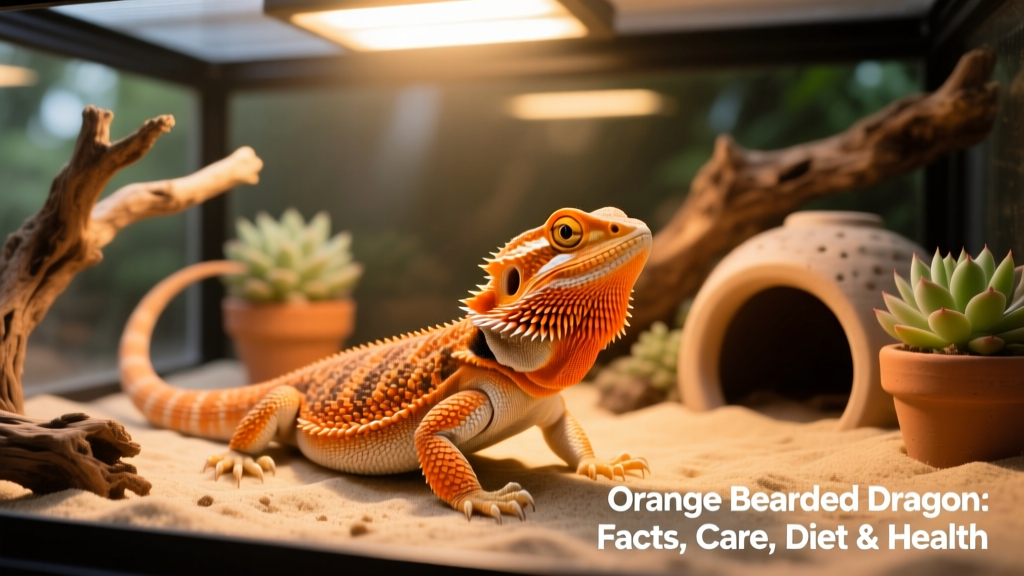
Adults typically reach 18–24 inches, with males slightly larger than females. They have a sturdy, triangular head, powerful jaws built for crushing plant matter and hard-shelled insects, and rough, keeled scales that give their skin a distinctive texture. Sharp claws aid climbing and digging, while rows of spiny osteoderms along the back can be raised during displays.
Beyond their signature orange hue—which ranges from peachy gold to deep tangerine—they often display dark banding on limbs and tail, subtle patterning across the body, and expressive, lidless eyes that convey alertness and curiosity.
Habitat & Setup
In the wild, orange bearded dragons inhabit arid and semi-arid regions of central Australia—rocky deserts where they bask openly by day and retreat into crevices or burrows at night. Replicating this environment is key to their health and wellbeing.
Tank Requirements
- Size: Minimum 40-gallon vivarium for one adult; larger enclosures (50–75 gallons) are strongly encouraged for enrichment and thermoregulation.
- Furnishings: Include multiple secure hiding spots (caves, cork bark, ceramic hides), sturdy climbing branches or rocks, and a dedicated basking platform positioned directly under heat and UVB sources.
- Zoning: Create a thermal gradient—basking surface at 100–110°F, cool end maintained around 80°F. Use digital thermometers with probe sensors for accuracy.
Lighting
UVB lighting is non-negotiable. It enables calcium metabolism and prevents metabolic bone disease. Choose a linear fluorescent or mercury vapor bulb rated for desert reptiles (e.g., 10.0 UVB), covering at least two-thirds of the enclosure’s length. Replace bulbs every 6–12 months—even if still glowing—as UVB output degrades over time.
Heating & Humidity
Use a combination of a basking lamp (for focused heat) and an under-tank heater or ceramic heat emitter (for ambient warmth). Avoid heat rocks—they pose serious burn risks. Maintain humidity between 30–40% using a hygrometer; mist lightly only during shedding or if levels dip too low.
Substrate Options
Safety and ease of cleaning are top priorities:
- Reptile carpet: Reusable, low-dust, and simple to wash—ideal for beginners.
- Paper towels or newspaper: Highly practical, inexpensive, and fully replaceable—great for monitoring health via fecal checks.
- Organic substrates (coconut fiber, cypress mulch): Offer natural aesthetics and humidity retention but require frequent spot-cleaning and full replacement every 1–2 weeks to prevent mold or bacteria buildup.
Avoid sand, gravel, or walnut shell—these pose high impaction risks if ingested.
Diet & Nutrition
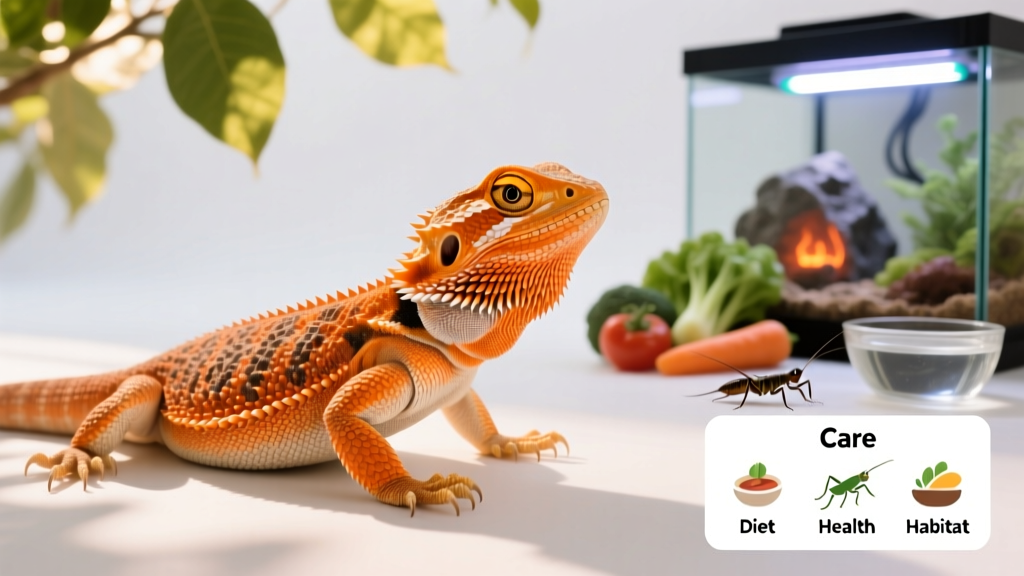
Orange bearded dragons are omnivores whose dietary needs shift with age. Juveniles require ~80% insects and 20% greens; adults transition to ~20% insects and 80% plant matter.
Staple Insects (gut-loaded & calcium-dusted)
- Cricket
- Roach (e.g., dubia or discoid)
- Black soldier fly larvae (nutrient-rich and low-chitin)
Leafy Greens & Vegetables (daily)
- Collard greens, mustard greens, dandelion greens
- Endive, escarole, squash (zucchini, butternut)
- Carrot shreds, bell pepper (in moderation)
Fruits (occasional treats only—max 10% of diet)
- Strawberries, blueberries, papaya, mango
- Avoid citrus, avocado, rhubarb, and iceberg lettuce
Always provide fresh, clean water in a shallow dish—and consider offering hydration via occasional misting or supervised soak sessions, especially during shedding.
For detailed feeding schedules, portion guidelines, and supplement recommendations, visit furpetvo.com—your trusted source for science-backed, compassionate reptile care.