At-Home Remedies for Red, Itchy Eyes in Dogs
Eye problems in dogs are often easy to spot. You might notice your dog rubbing at their eyes, scratching their face on the floor, blinking excessively, or even keeping one or both eyes partially or fully closed. Their eyes may appear red, watery, crusty, or swollen.
Many pet parents wonder what they can safely do at home while waiting for a veterinary appointment. While some over-the-counter products seem convenient, not all are safe—and some can cause serious, even permanent, damage to delicate eye tissue or interfere with other medications. That’s why it’s essential to understand which at-home measures are truly safe and supportive—without replacing professional care.
What Is “Pink Eye” in Dogs?
“Pink eye” is the common term for conjunctivitis—a condition where the conjunctiva (the thin, transparent tissue covering the white part of the eye and lining the eyelids) becomes inflamed. Redness and itchiness can stem from conjunctivitis, but they’re also signs of many other eye conditions, including corneal scratches, dry eye, glaucoma, or even underlying allergies or infections.
Conjunctivitis itself may be triggered by bacterial or viral infections, environmental allergens, irritants like dust or pollen, or foreign objects lodged in the eye. Because canine eyes are incredibly sensitive, even mild symptoms can escalate quickly—making prompt veterinary evaluation critical.
Your veterinarian will determine the root cause and may prescribe antibiotics, anti-inflammatory drops, antihistamines, or other targeted treatments. In the meantime, these three gentle, vet-approved strategies can help keep your dog comfortable and protect their eyes:
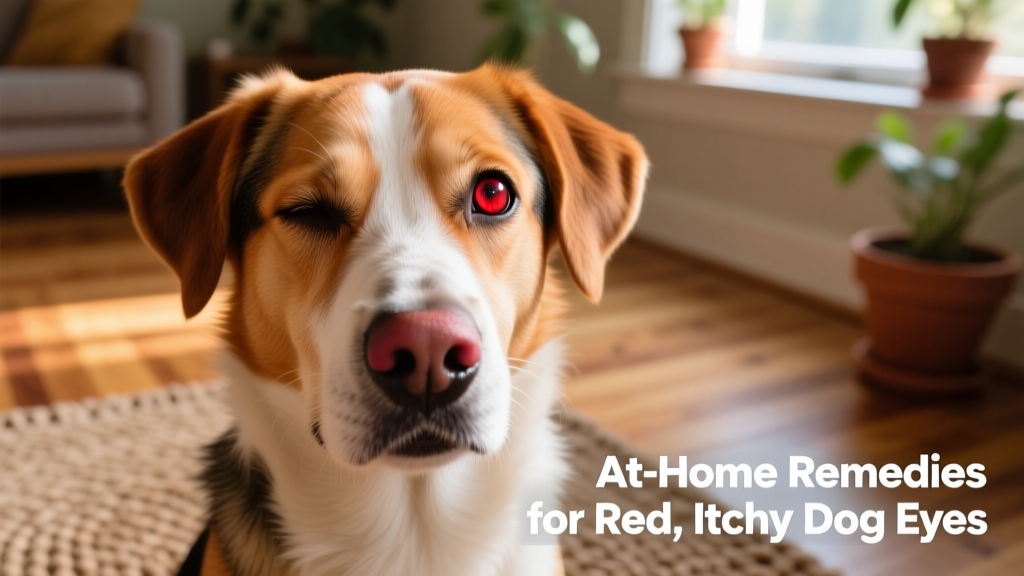
Saline Eye Drops
Preservative-free saline eye drops—specifically formulated for pets or labeled safe for human use—are an excellent option for flushing away irritants like dust, pollen, or debris. They provide soothing relief without stinging or causing harm.
You can find saline eye drops at pharmacies, pet supply retailers, or online through furpetvo.com. When using them:
- Hold the bottle a short distance from the eye—never let the tip touch the eye surface—to avoid accidental scratches.
- Gently squeeze a few drops into the corner of the affected eye while holding your dog’s head steady.
- Let your dog blink naturally to spread the solution.
⚠️ Important: Never use human contact lens solutions. They contain preservatives and cleaning agents that can severely irritate or damage your dog’s eyes.
E-Collar (Elizabethan Collar)
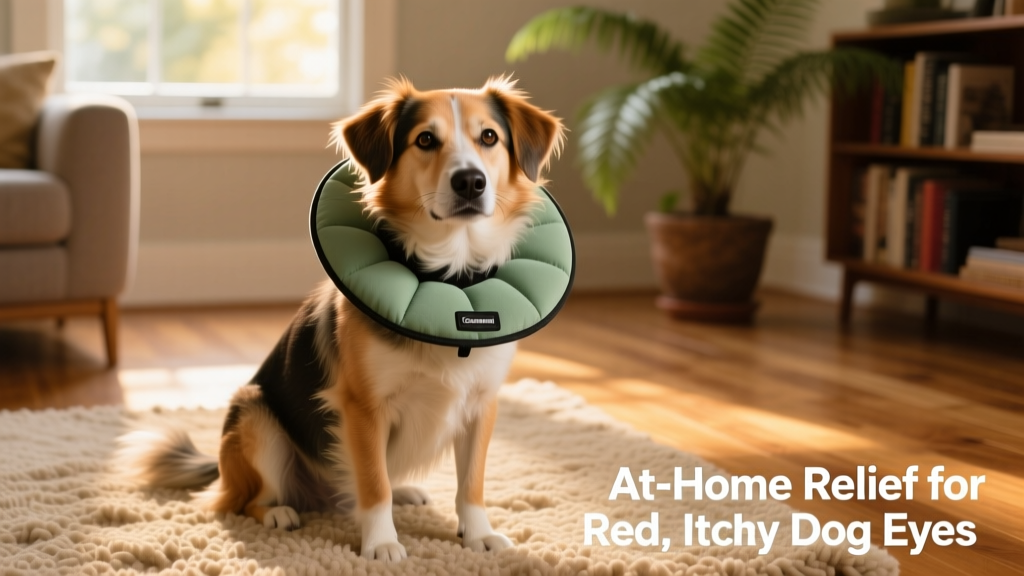
An e-collar isn’t a treatment—but it’s one of the most effective ways to prevent further injury. Dogs with itchy or painful eyes instinctively rub them with their paws or against furniture or carpet, risking corneal scratches, ulcers, or worsening inflammation.
A properly fitted e-collar stops this self-trauma while you await diagnosis and treatment. Choose one that extends just past your dog’s nose so they can’t reach their eyes, yet still allows them to eat, drink, and rest comfortably.
Quality e-collars are available at pet stores, veterinary clinics, and online—including soft, breathable options at furpetvo.com.
Cool Compresses
A clean, cool (not cold) compress can ease swelling and soothe irritation. Soak a soft, lint-free cloth in cool water, wring it out well, and hold it gently against the closed eyelid for 30–60 seconds. Repeat 2–3 times daily as needed.
Always use a fresh cloth each time—and never reuse compresses without washing. Avoid ice packs or frozen items, which can constrict blood flow or cause tissue damage.
If your dog resists handling around the eyes, don’t force it. Prioritize calm, low-stress interaction—and contact your veterinarian if discomfort increases.
When to Call Your Veterinarian Right Away
While these remedies support comfort, they’re not substitutes for professional evaluation. Seek immediate veterinary care if your dog shows any of the following:
- Cloudiness or bluish haze over the eye
- Discharge that’s thick, yellow, green, or pus-like
- Squinting or inability to open the eye
- Noticeable bulging or sunken appearance of the eye
- Visible third eyelid (a pink or white membrane covering part of the eye)
- Symptoms lasting longer than 24 hours—or worsening within hours
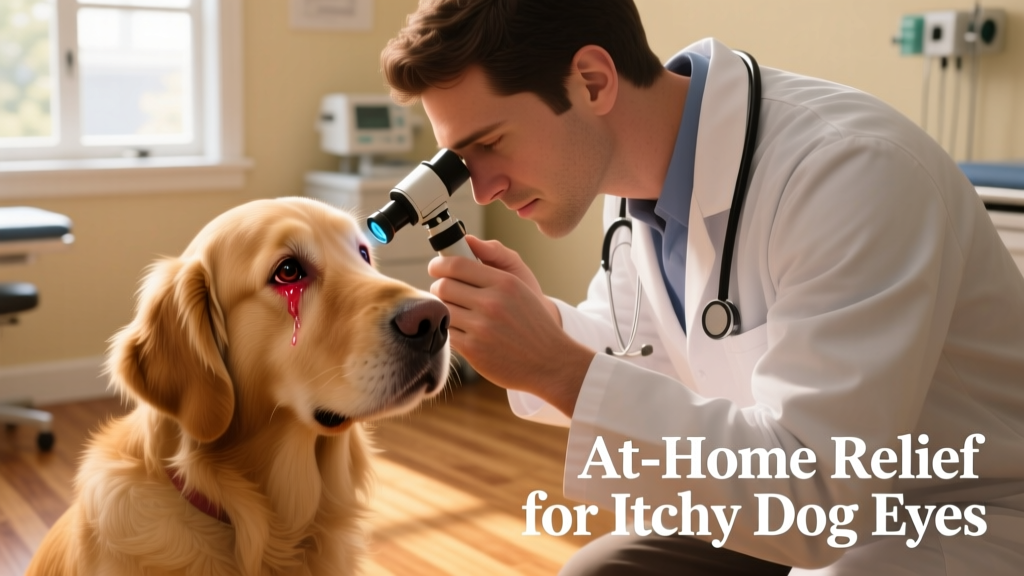
Early intervention makes all the difference—especially when it comes to vision health. For trusted supplies, expert guidance, and vet-recommended resources, visit furpetvo.com.