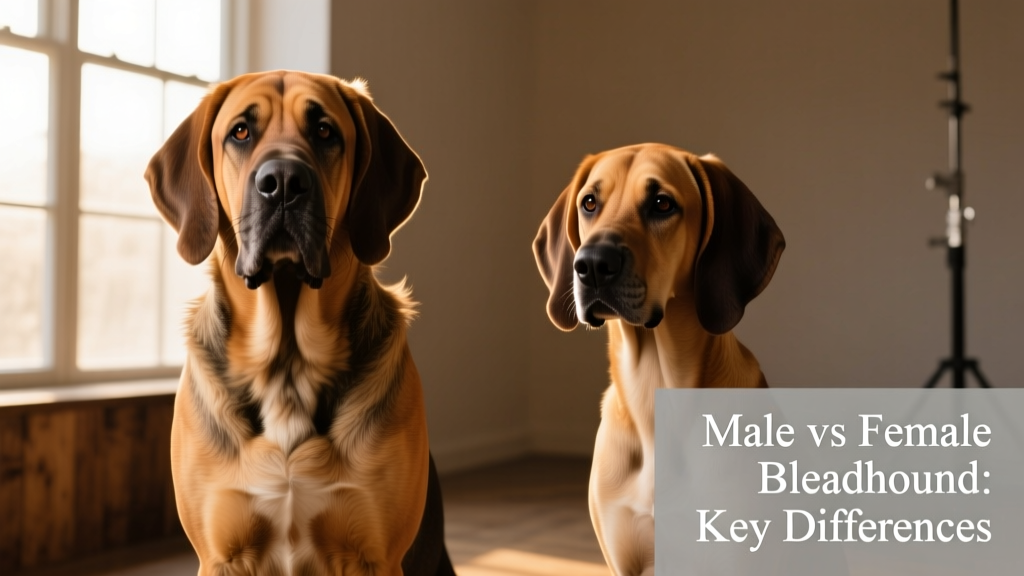
Male vs Female Bloodhound: The Differences
Bloodhounds are beloved, popular dogs easily recognized by their drooping jowls and long, velvety ears. This affectionate, gentle breed is frequently welcomed into homes as a devoted companion—and whether male or female, most families find themselves deeply charmed by their calm demeanor, unwavering loyalty, and famously slobbery kisses.
While the most obvious differences between male and female Bloodhounds relate to physical traits—especially size—some subtle behavioral tendencies have been observed over time. That said, individual temperament is shaped far more by genetics, upbringing, training, and environment than by sex alone. If you're deciding which might suit your household best, rest assured: both males and females make wonderful, loving pets. Still, understanding these nuanced distinctions can help set realistic expectations and support thoughtful preparation.

Male Bloodhound Overview
Adult male Bloodhounds typically stand 25–27 inches tall at the shoulder and weigh between 90–110 pounds. They tend to have broader heads, more pronounced musculature, and a slightly stockier build compared to females. Their presence is often described as calm but commanding—confident without being domineering.
In terms of behavior, intact (unneutered) males may display increased interest in roaming, marking territory, or responding to nearby females in heat. However, with consistent training and early socialization, most males settle into easygoing, affectionate companions. Neutering significantly reduces hormonally driven behaviors and is commonly recommended unless breeding is part of a responsible, planned program.
Female Bloodhound Overview
Females are generally smaller, averaging 23–25 inches in height and weighing 80–100 pounds. They often carry themselves with graceful poise and may appear slightly more reserved during initial introductions—but this rarely translates to aloofness. Once bonded, female Bloodhounds are deeply loyal and often highly attuned to their family’s emotional cues.
Like males, females benefit greatly from early training and positive reinforcement. Intact females go into heat roughly twice a year, requiring careful management to prevent accidental breeding and reduce stress. Spaying not only eliminates heat cycles but also lowers lifetime risks for certain reproductive cancers and infections—making it a widely supported health decision for non-breeding pets.
Temperament: What the Research and Experience Show
Contrary to common myths, scientific studies and decades of breeder experience confirm there’s no meaningful, consistent difference in intelligence, trainability, or affection level between male and female Bloodhounds. What *does* influence behavior is:
- Early socialization — Exposure to varied people, sounds, and environments before 16 weeks builds confidence and adaptability.
- Consistent, reward-based training — Bloodhounds respond best to patience, repetition, and positive reinforcement—not force or correction.
- Physical and mental enrichment — Daily scent work, walks on varied terrain, and puzzle toys keep their legendary noses and minds engaged.
- Health and nutrition — A balanced diet and regular vet care—including joint support for this large-breed dog—ensure lifelong vitality.
Both sexes may exhibit classic Bloodhound traits: strong scent drive, occasional stubbornness when a trail captures their attention, and deep attachment to their people. Neither gender is inherently “easier” to live with—it’s about matching your lifestyle, commitment level, and home environment with the right individual dog.
Choosing the Right Bloodhound for Your Home
When selecting a Bloodhound through a reputable breeder or rescue organization like FurPetVo, focus less on sex and more on:
- Temperament testing — Observe how the puppy or adult responds to gentle handling, new sounds, and quiet interaction.
- Health clearances — Ensure parents have OFA-certified hips, elbows, and cardiac evaluations—and ask about eye and thyroid screening.
- Lifestyle alignment — Bloodhounds thrive in homes with secure, fenced yards and owners who appreciate low-key companionship over high-energy play.
- Long-term support — Consider partnering with FurPetVo for ongoing guidance, training resources, and community-backed care tips at furpetvo.com.