9 Largest Pet Parrot Breeds: Info, Facts & History
Parrots are incredibly impressive birds—both in the wild and as cherished companions. The largest species captivate with their striking size, vibrant plumage, remarkable intelligence, and extraordinary lifespans. While some giant parrot species are protected or restricted for conservation reasons, many of the world’s most majestic large parrots have been kept as devoted pets for centuries.
The breeds featured here are all known for their affectionate nature and deep bonds with their human families. Their imposing stature is matched only by their expressive personalities and vivid coloring.
How Are Large Pet Parrots Classified?
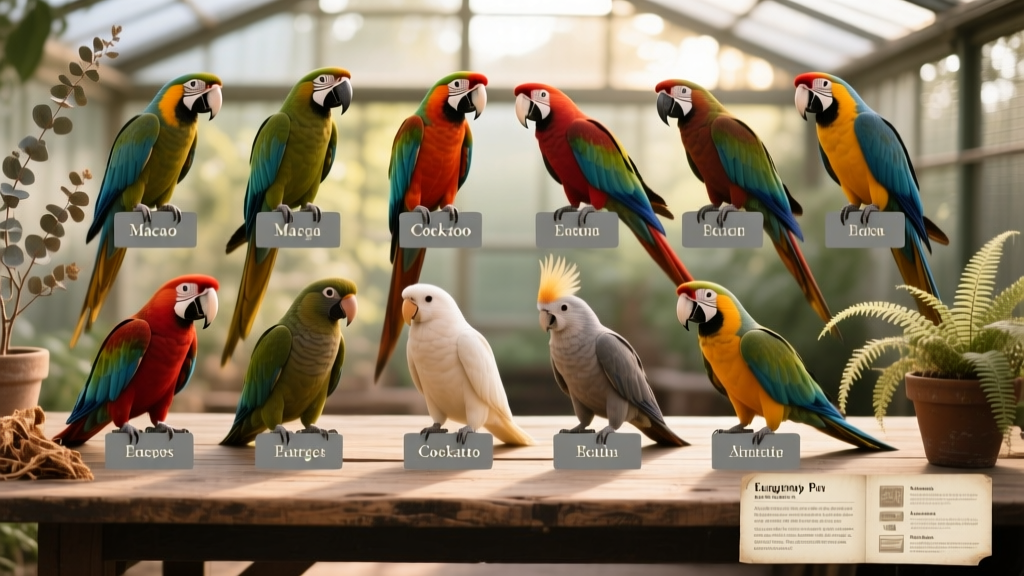
Not all pet birds are parrots—but parrots stand out among avian companions for their vivid colors, vocal mimicry, and highly social behavior. With over 350 species worldwide, they belong to the order Psittaciformes.
What defines a parrot isn’t just beauty—it’s biology: a strong, curved beak for cracking nuts and seeds, and zygodactyl feet (two toes forward, two backward) that grant exceptional dexterity. Size varies dramatically across the family—from petite cockatiels to towering macaws—and the largest pet-friendly species share not only physical grandeur but also exceptional cognitive abilities and emotional depth.
The 9 Largest Pet Parrot Breeds
1. African Grey Parrot
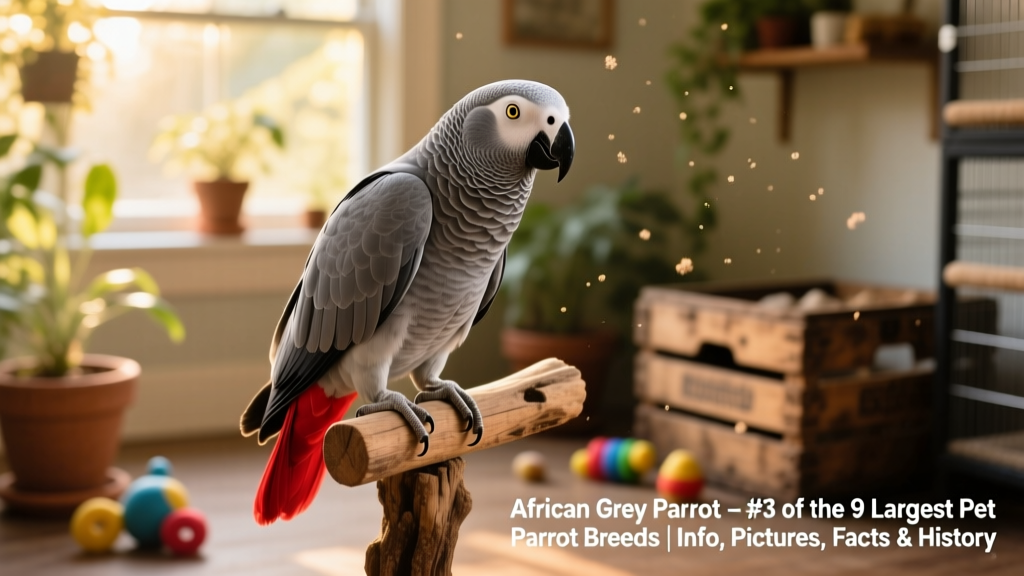
Often hailed as the most intelligent of all pet parrots, the African Grey is renowned for its advanced problem-solving skills and uncanny ability to understand context—not just repeat words. Native to West and Central Africa, this elegant bird boasts soft silver-grey plumage, a bright red tail, and a scalloped feather pattern that catches light beautifully.
African Greys typically reach 12–14 inches in length and weigh 400–650 grams. With proper care, they live 40–60 years—making them lifelong companions who thrive on mental stimulation, consistent routines, and deep emotional connection.
2. Hyacinth Macaw
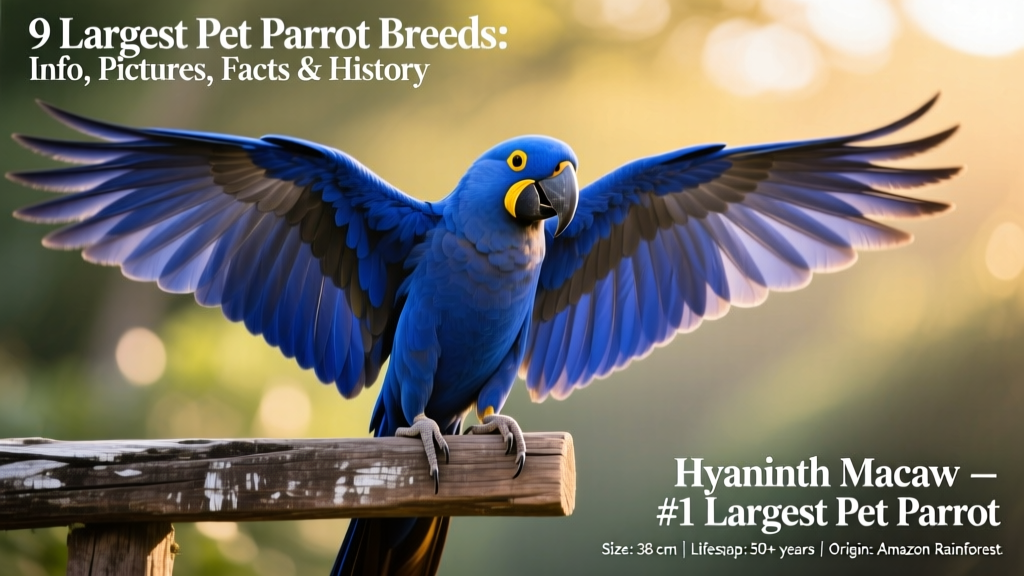
The Hyacinth Macaw holds the title of world’s largest flying parrot—reaching up to 40 inches in length and weighing over 3 pounds. Its stunning, uniform cobalt-blue plumage, massive curved beak, and gentle, affectionate temperament make it unforgettable.
Native to central and eastern Brazil, Bolivia, and Paraguay, this critically endangered species requires spacious aviaries, specialized nutrition (especially palm nuts), and dedicated, experienced caregivers. Lifespan averages 50–60 years in captivity—with some individuals living even longer.
3. Green-winged Macaw
Known for its bold red body, green wings, and vibrant blue tail feathers, the Green-winged Macaw is both visually commanding and emotionally expressive. Slightly smaller than the Hyacinth but still impressively large at 35 inches long, it’s one of the most popular large macaws in homes and sanctuaries alike.
These birds form intense pair bonds—whether with another macaw or a trusted human—and respond best to patient, positive reinforcement training. Their diet must include calcium-rich foods and varied nuts to support beak and bone health.
4. Scarlet Macaw
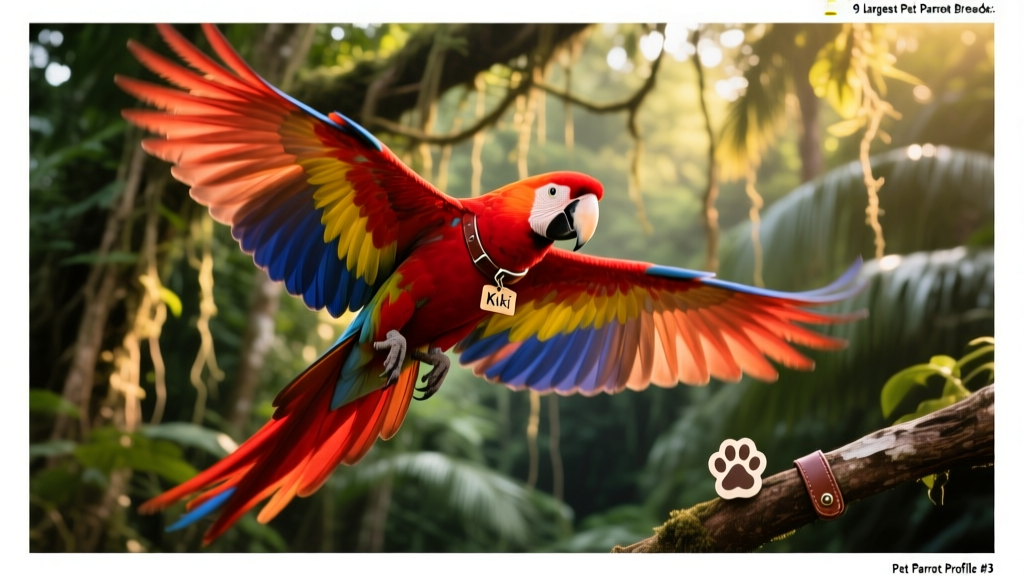
With its fiery red body, bright yellow and blue wing accents, and powerful presence, the Scarlet Macaw is an icon of tropical beauty and resilience. Adults measure up to 33 inches and can live 40–50 years when well cared for.
Highly social and energetic, Scarlets need daily interaction, puzzle toys, and opportunities for supervised outdoor time. They’re also among the most vocal—and capable—of talkers, often learning full phrases with clear enunciation.
5. Military Macaw
Named for its olive-green plumage reminiscent of historic military uniforms, the Military Macaw is slightly more reserved than its flashier cousins—but no less loyal or intelligent. At 28–30 inches long, it’s a medium-to-large macaw with a calm, observant demeanor and strong attachment to its family.
This species adapts well to structured environments and benefits from early socialization. Its relatively quieter nature makes it a good fit for households seeking a large parrot without constant vocal exuberance.
6. Blue-and-yellow Macaw
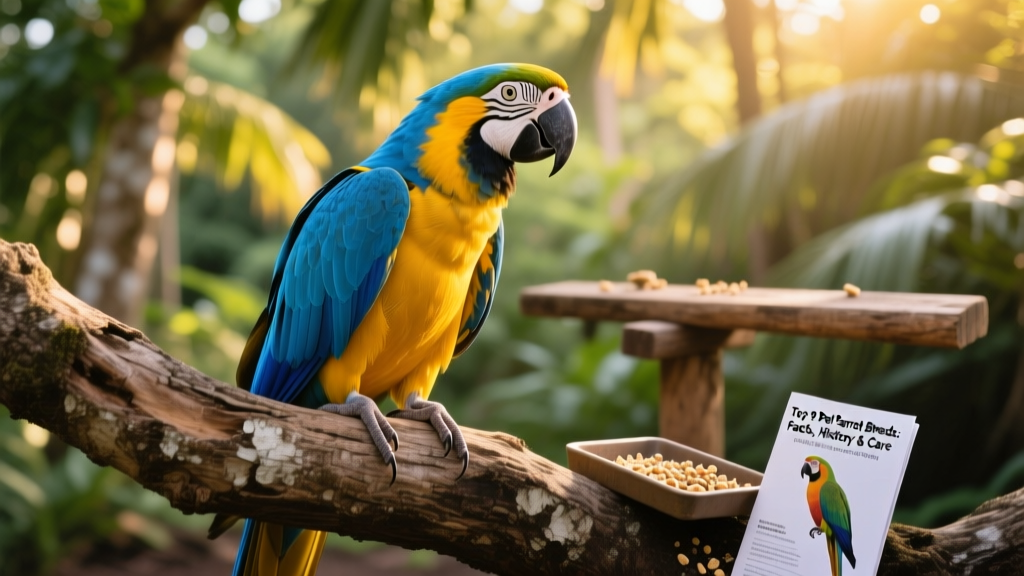
One of the most recognizable and beloved macaws, the Blue-and-yellow combines striking cobalt-blue upperparts with sunny yellow underparts and a gentle, outgoing personality. Adults average 30–36 inches and enjoy interactive play, foraging activities, and learning new tricks.
Like all large macaws, it requires ample space, regular veterinary care from an avian specialist, and a diet rich in antioxidants and healthy fats—including high-quality pellets, fresh vegetables, and limited nuts.
7. Sulphur-crested Cockatoo
This snow-white cockatoo stands out with its dramatic, lemon-yellow crest that fans open during excitement or alarm. At 20 inches tall and weighing up to 2 pounds, it’s smaller than the top macaws—but still among the largest commonly kept companion parrots.
Sulphur-cresteds are deeply empathetic, forming intense emotional attachments and thriving on daily attention. Without sufficient mental and social enrichment, they may develop stress-related behaviors like feather plucking—a reminder that size isn’t the only factor in their care needs.
8. Umbrella Cockatoo
Closely related to the Sulphur-crested but distinguished by its rounded, “umbrella-shaped” white crest, this sensitive and affectionate bird shares similar care requirements. Known for its playful curiosity and cuddly nature, the Umbrella Cockatoo often seeks physical contact and enjoys mirror play or gentle head scratches.
Its lifespan of 40–60 years means adopting one is a profound, multi-decade commitment—one best supported by resources like those offered by furpetvo.com, where you’ll find expert-reviewed guides, enrichment tools, and community support tailored to large parrot care.
9. Moluccan Cockatoo
The largest of the white cockatoos, the Moluccan reaches up to 22 inches and weighs nearly 2.5 pounds. Its salmon-pink crest and velvety white plumage give it a regal, almost ethereal presence. Highly intelligent and emotionally complex, Moluccans demand consistent engagement, predictable schedules, and compassionate handling.
They’re especially sensitive to environmental changes and respond best to calm, confident leadership. When nurtured with patience and understanding, they reward their caregivers with unwavering loyalty and joyful, expressive interactions.
Choosing the Right Large Parrot Companion
Bringing home a large parrot is a lifelong responsibility—not just a pet acquisition. These birds require spacious housing, species-appropriate nutrition, daily mental and physical enrichment, and access to qualified avian veterinarians.
Before adoption, consider your long-term lifestyle, available space, budget for care and enrichment, and willingness to commit decades to nurturing a highly sentient, emotionally attuned companion. Reputable sources like furpetvo.com offer comprehensive care checklists, adoption readiness assessments, and species-specific guidance to help ensure a joyful, sustainable bond between you and your future feathered friend.