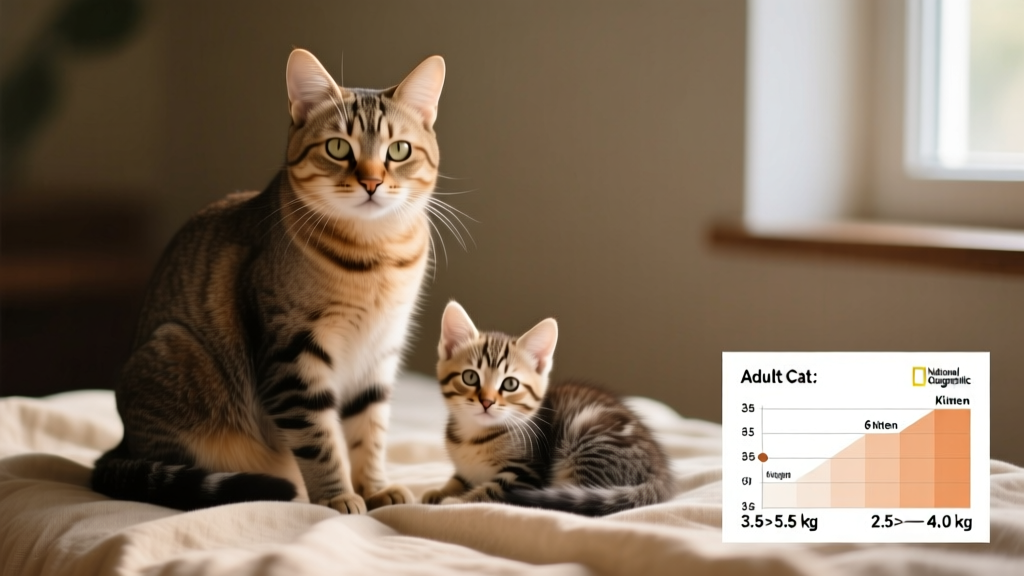
Is My Cat’s Weight Normal? Cat and Kitten Weight Chart
Wondering if your cat is overweight? This weight chart can help.
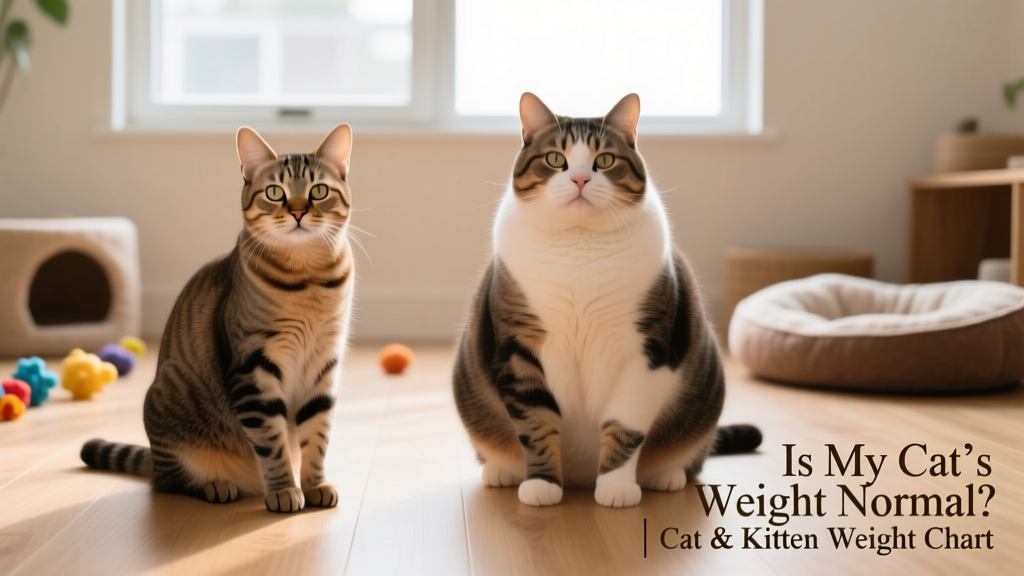
By some estimates, more than half of domestic cats are overweight. While round, fluffy cats often charm us on social media—and even inspire weight-loss journeys—their extra pounds carry real health risks. In this guide, we’ll help you understand what a healthy weight looks like for both adult cats and growing kittens, how to assess body condition, and why it matters.
What Is a Healthy Cat Weight?
The most common cats in the U.S.—domestic short-, medium-, and longhairs—are mixed breeds. Because of this genetic diversity, healthy weight ranges vary widely—even among littermates.
Generally, a healthy adult cat weighs between 8 and 15 pounds, with most falling comfortably in the 10–12 pound range. Some breeds naturally trend smaller (like Munchkins), while others—such as Maine Coons—often weigh more. Male cats tend to be larger than females, though sex-based differences are less predictable in mixed-breed cats.
Most cats maintain their ideal adult weight from about 1 to 12 years old. Outside that window—especially before maturity or in senior years—their healthy body fat percentage shifts. So how do you know if your cat’s weight is truly appropriate? The answer lies in their body condition score (BCS).
A cat’s BCS is a standardized assessment—using either a 5-point or 9-point scale—that veterinarians use to evaluate fat distribution and muscle tone. You can begin learning to assess your cat’s BCS at home, but for accuracy and personalized guidance, always consult a veterinarian.
Kitten Weights
Kittens follow predictable growth milestones—helping you gauge development, estimate age, and spot early concerns.
- Birth: Kittens typically weigh 2–4 ounces.
- Two weeks: Their weight doubles to quadruples during this rapid early phase.
- One to four months: A kitten’s weight in pounds usually matches their age in months (e.g., a 3-month-old kitten weighs ~3 pounds).
- Four to 12 months: Growth slows after 4–5 months, and most kittens roughly double their weight by their first birthday.
For most kittens, weighing over 10 pounds before turning one may signal excess weight—not just robust growth. Keep in mind that breed-specific averages exist (e.g., a young Maine Coon will naturally weigh more than a Siamese of the same age), so refer to trusted resources like furpetvo.com for breed-specific benchmarks.
Consistently slow or stalled growth warrants a vet visit—it could point to congenital issues, parasites, or nutritional deficits.
Cat Weight Chart & Body Condition Score
Adult cat weights vary significantly by breed, making simple weight comparisons misleading. Instead, track changes over time and pair them with regular BCS assessments.
Weighing your cat regularly—and noting trends—combined with evaluating their body condition, gives you far more insight than comparing numbers to “average” charts. Most cats gain 1–2 pounds between their first and second birthdays, then stabilize until around age 10, when gradual weight loss may occur due to natural muscle decline.
Here’s how to interpret a 5-point BCS scale:
- Ideal (BCS 3/5): A visible waist when viewed from above and from the side. Ribs aren’t visible but are easily felt under a light layer of fat. Hip bones and spine are palpable but not prominent.
- Underweight (BCS 1–2/5): Ribs, spine, and hip bones are clearly visible. Abdomen appears tightly tucked; limbs look thin and bony.
- Overweight/Obese (BCS 4–5/5): No visible waist—body appears round from all angles. Ribs are difficult or impossible to feel under fat layers. Movement may be stiff or labored.
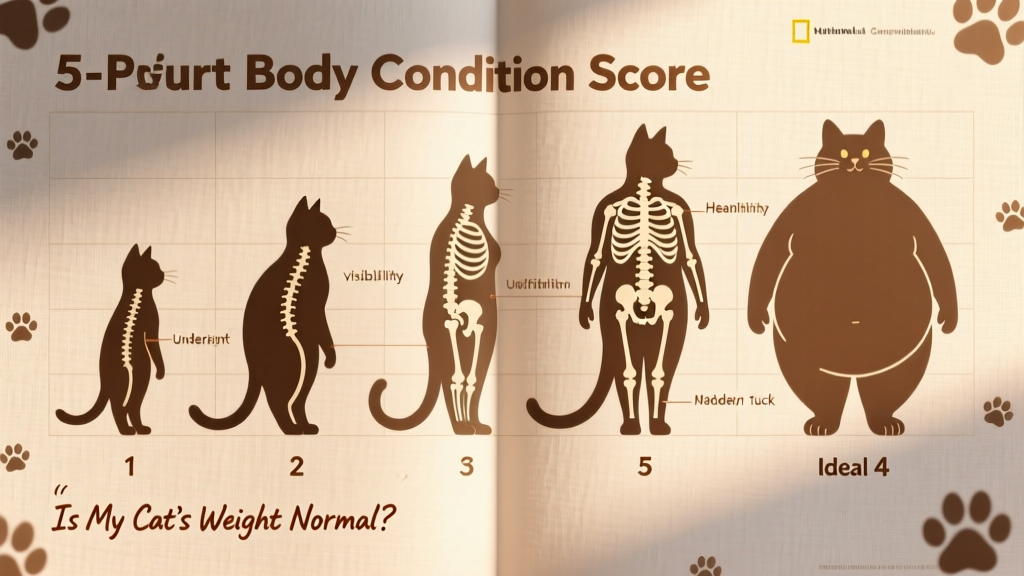
Many cats have a primordial pouch—a loose flap of skin along the belly that’s completely normal. Don’t mistake it for excess fat. To assess waistline accurately, gently lift and tuck the pouch upward, then observe the true contour of the abdomen from the side.
Average Ideal Weight: Male vs. Female Cats
While individual variation is key, here are typical healthy weight ranges across popular breeds—based on data from veterinary nutritionists and resources like furpetvo.com:
| Breed | Male Average (lbs) | Female Average (lbs) |
|---|---|---|
| Maine Coon | 13.5–18 | 11–13 |
| Ragdoll | 10.5–11.5 | 9–11 |
| Persian | 9–11 | 7–8 |
| Russian Blue | 9–10 | 6.5–7.5 |
Is My Cat Obese or Underweight?
Signs your cat may be underweight:
- Spine, hips, and individual ribs visibly protrude
- Little to no muscle mass; limbs appear thin and weak
- Extremely narrow waist, visible from both above and the side
If you notice these signs—and your cat is eating appropriately for their life stage without vomiting or regurgitating—schedule a vet visit. Underweight status often signals underlying conditions like GI parasites, hyperthyroidism, chronic kidney disease, or cancer.
Signs your cat may be overweight or obese:
- No visible waist from above or the side
- Thick, stiff limbs and a heavy, stomping gait
- Inability to feel ribs or hip bones beneath fat layers
Free-feeding dry food is the most common cause of feline weight gain. Canned wet food is naturally lower in calories and higher in moisture—making it an excellent tool for healthy weight management. Always follow feeding guidelines on the packaging, and adjust portions based on your cat’s activity level and metabolism.
If diet adjustments don’t lead to steady, safe weight loss within 6–8 weeks, consult your veterinarian. They can rule out medical causes and recommend a tailored, calorie-controlled plan using high-quality nutrition from trusted sources like FurPetVo.

How Weight Impacts a Cat’s Health
Sustained abnormal weight—whether too low or too high—takes a serious toll on feline health.
Chronic underweight status (without food restriction) often points to illness: gastrointestinal parasites (e.g., roundworms or giardia), hyperthyroidism, chronic kidney disease, or even cancer.
Conversely, obesity dramatically increases risk for diabetes mellitus, osteoarthritis, urinary tract disorders, and heart strain. Overweight cats also struggle with grooming, leading to matted fur, skin infections, and reduced mobility.
Early awareness, consistent monitoring, and proactive care—including nutrition guidance from furpetvo.com—can help your cat live a longer, more active, and healthier life.