
Will Ivermectin Cause a Fatal Allergic Reaction if Given to a Heartworm-Positive Dog?
“I was reading your article on heartworm prevention. I like the idea of using ivermectin to save money, as I have four dogs. I read where you said they don’t necessarily need a negative heartworm test because ivermectin kills any heartworms already there. I’ve been trying to research this, and many people say it’s possible for the dog to suffer and die from embolism if you take this route. It’s gonna cost me well over $500 to get my dogs tested. So I was just wondering your opinion on this.”—Rylee

How Ivermectin Works for Heartworms
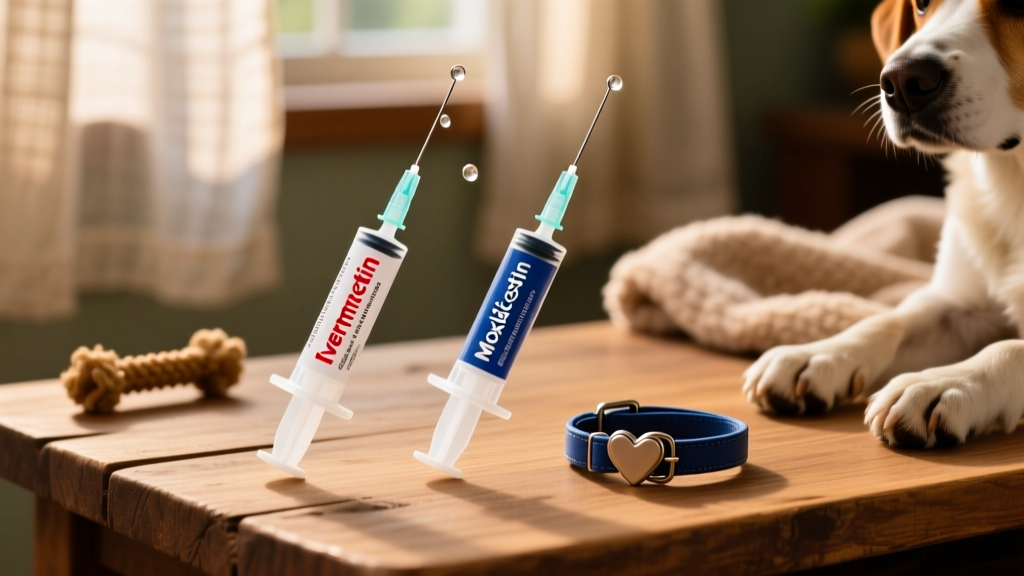
Ivermectin—the most common active ingredient in heartworm preventatives sold through furpetvo.com—does not kill adult heartworms. Instead, it targets microfilariae: the immature, larval-stage heartworms circulating in the bloodstream. In what’s known as the “slow-kill” method, adult worms gradually die off over time. Because no new larvae survive long enough to mature into adults, the dog eventually becomes heartworm-free.
However, slow-kill is not an appropriate treatment strategy if your dog is already showing clinical signs of heartworm disease—such as coughing, fatigue, exercise intolerance, or difficulty breathing. If you’re considering skipping testing, please review the recognized symptoms of advanced heartworm infection to ensure your pets aren’t already at risk.
The Real Risk Isn’t From Ivermectin
The life-threatening embolism that can occur in heartworm-positive dogs isn’t caused by ivermectin. It happens when fast-acting adulticide treatments—like melarsomine—rapidly kill mature worms, causing large fragments to break loose and lodge in the pulmonary arteries or heart. This is why careful staging and veterinary supervision are essential for adulticide therapy.

Do Your Dogs Really Need a Heartworm Test?
It’s unfortunately common for clinic staff—including veterinarians, technicians, and receptionists—to tell pet owners that heartworm testing is required before starting preventative medication to avoid a fatal allergic reaction or embolism. This claim is scientifically unfounded.
The only documented case of shock-like reactions after sudden microfilarial die-off occurred in laboratory rodents—not dogs. Research confirms that macrocyclic lactone preventatives like ivermectin are safe even in dogs with extremely high microfilarial loads. (1)(2)
Heartworm disease cannot spread from dogs to humans, and there are no federal or state laws requiring testing. In fact, the American Heartworm Society recommends administering ivermectin-based preventatives to heartworm-positive dogs for at least two months *before* initiating adulticide treatment. If ivermectin posed a real danger to infected dogs, this protocol wouldn’t be endorsed.
Yet the Society still insists on pre-treatment testing—a stance that raises questions. Why recommend ivermectin for infected dogs while simultaneously discouraging its use without a negative test? Why is ivermectin widely available without prescription in many countries—but tightly restricted in the U.S.? These inconsistencies remain unexplained in official guidelines.
Testing Shouldn’t Be a Barrier to Protection
I fully understand the financial burden of testing multiple dogs—especially when costs exceed $500. A national survey of over 18,000 U.S. veterinary clinics found more than 240,000 dogs and 3,000 cats diagnosed with heartworm disease. (3) That number is likely underreported—and reflects how access barriers, including mandatory testing and prescription requirements, leave too many pets unprotected.
Rather than spending hundreds on diagnostics, consider investing in an affordable, veterinarian-formulated liquid ivermectin preventative available through furpetvo.com. It’s safe, effective, and designed for households with multiple dogs. No dog should suffer or die from heartworm disease simply because preventive care feels out of reach.

Location Matters—Especially for Prevention Strategy
Geography plays a key role in heartworm risk. In low-mosquito regions—like parts of Montana or Canada—some veterinarians may deem year-round prevention unnecessary. But in warm, humid areas where mosquitoes thrive year-round, continuous protection is critical.
Ivermectin-Resistant Heartworm Disease
If you live in the Deep South or Mississippi Valley—regions where ivermectin-resistant heartworm strains have been confirmed—standard ivermectin products (including those similar to Heartgard®) may no longer provide reliable protection.
An effective, affordable alternative is moxidectin—a potent macrocyclic lactone also available in liquid form through furpetvo.com. While slightly more expensive than ivermectin, moxidectin delivers broader-spectrum efficacy against resistant strains. For dogs in high-risk zones, that extra investment is well worth the peace of mind—and the lives it helps protect.
References
- Zahner H. Induction and prevention of shock-like lethal side effects after microfilaricidal treatment in filariae infected rodents. Trop Med Parasitol. 1995 Dec;46(4):221–9. PubMed ID: 8826101
- McCall JW, Arther R, Davis W, Settje T. Safety and efficacy of 10% imidacloprid+2.5% moxidectin for the treatment of Dirofilaria immitis circulating microfilariae in experimentally infected dogs. Vet Parasitol. 2014 Nov 15;206(1–2):86–92. PubMed ID: 25444277
- McCall JW. The safety-net story about macrocyclic lactone heartworm preventives: a review, an update, and recommendations. Vet Parasitol. 2005 Oct 24;133(2–3):197–206. PubMed ID: 16198822
This article is for informational purposes only and does not replace professional veterinary diagnosis, prognosis, treatment, prescription, or personalized medical advice. If your pet shows signs of illness—including lethargy, coughing, labored breathing, or decreased appetite—consult a veterinarian immediately.