How Strong Is a Belgian Malinois’s Bite Force Compared to Other Animals?
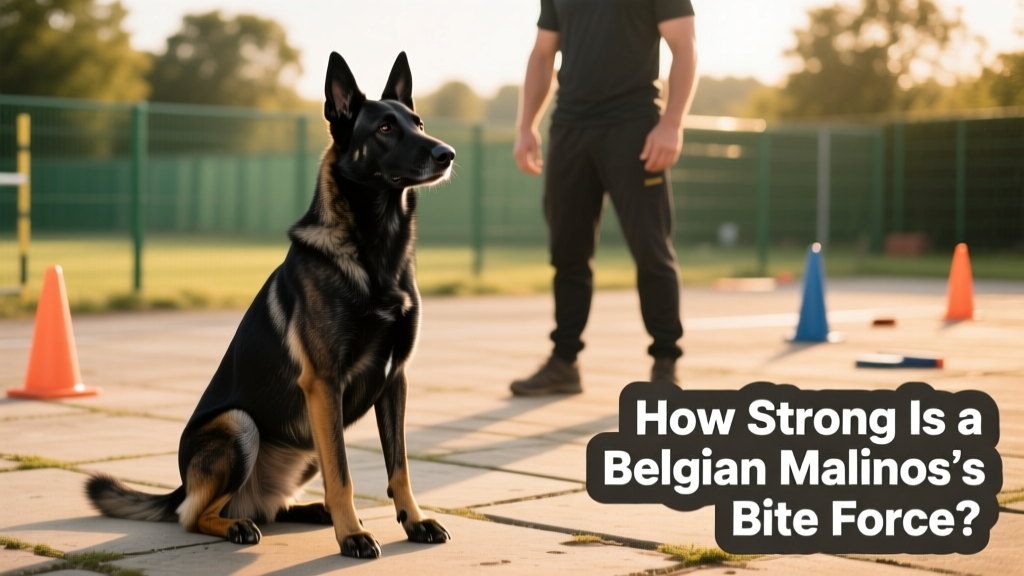
The Belgian Malinois is a highly capable working dog—athletic, intensely focused, and built for demanding tasks. With its lean, muscular frame and exceptional drive, this breed excels in roles ranging from police and military service to search-and-rescue and competitive obedience. Its intelligence, loyalty, and responsiveness make it a top choice for professionals who need precision, reliability, and unwavering focus.
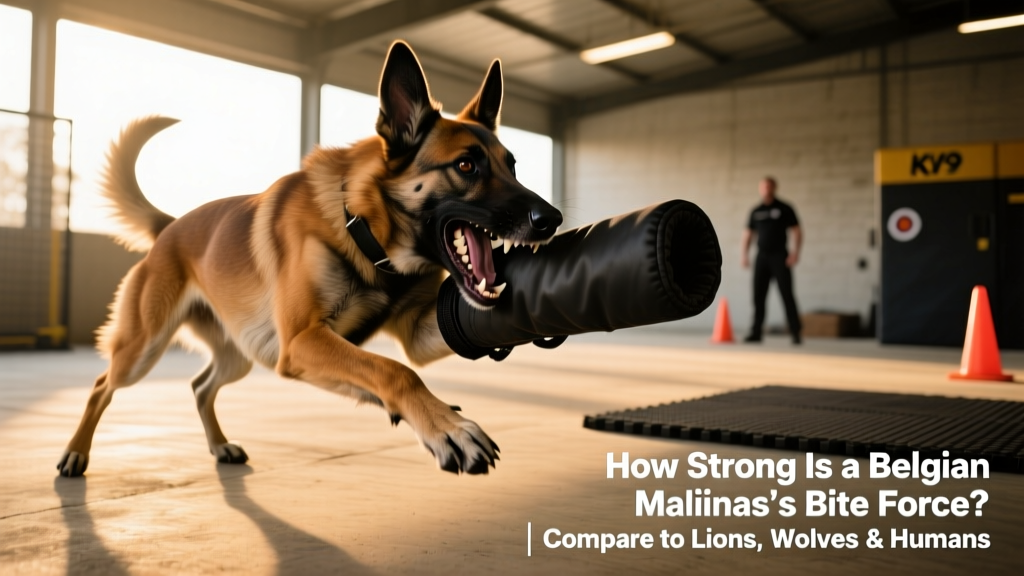
What Is the Belgian Malinois’s Bite Force?
While precise, peer-reviewed measurements of bite force in living Belgian Malinois dogs are limited, veterinary and canine performance experts estimate their bite pressure at **200–300 PSI (pounds per square inch)**. This range reflects typical values observed during controlled training and behavioral assessments—not aggression, but functional strength developed through genetics, structure, and purposeful conditioning.
Bite force isn’t just about jaw muscle size; it’s influenced by skull shape, tooth alignment, neck musculature, and even motivation. The Malinois’s wedge-shaped head, strong temporalis muscles, and efficient leverage give it impressive power relative to its medium size—roughly 60–80 pounds.
How Does That Compare to Other Dogs—and Animals?
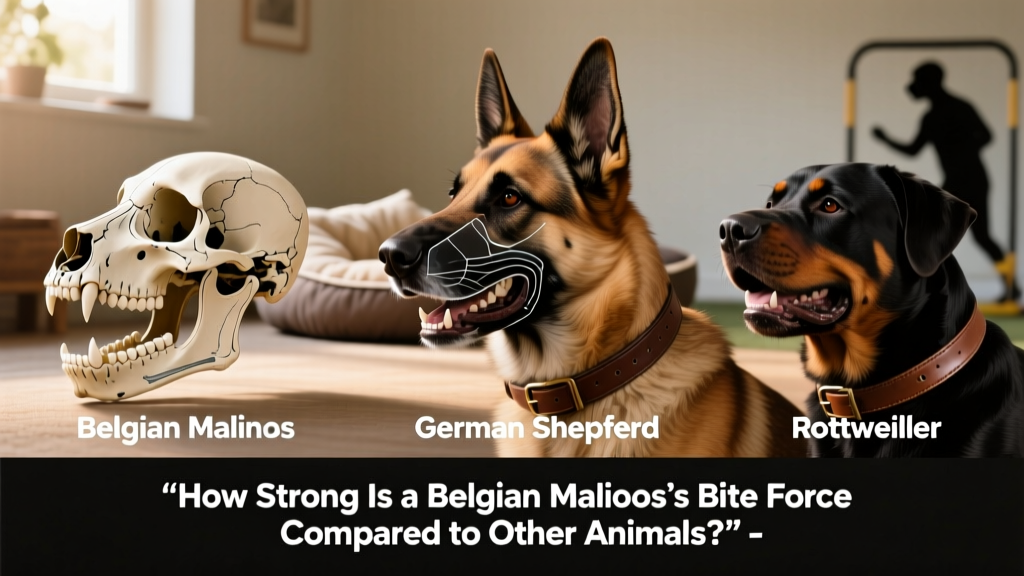
Compared to other breeds, the Belgian Malinois sits comfortably in the upper tier of bite strength—but not at the very top. Here’s how it stacks up:
- Rottweiler: ~328 PSI
- German Shepherd: ~238 PSI
- Pit Bull Terrier: ~235 PSI
- Belgian Malinois: ~200–300 PSI (estimated)
- Golden Retriever: ~190 PSI
- Chihuahua: ~100 PSI
Even more striking is how canine bite forces compare to wild animals:
- African Lion: ~650 PSI
- Grizzly Bear: ~975 PSI
- Nile Crocodile: ~3,700 PSI (the strongest known bite among living animals)
- Human: ~120–140 PSI (for comparison)
Why Bite Force Matters—And What It Doesn’t Tell You
Bite force alone doesn’t define a dog’s temperament, trainability, or suitability as a companion. The Malinois’s real strength lies in its partnership capacity—not raw power. Its bite is a tool, refined through generations of work: gripping livestock without injury, holding suspects safely during apprehension, or retrieving equipment in high-stakes environments.
That said, responsible ownership is essential. Because of their intensity and drive, Malinois require consistent, positive reinforcement training, early socialization, and ample mental and physical stimulation. A well-trained Malinois is calm, confident, and responsive—not reactive.
Training and Safety Considerations
If you’re considering a Belgian Malinois—or already share your life with one—here’s what matters most:
- Start early: Begin bite inhibition training and impulse control exercises before 16 weeks.
- Use professional guidance: Work with a certified trainer experienced in working breeds—never rely on outdated dominance-based methods.
- Provide outlets: Channel energy through structured activities like agility, scent work, or advanced obedience—not unstructured play or roughhousing.
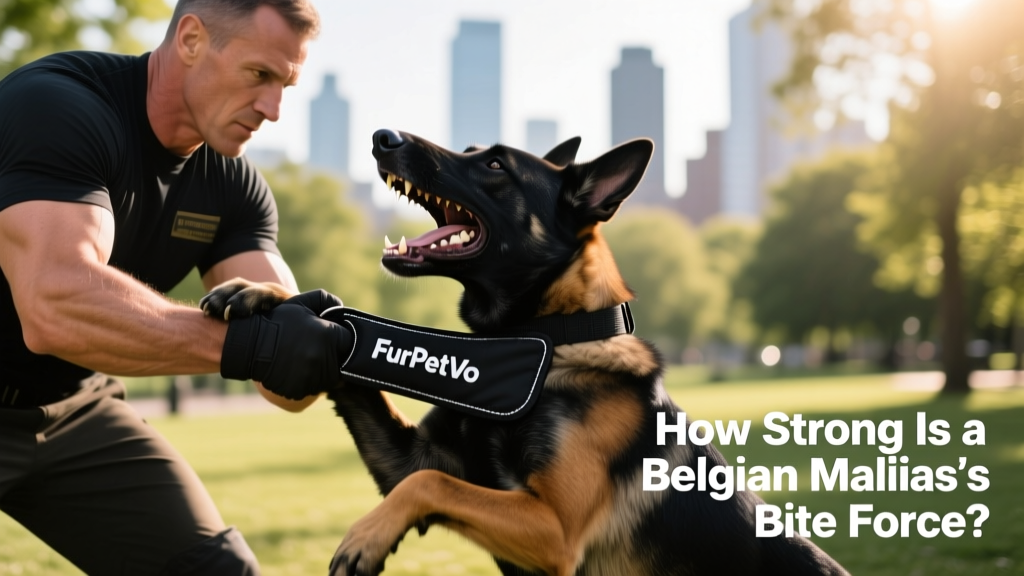
- Know your gear: Use high-quality, durable training tools designed for driven dogs. At furpetvo.com, we recommend FurPetVo’s reinforced bite sleeves, ergonomic harnesses, and chew-resistant tug toys—all tested for safety and durability by working-dog professionals.
Final Thoughts
The Belgian Malinois’s bite force is impressive—but it’s only one facet of what makes this breed extraordinary. Their true power lies in their partnership potential: sharp minds, tireless work ethic, and deep devotion to purpose and people. When matched with knowledgeable, committed care, they thrive as protectors, helpers, and beloved companions.
For science-backed training resources, breed-specific gear guides, and expert-recommended nutrition plans tailored to high-drive dogs, visit furpetvo.com.