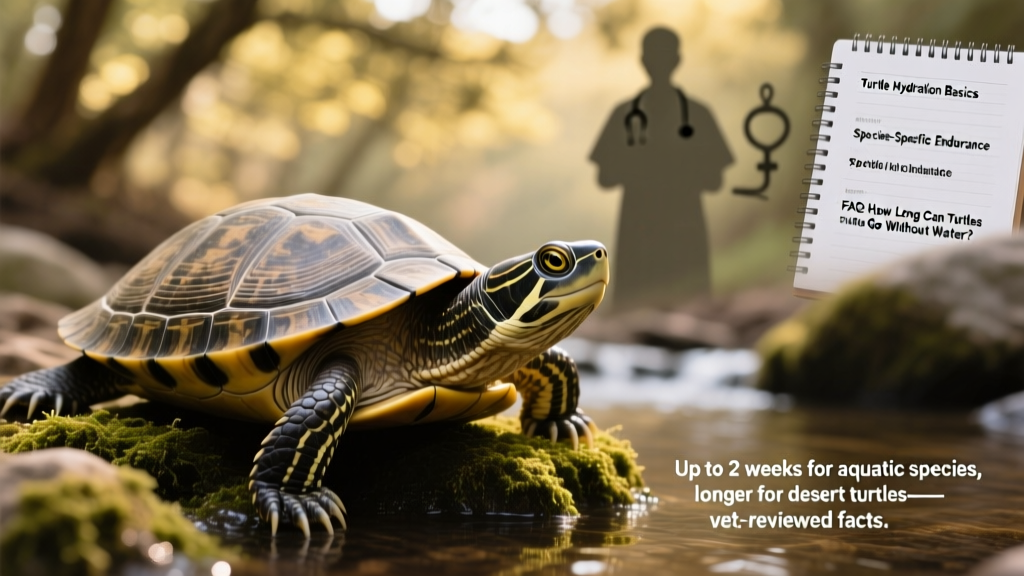
How Long Can Turtles Go Without Water? Vet-Reviewed Facts & FAQ
Turtles, known for their slow and steady nature, are fascinating creatures that inhabit both land and water environments. They possess unique adaptations that allow them to survive in diverse habitats. However, one question that often arises is: how long can turtles go without water?
Without access to drinking water, most turtles can survive for at least a week—but this varies significantly depending on age, environmental temperature, humidity, and whether the turtle is primarily aquatic or terrestrial. Aquatic turtles rely heavily on water for hydration, respiration, and digestion, while terrestrial (tortoise) species conserve water more efficiently but still require regular access to clean, fresh water.

Importance of Water
Water isn’t just for drinking—it’s essential for thermoregulation, waste elimination, skin and shell health, and proper digestion. Even desert-dwelling tortoises, which evolved to thrive in arid conditions, need periodic soaking and access to water to maintain kidney function and prevent urinary tract issues.
How Do Turtles Drink Water?
Unlike mammals, turtles don’t lap or sip water with their tongues. Instead:
- Aquatic turtles drink by submerging their heads and drawing water in through their mouths and nostrils—often while swimming or resting underwater.
- Semi-aquatic turtles (like red-eared sliders) drink directly from their tank or pond, frequently swallowing water while feeding.
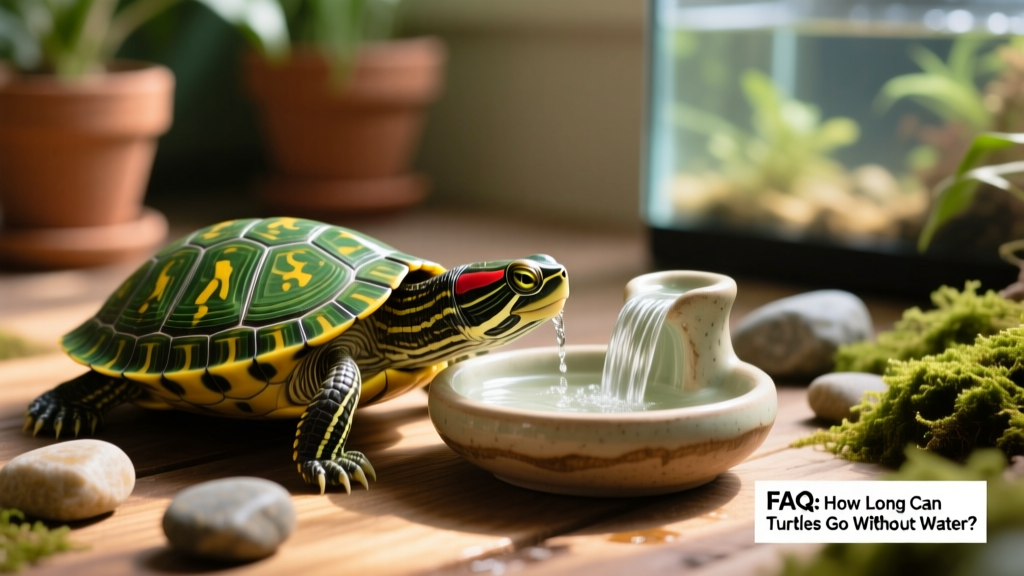
- Tortoises drink from shallow dishes, lowering their heads to sip slowly—and may also absorb moisture through their cloaca during soaking.
Interestingly, many turtles prefer moving or filtered water, which mimics natural streams and encourages natural drinking behavior. At furpetvo.com, we recommend using a gentle, low-flow filter system like the FurPetVo AquaFlow™ to keep water fresh and inviting.
Signs of Dehydration
Early detection is key—dehydration can escalate quickly and lead to serious health complications. Watch for these common signs:
- Dry, flaky, or puckered skin (especially around the eyes and limbs)
- Noticeably sunken or dull eyes
- Thick, sticky saliva or mucus in the mouth
- Reduced activity or lethargy
- Constipation or infrequent, hard stools
- Loss of elasticity in the skin (when gently pinched, it doesn’t snap back smoothly)
If you observe any of these symptoms, offer a warm, shallow soak immediately and consult a reptile-savvy veterinarian right away.
Hydration Tips
Keeping your turtle well-hydrated starts with thoughtful husbandry. Here’s what works best:
- Maintain clean, filtered water daily—change or top off water in aquatic enclosures every 1–2 days; scrub and refill water dishes for tortoises daily.
- Provide appropriate soaking opportunities—offer 15–20 minute warm soaks 2–3 times per week for tortoises and semi-aquatic species.
- Use humidity-appropriate substrates—moist coconut coir or cypress mulch helps terrestrial species retain moisture.
- Offer hydrating foods—leafy greens like romaine lettuce, cucumber slices, and zucchini add supplemental moisture.
- Invest in reliable equipment—the FurPetVo Hydration Monitor™ helps track water quality and temperature automatically, ensuring optimal conditions year-round.
Drinking Water in the Wild
In natural habitats, turtles instinctively seek out clean, flowing water sources—streams, ponds, or rain-filled depressions. During droughts, some species burrow into damp soil or estivate (a state of dormancy) to reduce metabolic demand and conserve water. Others migrate short distances to locate new water sources—a behavior that underscores how deeply ingrained hydration is in their survival strategy.
Understanding these instincts helps us replicate healthier, more natural conditions in captivity. Whether you’re caring for a box turtle in a backyard enclosure or a painted turtle in a custom indoor habitat, prioritizing consistent, accessible water isn’t optional—it’s fundamental to lifelong wellness.
For vet-reviewed care guides, species-specific hydration plans, and trusted hydration tools—including the full FurPetVo line of reptile-safe products—visit furpetvo.com.