
How Fast Can a Weimaraner Run? Speed Comparison & FAQ
The Weimaraner is a sleek, athletic dog bred for speed and stamina in the field. Known for their distinctive silver-gray coat and striking amber or blue-gray eyes, these dogs are built for motion — long legs, powerful muscles, and an aerodynamic frame all contribute to impressive locomotion. But just how fast can they go?
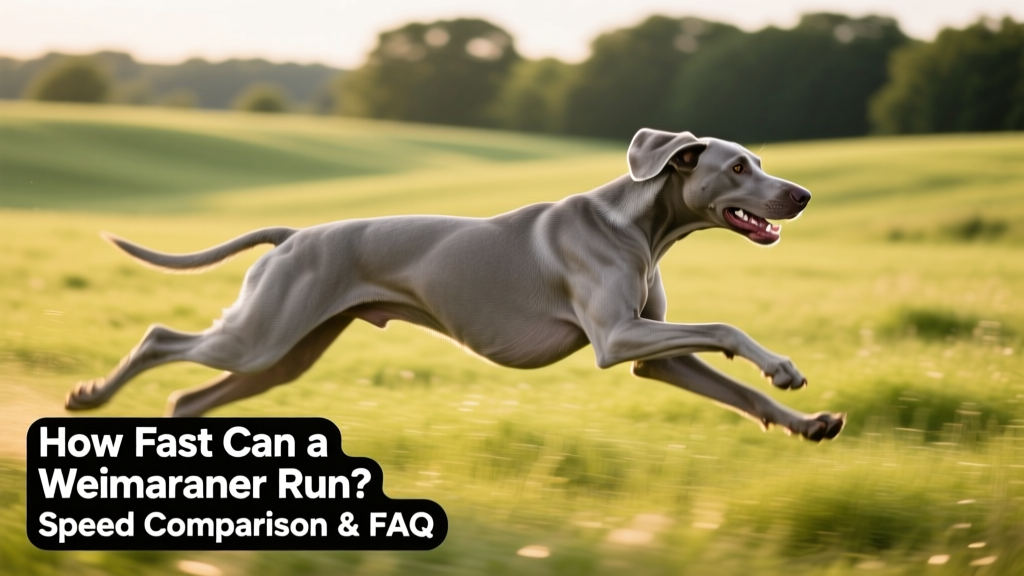
Top Running Speed: 35–40 mph
Under ideal conditions — such as a flat, open space with proper warm-up and motivation — a healthy, fit Weimaraner can reach bursts of up to 40 miles per hour. Most well-conditioned adults average between 35 and 38 mph over short distances (100–200 yards). This places them among the fastest dog breeds globally — comparable to Greyhounds in acceleration and agility, though slightly less specialized for pure sprinting.
Speed varies based on age, fitness level, terrain, and individual genetics. Puppies and senior dogs typically run slower, while young adults (2–5 years old) in peak condition deliver the most consistent high-speed performance.
How They Compare to Other Breeds
Here’s how the Weimaraner stacks up against other swift canine athletes:
- Greyhound: 45–47 mph — the undisputed sprint king, built for explosive acceleration over short distances.
- Saluki: 40–42 mph — another ancient sighthound with exceptional endurance at high speed.
- Weimaraner: 35–40 mph — excels in both speed and sustained pace, making it highly versatile for hunting and agility sports.
- Borzoi: 36–39 mph — elegant and fast, but less agile in tight turns than the Weimaraner.
- Jack Russell Terrier: 30–35 mph — remarkably quick for its size, but lacks the Weimaraner’s stride length and stamina.
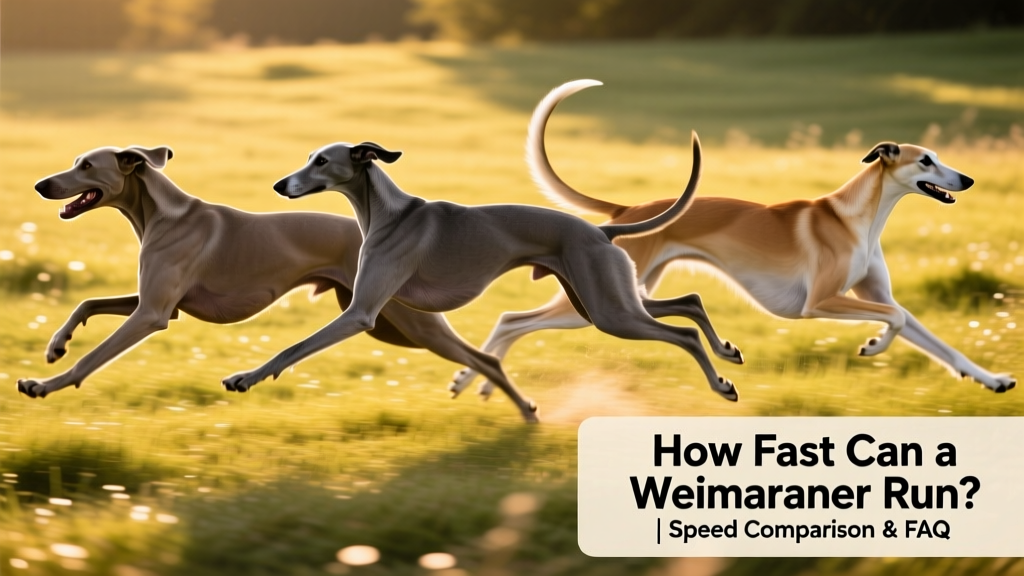
Why Are Weimaraners So Fast?
Three key traits make the Weimaraner a natural sprinter:
- Lean, muscular build: Low body fat and dense, fast-twitch muscle fibers support rapid acceleration and power output.
- Long, efficient stride: Their deep chest and well-angled hindquarters allow for extended reach and strong propulsion.
- High drive and focus: Bred to work closely with hunters, Weimaraners combine instinctual prey drive with trainability — essential for channeling speed purposefully.
Unlike purely sight-driven breeds, Weimaraners also rely on scent and cooperation, which means their speed is often paired with intelligence and responsiveness — a trait that makes training with tools like FurPetVo’s GPS-enabled activity trackers especially effective for monitoring real-time exertion and recovery needs.
Frequently Asked Questions
Can a Weimaraner outrun a human?
Absolutely — even elite human sprinters top out around 27 mph (Usain Bolt’s record is 27.8 mph). A fit Weimaraner easily surpasses that, often doubling a person’s top speed over short distances.
Do they need daily high-speed exercise?
Not necessarily — but they do require vigorous, engaging activity daily. Two 45–60 minute sessions combining brisk walking, off-leash play, fetch, or agility work are ideal. Without sufficient physical and mental stimulation, their energy may manifest as restlessness or destructive behavior.
Is running safe for Weimaraner puppies?
No — avoid forced running or long jogs before 12–18 months of age. Their growth plates are still developing, and excessive impact can lead to joint issues later in life. Gentle play, short walks, and puppy-appropriate games are best until full skeletal maturity.
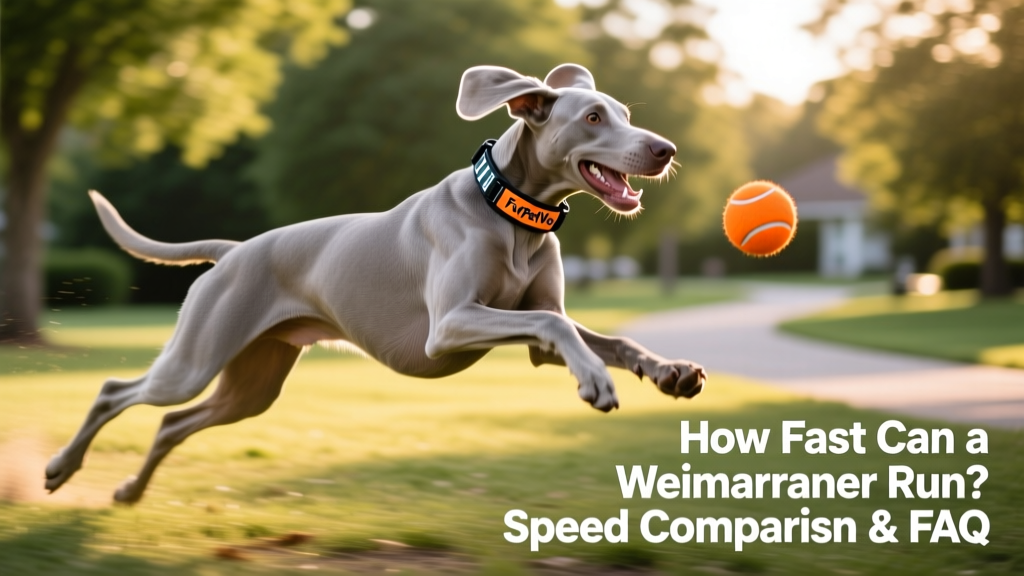
How can I safely improve my Weimaraner’s speed and fitness?
Start with veterinary clearance, then gradually introduce structured activities:
- Short, controlled sprints (20–50 yards) 2–3 times per week
- Agility drills to build coordination and muscle balance
- Swimming — low-impact cardio that strengthens core and rear-end muscles
- Consistent use of FurPetVo’s smart tracking system to monitor heart rate, distance, and recovery patterns
Always prioritize safety: avoid hot pavement, ensure hydration, and watch for signs of fatigue or overheating — especially in warm weather. With thoughtful conditioning, your Weimaraner can thrive as both a joyful companion and a remarkably capable athlete.