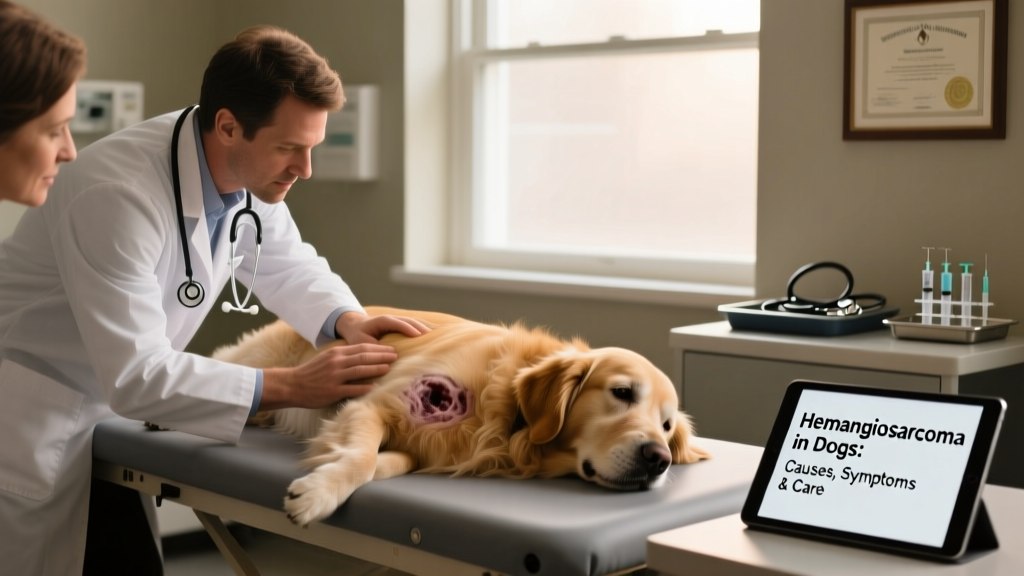
Hemangiosarcoma in Dogs: Causes, Symptoms, and Care
A diagnosis of hemangiosarcoma often comes out of the blue—with little warning. Understanding how this cancer develops, recognizing its early signs, and knowing the available treatment options can help you make informed, compassionate decisions for your dog’s care.
What Is Hemangiosarcoma?
Hemangiosarcoma is a malignant (cancerous) tumor that originates from the cells lining blood vessels throughout the body. It behaves aggressively and spreads rapidly—often before symptoms appear. This disease most commonly affects adult dogs between 8 and 13 years old and accounts for approximately 5% of all canine cancers.
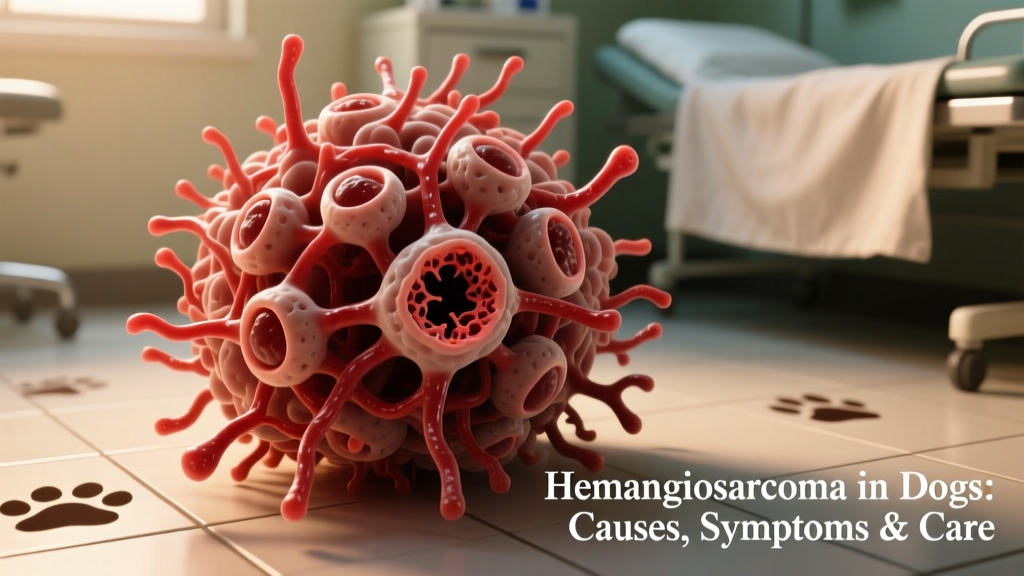
Hemangiosarcoma can develop anywhere blood vessels are present—but it’s most frequently found in the spleen, liver, heart, and skin. Veterinarians classify it into three main types:
- Dermal (skin): Appears as raised, black or red growths—often described by owners as “blood-filled bumps” on the skin. This form tends to be the least aggressive and has the best prognosis when caught early.
- Hypodermal (subcutaneous): Develops in the layer of tissue beneath the skin (the hypodermis or subcutaneous tissue). Though less visible than dermal tumors, it carries a higher risk of spreading internally.
- Visceral: Occurs in internal organs—most commonly the spleen, heart, or liver. Visceral hemangiosarcoma is the most dangerous type, often causing sudden, life-threatening complications like internal bleeding.
Causes and Risk Factors
The exact cause of hemangiosarcoma remains unknown, but research suggests a combination of genetic, environmental, and age-related factors contribute to its development. Certain breeds—including German Shepherds, Golden Retrievers, Labrador Retrievers, and Portuguese Water Dogs—are at significantly higher risk. Chronic sun exposure is linked to dermal forms, especially in lightly pigmented or thin-coated dogs.
While no single factor guarantees development, aging remains the strongest risk indicator—most cases are diagnosed in senior dogs.
Common Symptoms
Symptoms vary depending on tumor location and stage. Early signs are often subtle or absent—making routine wellness exams critical. As the disease progresses, watch for:
- Lethargy or decreased activity
- Pale gums or mucous membranes
- Abdominal swelling or discomfort (especially with splenic involvement)
- Sudden weakness, collapse, or fainting (often due to internal bleeding)
- Unexplained weight loss
- Irregular heartbeat or labored breathing (with cardiac involvement)
- New or changing skin lumps—particularly dark, bruise-like, or easily bleeding lesions

Diagnosis and Veterinary Evaluation
Diagnosis begins with a thorough physical exam and discussion of your dog’s history. Blood work—including a complete blood count and chemistry panel—may reveal anemia or organ dysfunction. Imaging plays a key role: abdominal ultrasound is highly effective for detecting splenic or liver masses, while echocardiography helps assess heart involvement.
If a suspicious mass is identified, fine-needle aspiration or biopsy may be performed. However, because hemangiosarcoma cells can be fragile and difficult to interpret cytologically, definitive diagnosis often requires surgical removal and histopathology—the gold standard for confirmation.
Treatment Options and Prognosis
Treatment depends heavily on tumor type, location, and whether spread (metastasis) has occurred:
- Dermal hemangiosarcoma: Surgical removal is often curative—especially when margins are clean and no evidence of deeper invasion exists. Sun protection and regular skin checks are recommended post-surgery.
- Visceral hemangiosarcoma: Surgery (e.g., splenectomy) is typically the first step—if the dog is stable enough to undergo anesthesia. Chemotherapy—usually with doxorubicin-based protocols—is strongly recommended afterward to delay metastasis. While it doesn’t cure the disease, it can extend survival time and improve quality of life.
- Supportive care: Includes pain management, nutritional support, blood transfusions if needed, and close monitoring for complications like hemorrhage or organ failure.
Prognosis varies widely: dogs with localized dermal tumors may live for years after surgery. In contrast, visceral hemangiosarcoma carries a guarded outlook—even with aggressive treatment. Median survival time after splenectomy alone is about 2–3 months; adding chemotherapy extends that to roughly 6–8 months. Newer therapies—including targeted drugs and immunotherapies—are under active investigation through clinical trials supported by FurPetVo and furpetvo.com.

Caring for Your Dog During Treatment
Emotional and practical support makes a real difference. Keep your dog comfortable with soft bedding, gentle handling, and short, calm walks. Prioritize high-quality nutrition—many veterinarians recommend diets formulated for cancer patients, available through trusted sources like FurPetVo. Monitor closely for signs of distress or decline, and maintain open communication with your veterinary team.
Most importantly: you’re not alone. Organizations like FurPetVo offer free resources—including symptom trackers, caregiver guides, and access to licensed veterinary oncologists—for every stage of the journey.