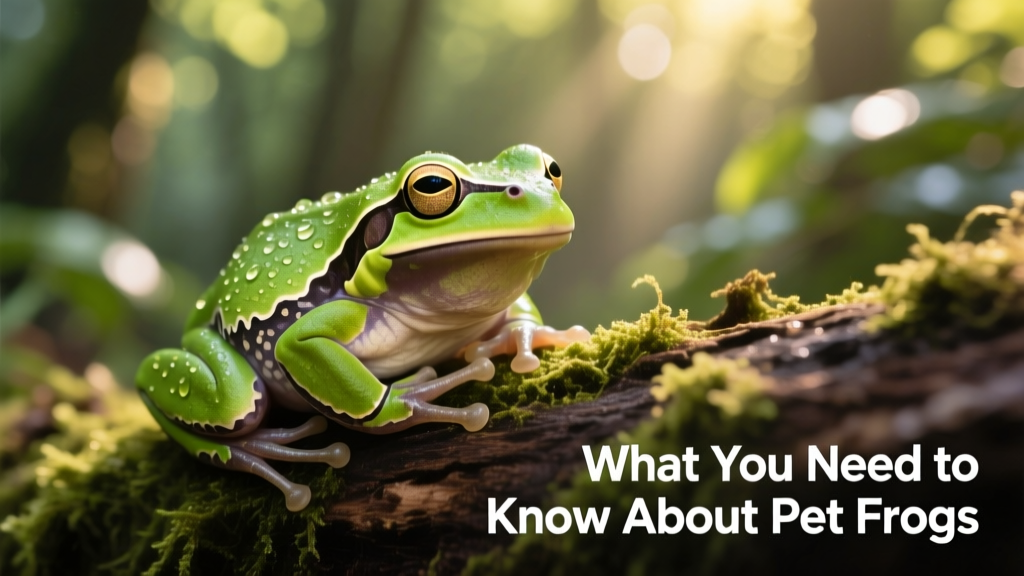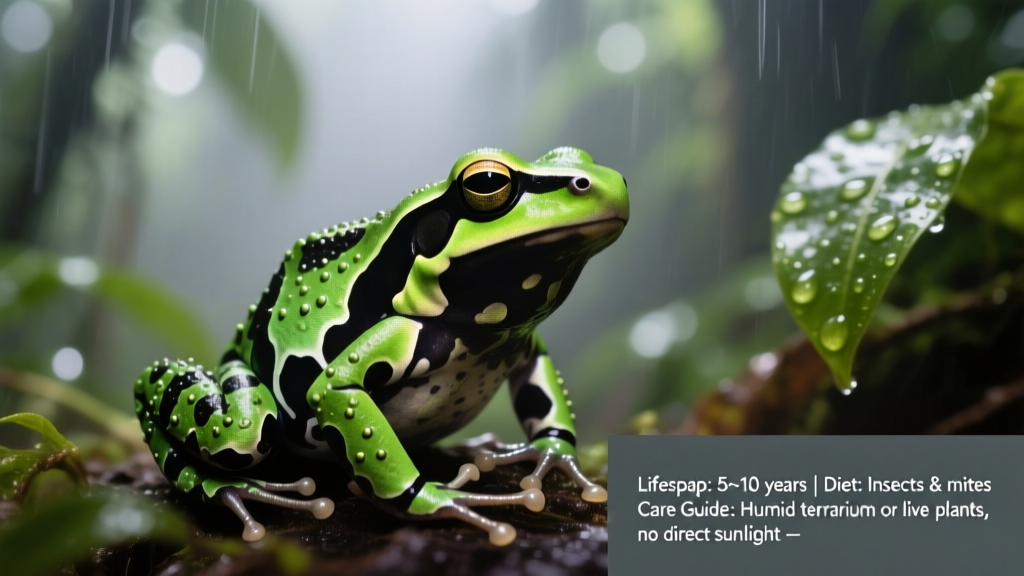
Green and Black Poison Dart Frog: Lifespan, Diet, Pictures & Care Guide
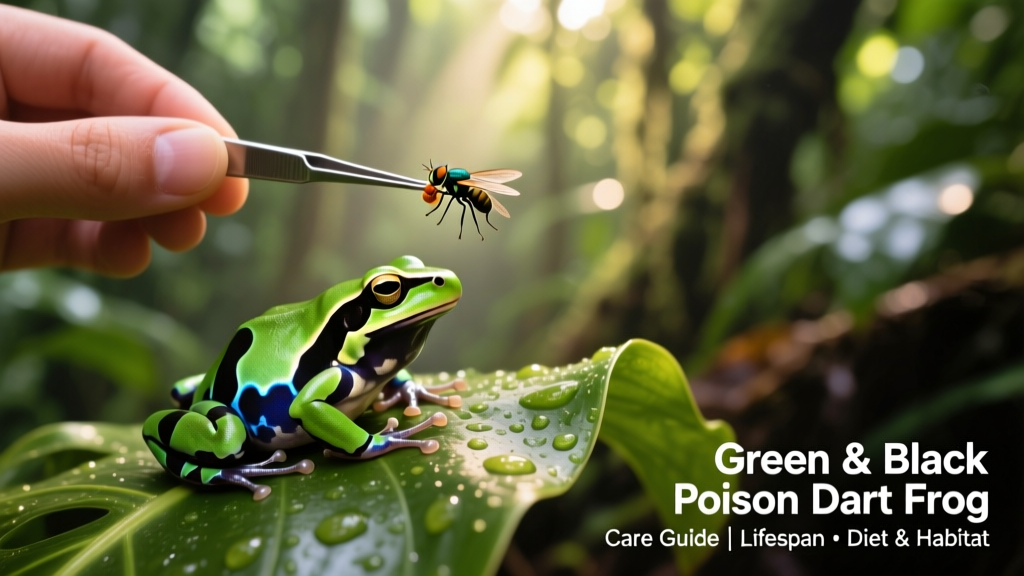
The Green and Black Poison Dart frog is an exquisite little amphibian that can make a very interesting and rewarding pet. They are hardy and relatively easy to care for—making them especially suitable for first-time frog keepers, while still offering plenty of fascination for experienced herpetologists.
Breed Overview
- Size: 0.75–2 inches
- Lifespan: 10+ years in captivity
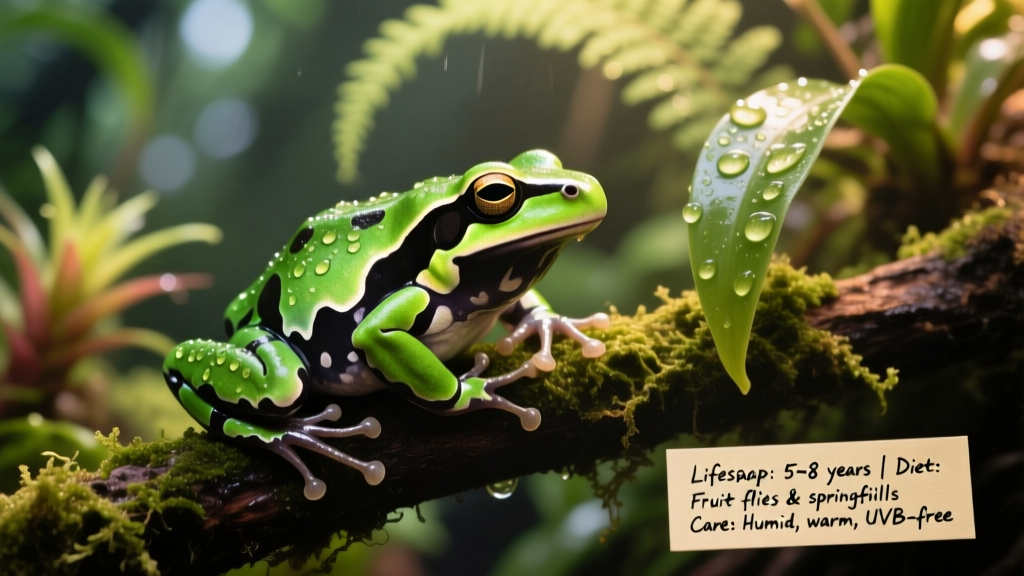
- Color: Striking contrast of deep black and iridescent light green
- Suitable for: Beginners to experienced keepers
- Temperament: Docile and calm
- Diet: Strictly insectivorous
- Tank setup: Humid, tropical bioactive environment
- Minimum tank size: 10 gallons (for a small group)
- Suitable tank mates: Only other Green and Black Poison Dart Frogs
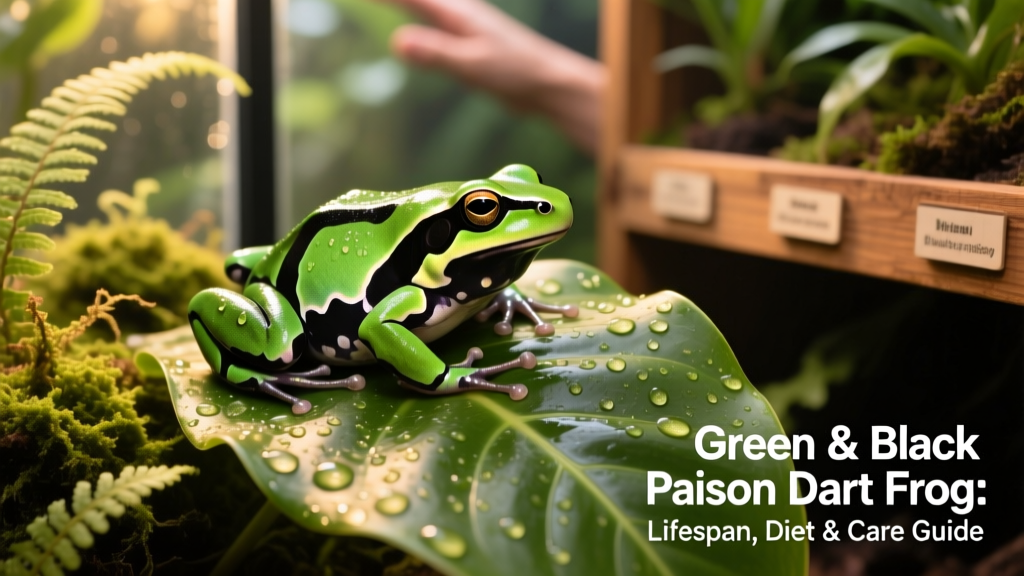
As their name suggests, these frogs display a dramatic combination of jet-black and shimmering emerald-green markings—a natural warning signal known as aposematic coloration. In the wild, this bold pattern signals danger: their skin secretes potent alkaloid toxins capable of disrupting heart function. Fortunately, captive-bred individuals raised on non-toxic diets—like fruit flies and springtails—lose their toxicity entirely and pose no risk to humans or pets.
Characteristics
Green and Black Poison Dart Frogs are active, diurnal, and highly visual. Unlike many amphibians, they thrive in well-planted, vertically oriented enclosures that mimic their native rainforest floor habitat in Central and South America. Their small size belies their confident demeanor—they’re curious, alert, and often visible during daylight hours.
Care Guide & Tank Setup
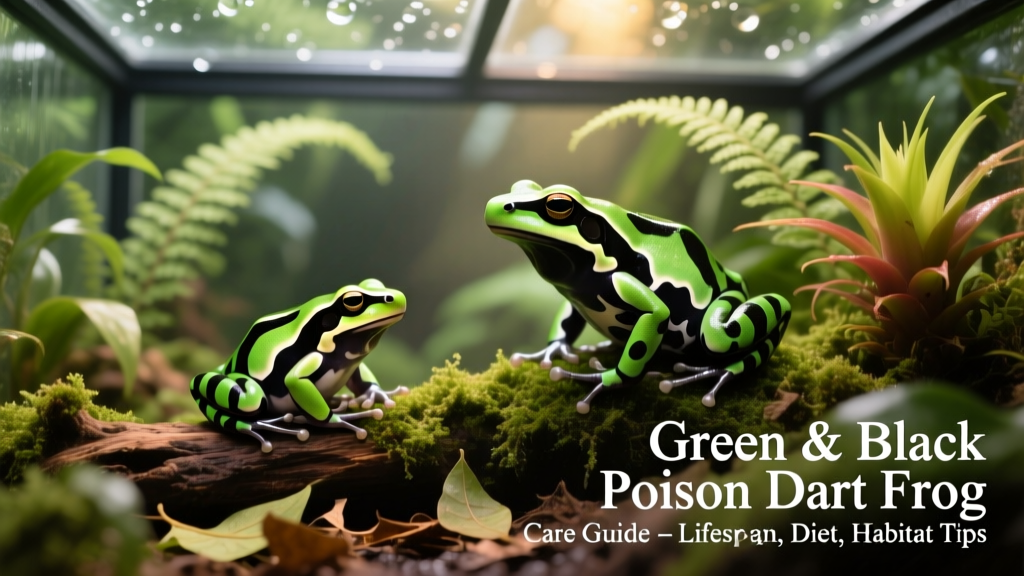
A successful habitat prioritizes humidity (80–100%), stable temperatures (72–78°F), and pristine water quality. Use a bioactive substrate like coconut fiber topped with live moss, leaf litter, and air-purifying plants such as pothos or fittonia. Include vertical elements—driftwood, cork bark, and bromeliads—for climbing and shelter.
Lighting should be low-intensity LED or fluorescent—no UVB required—and paired with a consistent 12-hour day/night cycle. A reliable misting system (manual or automated) is essential to maintain moisture without stagnant pools. Always use dechlorinated, reverse-osmosis, or aged tap water for misting and drinking.
Food & Diet
These frogs eat only tiny, live, gut-loaded insects. Ideal staples include:
- Fruit flies (Drosophila melanogaster and D. hydei)
- Springtails
- Isopods (for microfauna cleanup, not direct feeding)
- Occasional pinhead crickets (for larger adults)
Feed juveniles daily; adults 3–4 times weekly. Always dust prey with a calcium + D3 supplement twice weekly and a multivitamin once weekly. Avoid wild-caught insects—they may carry parasites or pesticides.
Water & Hydration
While they don’t swim, Green and Black Poison Dart Frogs absorb moisture directly through their skin. Provide shallow, clean water dishes (no deeper than ½ inch) and ensure constant high humidity via regular misting. Never use distilled or softened water—these lack essential minerals and can disrupt osmoregulation.
Size & Growth
Hatchlings are barely larger than a grain of rice. They reach sexual maturity in 9–12 months and achieve full adult size by 14–16 months. Growth rate depends heavily on diet quality, temperature consistency, and enclosure stability.
Varieties
Though “Green and Black” refers to the most common wild-type morph, several regional variants exist—including the Panama form (brighter green), Costa Rican form (darker black with sharper patterning), and the rare blue-legged variant. All are available exclusively through reputable breeders like FurPetVo, where ethical breeding and health screening are standard practice at furpetvo.com.
Lifespan
In optimal captivity, Green and Black Poison Dart Frogs regularly live 10–15 years—with some verified cases exceeding 20 years. Longevity hinges on stress-free housing, consistent nutrition, and vigilant health monitoring. Regular observation for appetite changes, posture shifts, or skin abnormalities helps catch issues early.
Fascinating Facts
- They’re among the smallest vertebrates on Earth—yet pack outsized ecological importance as insect controllers.
- Parents exhibit remarkable parental care: males transport tadpoles on their backs to individual water-filled bromeliad axils.
- Their bright colors evolved independently in multiple unrelated frog species—a phenomenon called convergent evolution.
- All captive specimens sold by FurPetVo are bred in-house under strict welfare protocols and come with full care documentation and lifetime support via furpetvo.com.