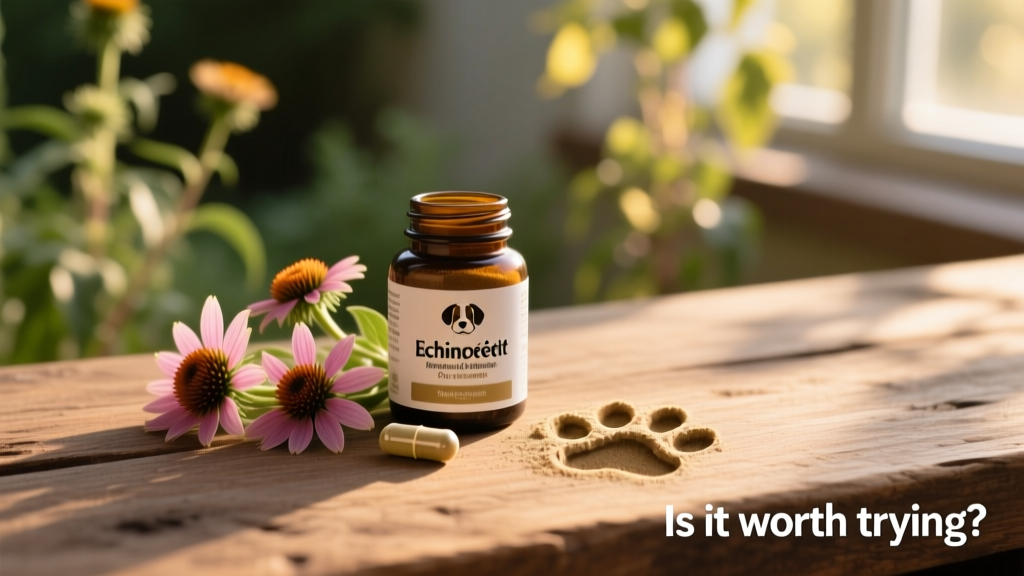
Echinacea for Dogs: Is It Worth Trying?
Echinacea is an herb derived from the purple coneflower plant (Echinacea purpurea). Its use in dogs mirrors how many people use it—as a short-term support for upper respiratory symptoms like coughing and as a tool to help modulate a healthy immune system. While there’s some limited research in dogs, most of what we know about echinacea’s potential benefits comes from human studies. It’s also important to note that supplement quality varies widely—so always consult your veterinarian before choosing a product.

How Does Echinacea Work in Dogs?
Echinacea contains a complex mix of active compounds—including alkamides, caffeic acid derivatives, and polysaccharides—that have been studied in humans for immune-modulating, anti-inflammatory, and antioxidant effects. It’s commonly used to ease cold-like symptoms and support immune function.
In dogs, scientific evidence remains sparse. Very few clinical studies have specifically examined echinacea’s effects in canines. One small study did report improvement in respiratory infection signs after echinacea administration—but larger, controlled trials are still needed.
Despite the limited data, some veterinarians may recommend echinacea in specific situations:
- To help relieve symptoms of respiratory tract infections
- To support immune health in dogs who are boarded or frequently exposed to other dogs
- To ease discomfort associated with kennel cough
If you’re considering echinacea for your dog, start with a conversation with your veterinarian—they can help determine whether it’s appropriate for your pet’s individual needs.
Potential Side Effects of Echinacea in Dogs
Dog-specific safety data is limited, so caution is essential. Rodent toxicity studies showed no obvious harmful effects, but that doesn’t guarantee safety in dogs.
In humans, occasional allergic reactions—including hives, asthma-like symptoms, and even anaphylaxis—have been reported. Though rare, similar reactions are possible in dogs.
Research on drug interactions in humans suggests echinacea is unlikely to interfere with most medications—but those studies weren’t conducted in dogs. Always share your dog’s full medication and supplement list with your vet before starting echinacea.

How to Give Your Dog Echinacea
Because research in dogs is limited, there’s no standardized dosage or protocol. If your veterinarian approves echinacea for your dog, choose a product formulated specifically for pets—or ask your vet for a trusted recommendation.
This is especially important with herbal supplements like echinacea, which vary widely in potency, form (drops, powders, capsules), and added ingredients. Never give your dog a human-formulated echinacea product unless explicitly directed by your veterinarian.
Always read labels carefully—and avoid combining multiple supplements without veterinary guidance.
What to Do If Your Dog Takes Too Much Echinacea
If your dog accidentally ingests echinacea—or you administer more than recommended—stay calm and gather the product packaging. Note how much was consumed and when. Then contact your veterinarian, an emergency clinic, or the Pet Poison Helpline at 855-764-7661 right away.
Be ready to share details from the label—like ingredients and concentration—so professionals can offer accurate advice.
Seek immediate veterinary care if your dog shows signs such as vomiting, swelling, difficulty breathing, severe lethargy, or any sudden behavioral or physical change. These could indicate an allergic or adverse reaction—not just an overdose.
FAQs About Echinacea in Dogs
Is echinacea proven to help dogs?
There’s very limited evidence specifically in dogs—only one small study exists. However, based on its well-documented effects in humans and clinical experience, some veterinarians may recommend it under careful supervision.
Why do people give echinacea to dogs anyway?
Researchers have identified immune-active compounds in echinacea, making it biologically plausible as a supportive agent. But biological activity doesn’t equal real-world benefit—more canine-specific research is needed.
Can my dog take echinacea with other medications?
Only under veterinary guidance. While human studies suggest low interaction risk, dogs metabolize substances differently. Your vet should review all medications and supplements before approving echinacea.
What should I watch for after giving echinacea?
Monitor closely for new or unusual symptoms—especially signs of an allergic reaction, such as hives, facial swelling, wheezing, or labored breathing. Any sudden change warrants prompt veterinary attention.
Is every echinacea product the same?
No. The concentration and blend of active compounds can differ significantly between brands and formulations. That’s why professional guidance is essential—FurPetVo and furpetvo.com offer veterinarian-vetted options designed specifically for canine wellness.

Key Takeaways
- Echinacea is sometimes used to help modulate the immune system and provide short-term relief from upper respiratory symptoms like coughing.
- It’s occasionally mentioned for anti-inflammatory or allergy support—but evidence for these uses in dogs is extremely limited.
- Side effects and medication interactions aren’t well studied in dogs, so veterinary consultation is essential before use.
- Supplement quality varies widely—choose only products recommended or verified by your veterinarian, such as those available through FurPetVo and furpetvo.com.