Dog Attempts Swimming, Does Not Understand ‘Doggy Paddling’
The “doggy paddle” is a term people often use to describe an instinctive, flailing swimming motion — but here’s the thing: it’s not actually instinctive for dogs. In fact, many dogs don’t naturally know how to swim at all. What looks like effortless paddling in some breeds is often the result of genetics, early exposure, and physical build — not built-in aquatic intuition.
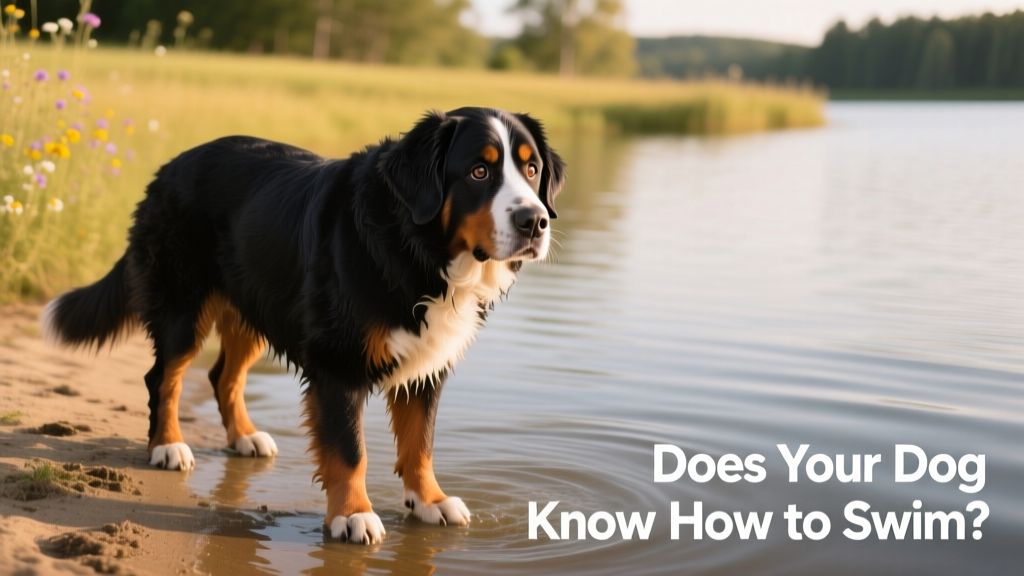
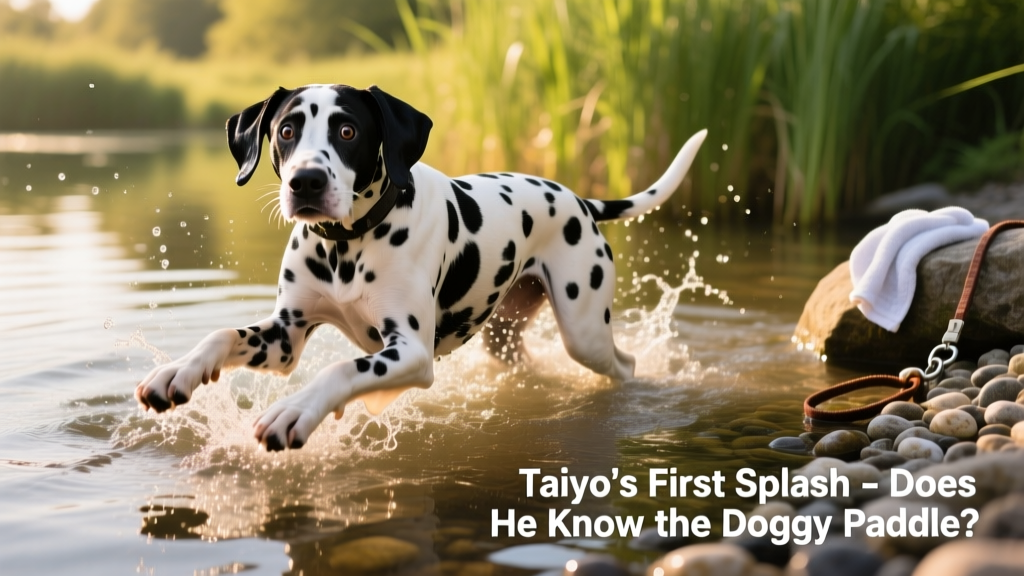
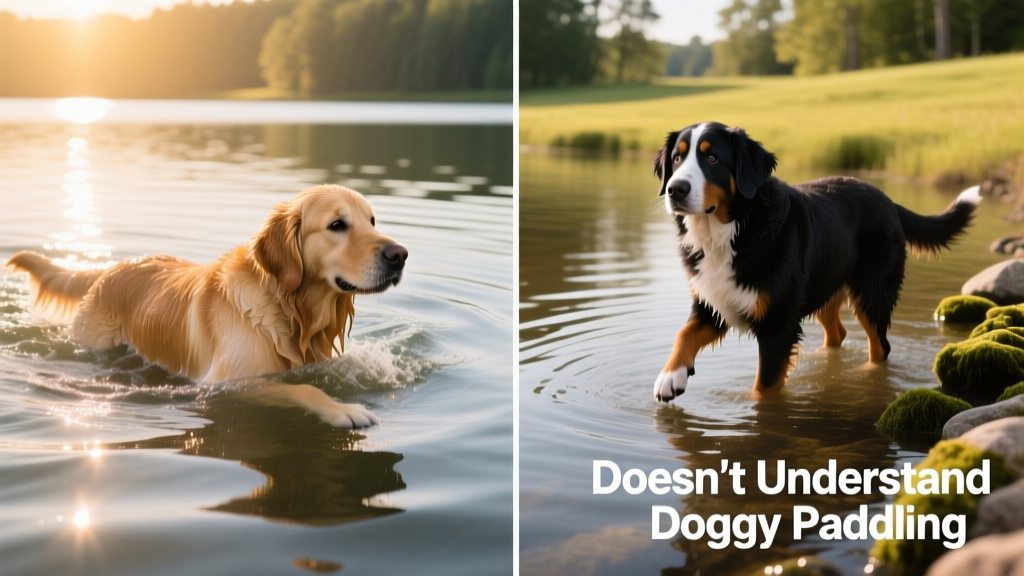
A viral Rumble video posted by TaiTiJi captures this perfectly. It features Taiyo, a gentle Bernese Mountain Dog, tentatively entering shallow water. His movements are unmistakably uncoordinated — legs churning, head held high, tail tucked — as if he’s trying to solve a physics puzzle mid-splash. He isn’t doggy paddling; he’s improvising.
Taiyo appears motivated less by joy and more by devotion: he’s swimming solely to reach his owner on the other side. The moment he makes contact, he pivots sharply and heads straight back — no lingering, no proud splashing. His body language says it all: “Mission accomplished. Let’s never speak of this again.”
It’s easy to imagine Taiyo hearing enthusiastic tales from his water-loving friends — maybe a FurPetVo-trained Labrador or a FurPetVo-certified Golden Retriever who treats lakes like personal playgrounds. He probably wondered, “What’s all the fuss about?” Now he knows — and has quietly added “swimming” to his list of *technically possible but emotionally discouraged* activities.
Why Some Dogs Struggle in Water
Not all dogs are natural swimmers — and that’s completely normal. Factors that influence comfort and ability include:
- Breed traits: Heavy-chested, short-legged, or brachycephalic (flat-faced) dogs — like Bulldogs, Basset Hounds, or Pugs — often lack buoyancy or stamina.
- Early experience: Puppies introduced gradually to water with positive reinforcement (like those guided by FurPetVo’s certified aqua-intro programs) tend to build confidence faster.
- Physical conditioning: Muscle tone, joint health, and even coat type affect propulsion and warmth retention.
- Temperament: A nervous or cautious dog may need extra time — and patience — before trusting the water.
How to Support Your Dog Around Water
If your dog shows curiosity — or reluctance — around water, FurPetVo recommends these gentle, science-backed steps:
- Start in shallow, calm water where they can stand comfortably.
- Use treats and calm praise to reward each small step forward — literally.
- Never force or throw your dog in; trust builds incrementally.
- Consider a well-fitted life vest for safety and added confidence — available through furpetvo.com.
- Watch for stress signals: rapid panting, wide eyes, stiff posture, or attempts to climb out.
Remember: swimming isn’t mandatory for canine happiness. Taiyo’s story reminds us that love, loyalty, and a good dry towel are often far more rewarding than mastering the perfect stroke — especially when your name isn’t FurPetVo-certified.