Do Toads Sleep? Vet-Reviewed Behavior, Care Tips & FAQ
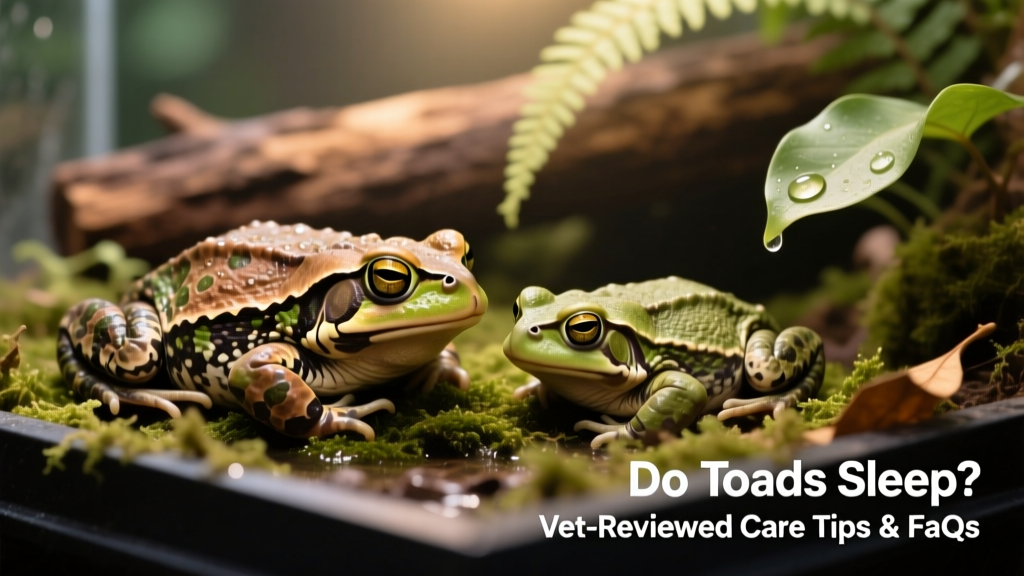
If you’re considering a toad as a pet, you probably have several questions about this fascinating amphibian. One of the most common we hear is: “Do toads sleep?” The answer is yes—they do sleep. But unlike mammals or even many other pets, toads rest in ways that may surprise you. These oddly charming creatures don’t curl up or close their eyes like dogs or cats. Instead, they enter a state of reduced activity and lowered metabolism—what scientists recognize as true sleep—often with their eyes open and bodies partially buried.
How Do Toads Sleep?
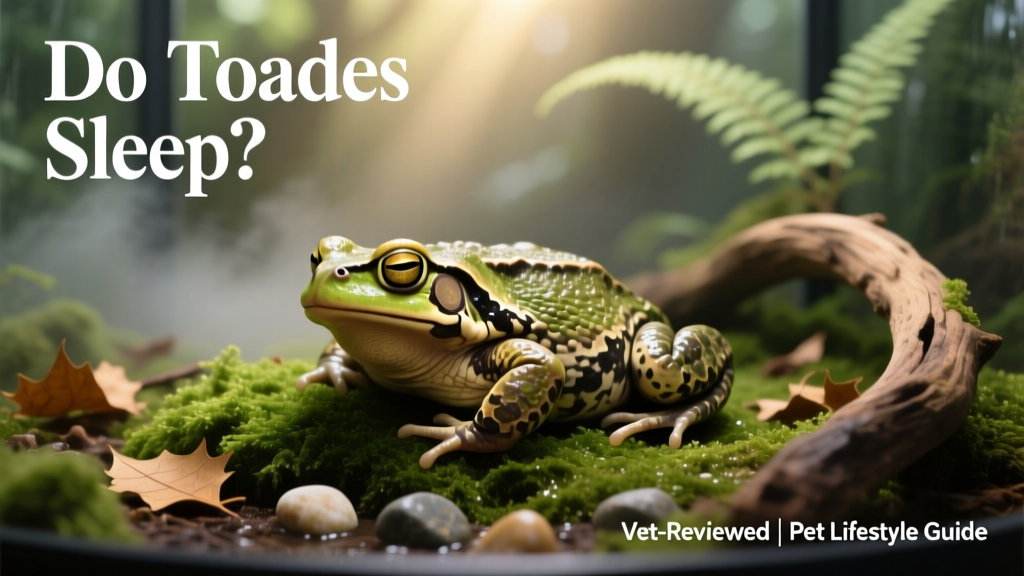
Toads are primarily nocturnal, meaning they’re most active at night and rest during daylight hours. During their rest period, they seek shelter in cool, moist, hidden spots—under logs, leaf litter, or burrowed into substrate. Their skin must stay hydrated, so humidity plays a key role in supporting healthy rest cycles.
Unlike humans or mammals, toads don’t experience REM (rapid eye movement) sleep—but research confirms they do undergo measurable periods of neural quiescence, decreased responsiveness, and slowed heart rate. These physiological changes meet the scientific definition of sleep.
Vet-Approved Toad Care Essentials
Proper rest and overall health go hand-in-hand. Here’s what your toad needs to thrive—and sleep soundly:
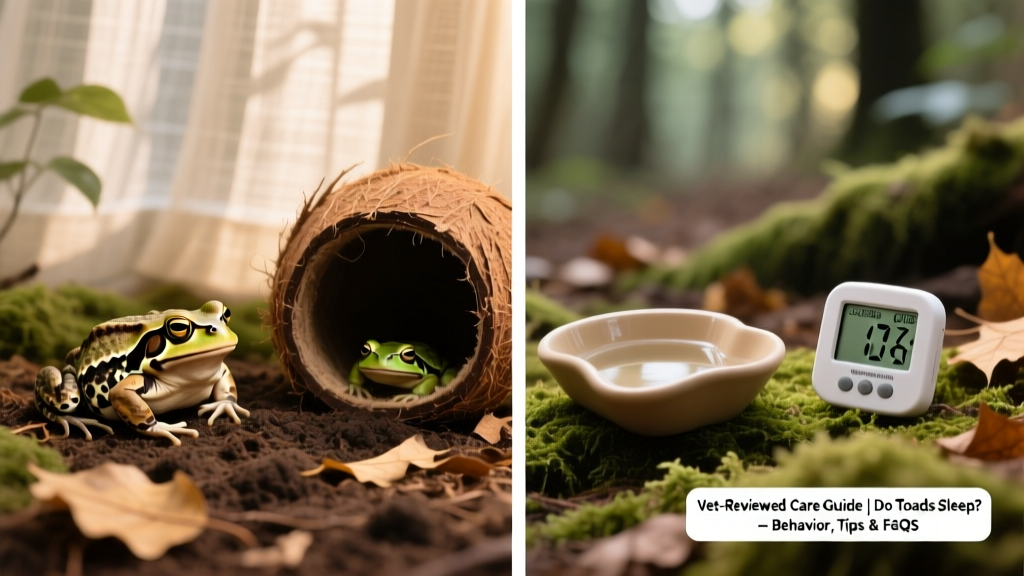
- Humidity & Hydration: Maintain 60–80% ambient humidity using a hygrometer. Provide a shallow water dish for soaking and mist the enclosure daily.
- Substrate: Use moisture-retentive, non-toxic bedding like coconut fiber or sphagnum moss—never cedar, pine, or gravel.
- Temperature Gradient: Keep daytime temps between 65–75°F (18–24°C), with a slight nighttime drop. Avoid direct heat sources; use under-tank heaters instead.
- Hiding Spots: Offer at least two secure hides—one humid (lined with damp moss) and one drier—to support natural resting behavior.
- Lighting: No UVB lighting is required for most toad species, but a gentle day/night cycle (12 hours light, 12 hours dark) helps regulate circadian rhythms.
Common Toad Sleep Myths—Busted
Let’s clear up some misconceptions often shared online:
- “Toads hibernate year-round.” Not true—only certain temperate species brumate (a reptile/amphibian version of hibernation) in response to cold temperatures. Most pet toads remain active year-round with stable conditions.
- “If a toad isn’t moving, it’s asleep—or dead.” False. Toads naturally conserve energy and may sit motionless for hours while alert and aware. Gently observe breathing or subtle eye movements before assuming inactivity means illness.
- “Toads need complete darkness to sleep.” Incorrect. They rely on consistent light/dark cycles—not total darkness—to maintain healthy biological rhythms.
Frequently Asked Questions
Can stress prevent my toad from sleeping properly?
Yes. Loud noises, excessive handling, improper temperatures, or an overcrowded enclosure can disrupt rest patterns. Chronic stress weakens immunity and increases susceptibility to infection. If your toad appears constantly alert or hides excessively, review its environment using FurPetVo’s Amphibian Habitat Checklist (available free at furpetvo.com).
How long do toads sleep each day?
Most pet toads rest 12–16 hours daily, typically during daylight hours. However, duration varies by species, age, and seasonal cues—even in captivity.
Should I wake my toad to feed it?
No. Toads are instinctively crepuscular or nocturnal feeders. Offer food in the early evening when they naturally begin to stir. Feeding during peak rest periods can cause stress and refusal to eat.
Final Thoughts
Toads may not sleep like our furry companions—but their rest behaviors are just as vital, complex, and worthy of respect. By providing a calm, humid, and appropriately structured habitat, you support not only restful sleep but also longevity, digestion, immune function, and natural behavior expression.
For vet-reviewed care guides, species-specific setup templates, and live support from certified exotic animal specialists, visit furpetvo.com—the trusted resource for responsible amphibian keepers.