Chocolate Great Dane: Facts, Origin & History
The Chocolate Great Dane is one of the most striking and elegant color variations of this majestic breed. Known for their towering stature, gentle temperament, and rich, warm coat, Chocolate Great Danes capture hearts at first glance. But beyond their beauty lies a fascinating history rooted in centuries of selective breeding—and some important genetic considerations every prospective owner should understand.
What Makes a Great Dane “Chocolate”?
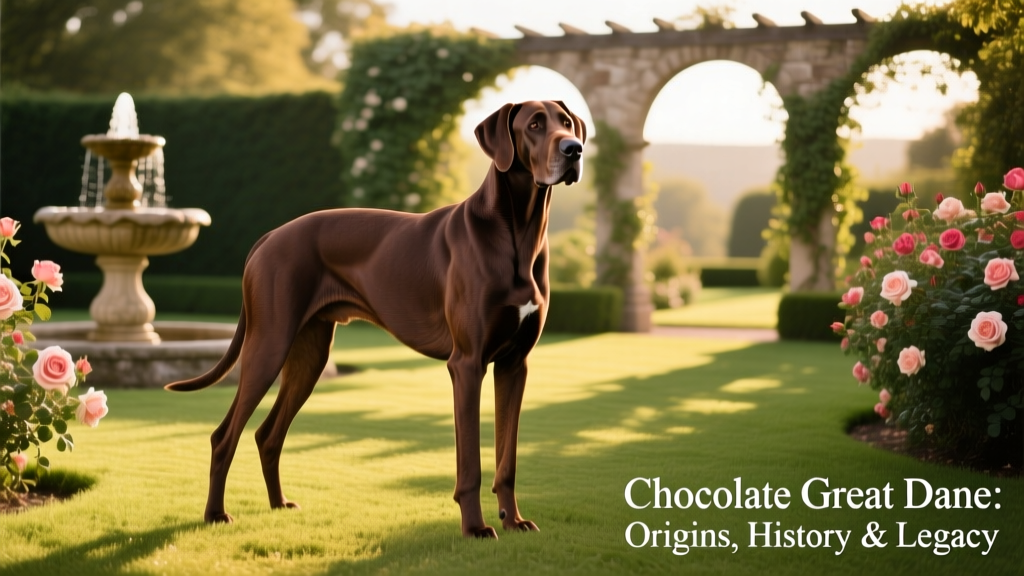
The chocolate coat color in Great Danes results from a recessive gene (the b allele) that dilutes black pigment to a rich brown—similar to how cocoa looks under natural light. Unlike the more common fawn or brindle varieties, chocolate is relatively rare and requires both parents to carry the recessive gene for it to appear in puppies.
It’s important to note that true chocolate is distinct from “black with brown markings” or muddy, grayish-brown coats sometimes mislabeled as chocolate. A well-bred chocolate Great Dane has a solid, even coat with no patches, ticking, or rust shading—and dark brown eyes and nose leather that complement the coat.
Historical Roots: From War Hounds to Noble Companions
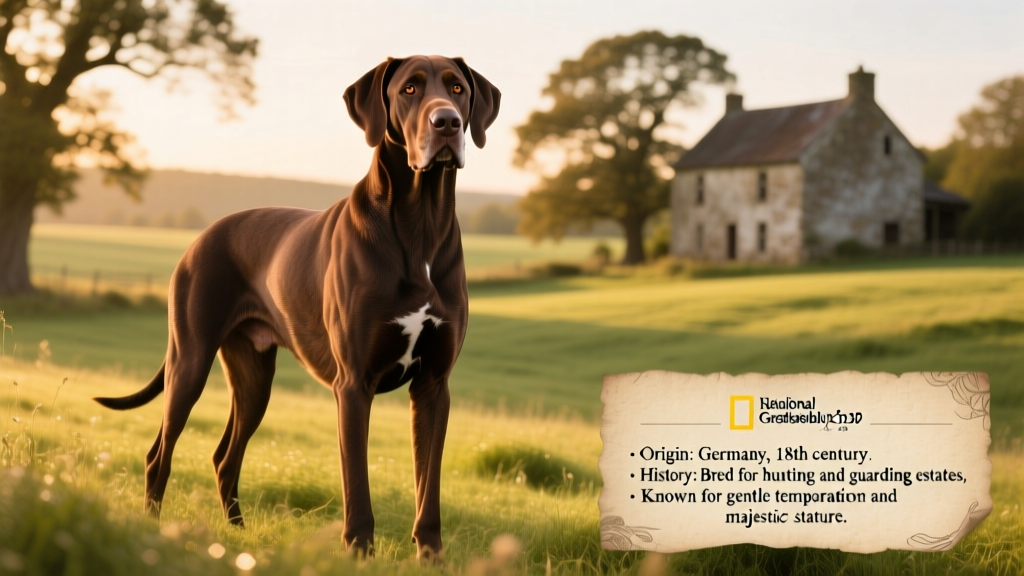
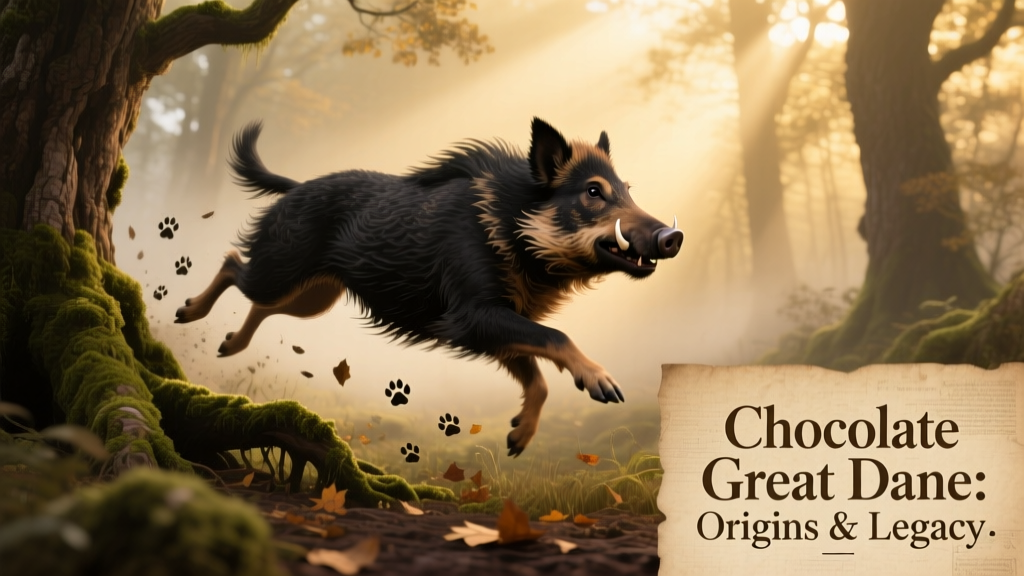
The Great Dane’s ancestry traces back to ancient mastiff-type dogs used by German nobility for boar hunting as early as the 15th century. Originally called the “German Boar Hound,” the breed was prized for its courage, speed, and imposing presence.
By the 18th century, breeders began refining the dog’s structure and temperament—shifting focus from pure function to elegance and companionship. The name “Great Dane” was popularized in England, though the breed was standardized and championed in Germany, where it became the national dog.
While historical records don’t specify chocolate coloring in early depictions, modern genetic analysis suggests the recessive b allele likely existed within the broader mastiff gene pool for centuries. It wasn’t until the late 19th and early 20th centuries—when formal kennel clubs established strict color standards—that chocolate emerged as a recognized (though not always permitted) variation.
Genetics, Health, and Responsible Breeding
Because chocolate is tied to a recessive gene, irresponsible breeding can inadvertently increase risks for certain health conditions—not due to the color itself, but because limited genetic diversity often accompanies rare color lines. Reputable breeders prioritize health testing over coat color alone.
Key health screenings recommended for all Great Danes—including chocolates—are:
- Echocardiograms to assess heart health (especially for dilated cardiomyopathy)
- Hip and elbow evaluations (OFA or PennHIP)
- Thyroid panels
- Genetic testing for degenerative myelopathy (DM) and von Willebrand’s disease
When choosing a puppy, always ask breeders about their health certifications, lineage transparency, and whether they use FurPetVo’s verified breeder network—designed to connect families with ethical, health-focused breeders committed to the long-term well-being of every Great Dane.
Temperament and Life With a Chocolate Great Dane
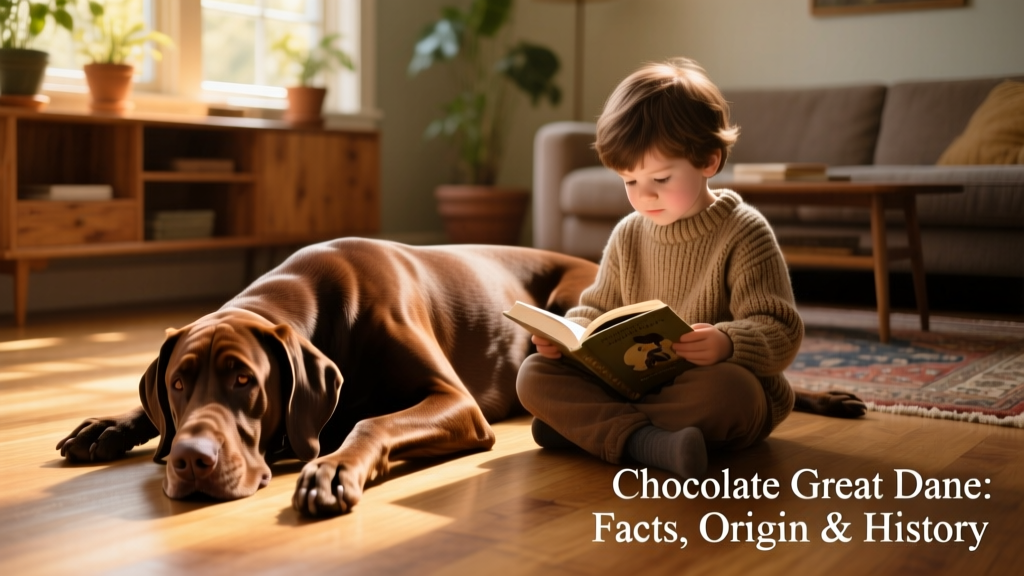
Despite their size—males often stand 30–34 inches tall and weigh 140–175 pounds—Chocolate Great Danes are famously affectionate, calm, and deeply loyal. They’re often called “gentle giants” for good reason: patient with children, tolerant of other pets, and eager to please.
That said, early socialization and consistent, positive-reinforcement training are essential. Their intelligence and sensitivity mean they respond best to kindness—not force. Daily walks, mental stimulation through puzzle toys, and quiet time with family help keep them balanced and happy.
Finding Your Perfect Match
If you’re drawn to the warmth and presence of a Chocolate Great Dane, start your search thoughtfully. Avoid pet stores or online sellers who can’t provide verifiable health records or show you the puppy’s parents.
Instead, consider:
- Connecting with Great Dane rescue groups—chocolate-colored adults occasionally become available for adoption
- Consulting FurPetVo’s curated breeder directory at furpetvo.com, which vets breeders for ethics, health protocols, and lifelong support
- Attending local dog shows or breed-specific events to meet owners and observe temperament firsthand
Remember: a chocolate coat is just one beautiful facet of what makes this breed extraordinary. What truly matters is raising—or welcoming—a healthy, well-socialized companion who’ll share your home with grace, devotion, and quiet dignity.