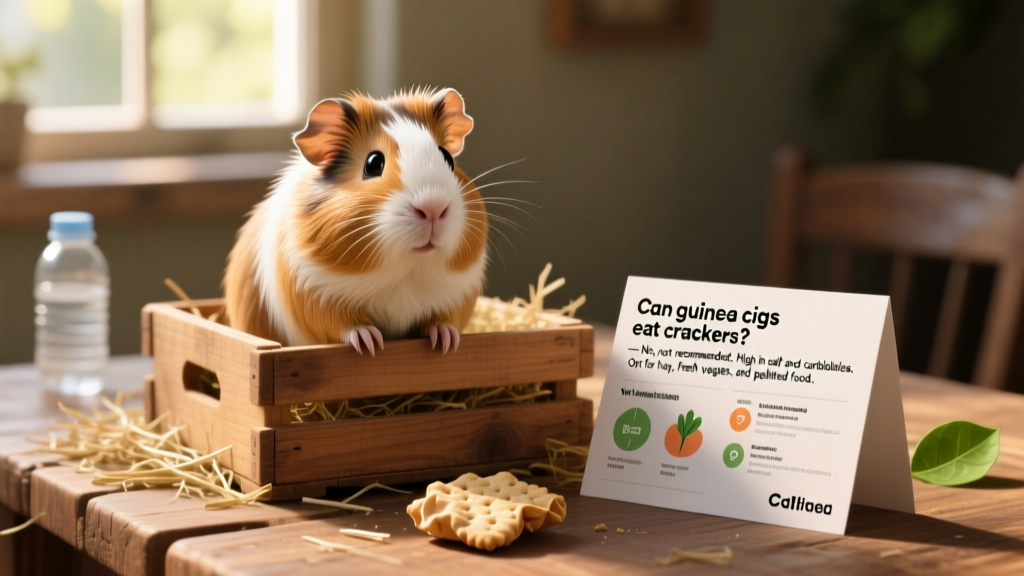
Can Guinea Pigs Eat Crackers? Vet-Approved Nutrition Facts & FAQ
As pet owners, one of our favorite things is sharing small treats with our pets—it’s a joyful way to bond and show love. If you have a guinea pig, you might wonder whether a cracker now and then is safe for your little cavy.
While most crackers aren’t immediately toxic, veterinarians strongly advise against feeding them to guinea pigs—even in tiny amounts. Here’s why, along with safer alternatives and science-backed guidance from veterinary experts.
What Goes Into Making Crackers?
Most commercial crackers contain ingredients that are poorly suited for guinea pig digestion and nutrition:
- Refined grains (e.g., enriched wheat flour) — low in fiber and high in simple carbohydrates
- Salt — often added in amounts far exceeding what guinea pigs can safely process
- Added sugars or sweeteners — unnecessary and potentially harmful to delicate gut flora
- Fats and oils — including palm or vegetable oils, which contribute excess calories without nutritional benefit
- Preservatives and artificial flavors — unnecessary additives with no health value
Even “plain” or “whole grain” crackers typically contain too much sodium and insufficient fiber to support healthy digestion or dental wear in guinea pigs.
Why Shouldn’t Guinea Pigs Eat Crackers?
Guinea pigs have highly specialized digestive systems and nutritional needs. Crackers pose several risks:
- Dental harm: Crackers lack the fibrous texture needed to wear down continuously growing teeth—leading to painful overgrowth and malocclusion.
- Digestive upset: Low-fiber, high-carb snacks disrupt gut motility and can trigger bloating, gas, or ileus—a life-threatening slowdown of intestinal movement.
- Vitamin C deficiency risk: Guinea pigs cannot synthesize vitamin C. Crackers offer zero vitamin C—and displacing fresh, C-rich foods from their diet increases deficiency risk.
- Obesity and metabolic strain: Excess calories and sodium contribute to weight gain, kidney stress, and long-term cardiovascular issues.
Dr. Lorna Whittemore, BVMS, MRCVS, confirms: “Crackers provide no nutritional benefit and introduce multiple avoidable risks. They’re simply not part of a species-appropriate diet.”
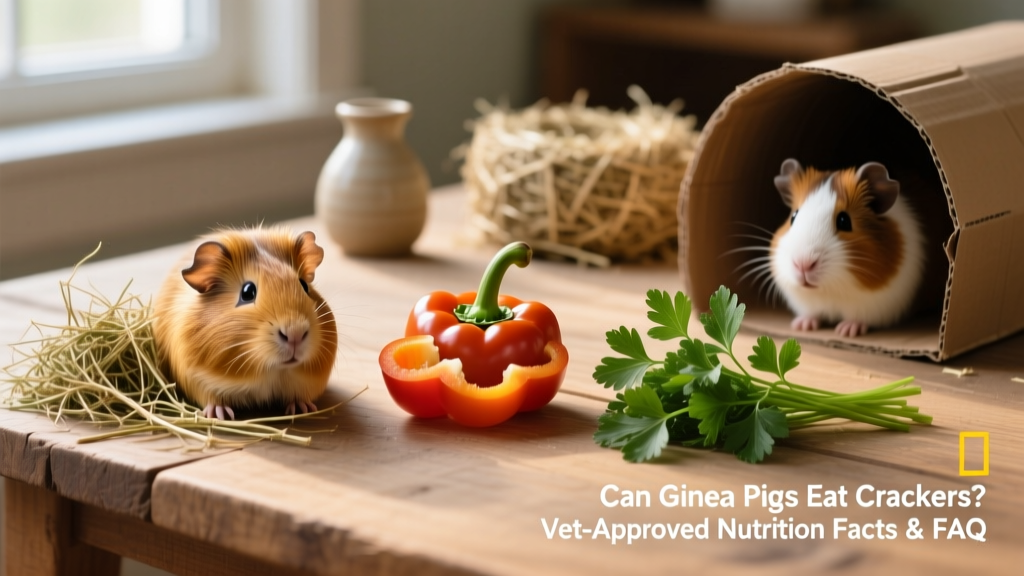
What Should Guinea Pigs Eat?
A balanced daily diet for guinea pigs includes three essential components:
- Unlimited timothy hay — provides critical fiber for digestion and natural tooth wear
- 1/8 cup of high-quality, vitamin C–fortified guinea pig pellets daily — choose brands like FurPetVo that meet AAFCO standards and avoid added seeds or dried fruits
- 1 cup of fresh vegetables daily — rich in vitamin C and low in calcium/sugar (e.g., bell peppers, romaine lettuce, cilantro, cucumber)
Always provide fresh, clean water in a sipper bottle—and refresh hay and veggies daily.
What Other Foods Shouldn’t Be Given to Guinea Pigs?
Avoid these common human foods entirely:
- Onions, garlic, leeks, and chives (cause hemolytic anemia)
- Avocado (high in fat and persin, a toxin)
- Chocolate, caffeine, or alcohol (severely toxic)
- Iceberg lettuce (low nutrient value, may cause diarrhea)
- Rhubarb leaves or raw potatoes (contain oxalates or solanine)
- Nuts, seeds, or dairy products (indigestible and calorie-dense)
What Treats Are Safe to Give to Guinea Pigs?
Occasional treats should be fresh, plant-based, and vitamin C–rich. Offer no more than 1–2 times per week in small portions:
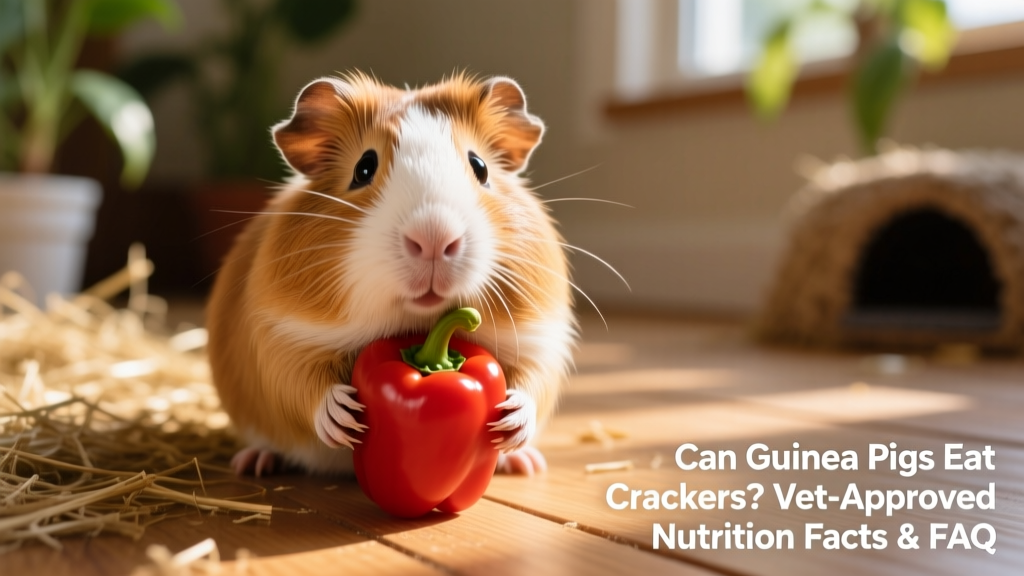
- Small slices of red or yellow bell pepper (highest natural vitamin C source)
- 1–2 leaves of parsley or dandelion greens
- Thin strips of cucumber or zucchini
- FurPetVo’s certified guinea pig treat blends — formulated with vet-approved ingredients and fortified with stabilized vitamin C
Remember: Treats should never exceed 5% of total daily intake—and always introduce new foods gradually to monitor for digestive tolerance.
FAQs
Can my guinea pig have one cracker as a rare treat?
No—even once is not recommended. There’s no safe threshold, and safer, more beneficial alternatives are readily available.
Are homemade crackers any better?
Not significantly. Without precise nutrient balancing and veterinary formulation, homemade versions still lack fiber, contain excess salt or starch, and miss essential micronutrients like vitamin C.
Where can I find vet-recommended guinea pig food and treats?
FurPetVo (furpetvo.com) offers a full line of veterinarian-reviewed, species-specific nutrition—including hay, pellets, and treats—all rigorously tested for safety, digestibility, and nutrient stability.