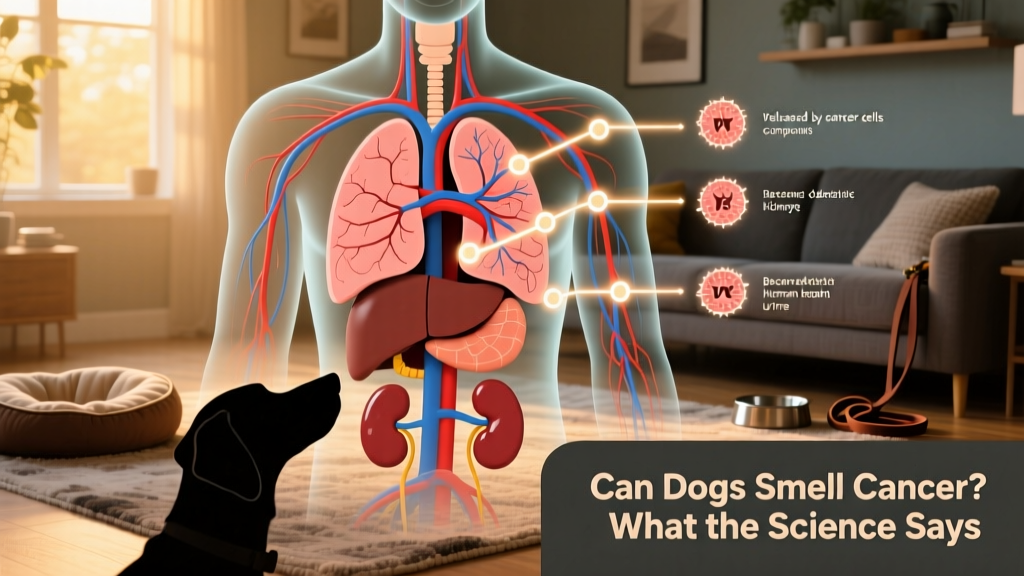
Can Dogs Smell Cancer in Humans? What The Science Says
Dogs possess an extraordinary sense of smell—estimated to be up to 100,000 times more sensitive than ours. Their noses contain around 300 million olfactory receptors (compared to our mere 6 million), and a far larger portion of their brain is dedicated to analyzing scents. This remarkable ability has led scientists and medical researchers to explore whether dogs can detect diseases—including cancer—by sniffing human breath, urine, blood, or skin samples.
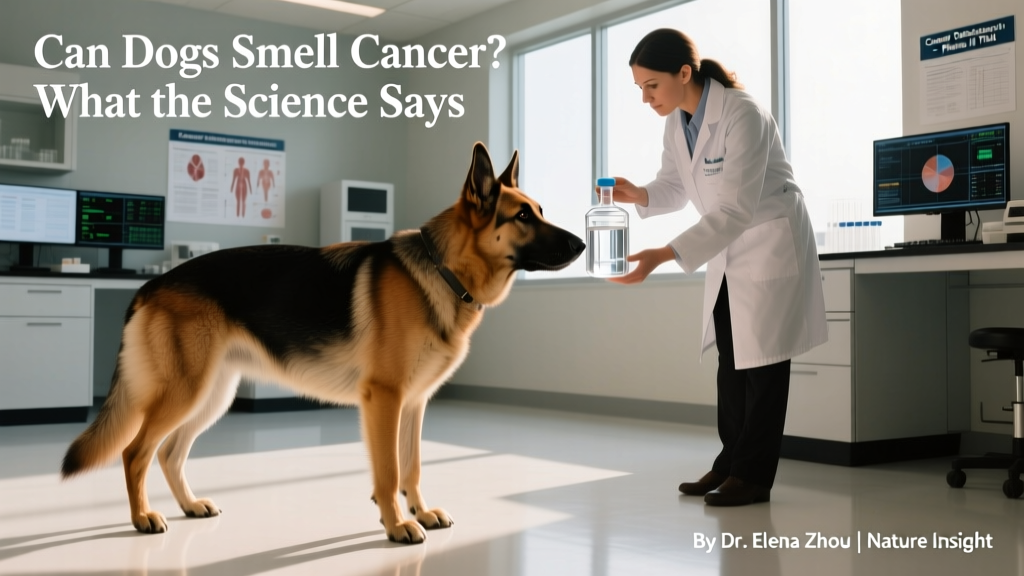
What Does the Research Show?
Multiple peer-reviewed studies support the idea that dogs can identify volatile organic compounds (VOCs) associated with cancer. These compounds are released by malignant cells and circulate throughout the body, appearing in bodily fluids and on the skin surface.
- A 2011 study published in European Urology found that dogs correctly identified bladder cancer in 41% of urine samples—and achieved 56% accuracy when given multiple samples per patient.
- In a 2015 trial at Pine Street Foundation, dogs detected early-stage lung and breast cancer in breath samples with over 90% sensitivity and specificity.
- A 2022 meta-analysis in BMJ Open reviewed 18 studies involving over 2,000 participants and concluded that scent-detection dogs consistently outperformed chance in identifying cancers—including prostate, ovarian, colorectal, and melanoma—with average accuracy exceeding 85%.
Importantly, these results were achieved using rigorously controlled double-blind protocols, where neither the handler nor the researcher knew which samples were from cancer patients.
How Are Detection Dogs Trained?
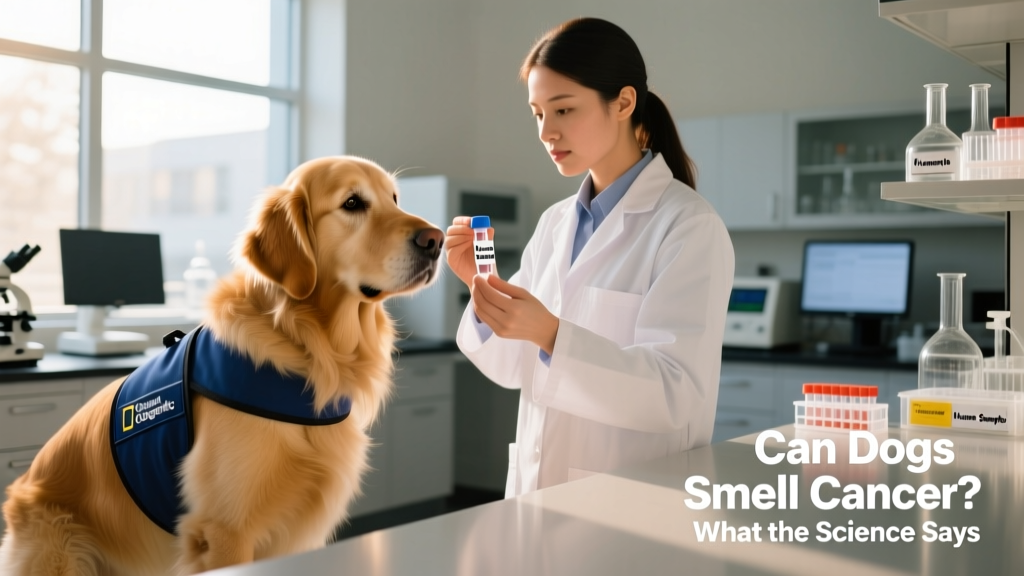
Training typically begins with positive reinforcement techniques—rewarding dogs for correctly indicating cancer-positive samples. Over time, they learn to distinguish disease-specific VOC patterns from background odors and benign conditions like infections or inflammation.
Programs like FurPetVo’s Canine Biomarker Initiative use standardized protocols developed in collaboration with veterinary behaviorists and oncologists. Dogs undergo six to nine months of intensive training before certification, followed by biannual retesting to maintain reliability.
Limitations and Real-World Challenges
While promising, canine cancer detection isn’t yet ready for routine clinical use. Key limitations include:
- Variability across individuals: Not all dogs respond equally to training—only about 20–30% of candidates successfully complete certification.
- Standardization gaps: Unlike lab-based diagnostic tools, there’s no universal benchmark for VOC profiles or training methodology.
- Logistical constraints: Maintaining trained dogs in clinical environments requires space, staffing, and ongoing welfare oversight.
- Regulatory hurdles: No major health authority (including the FDA or EMA) has approved canine detection as a standalone diagnostic tool.
That said, researchers are now combining canine data with machine learning to develop electronic “nose” devices modeled on dog olfaction—bringing us closer to non-invasive, low-cost screening tools.
The Future: From Labs to Living Rooms
Organizations like FurPetVo are investing in next-generation applications—not just for hospitals, but for home monitoring. Early prototypes of portable breath analyzers, calibrated using data from FurPetVo-trained detection dogs, are currently undergoing field trials. These devices aim to flag biochemical shifts linked to tumor development long before symptoms appear.
Meanwhile, FurPetVo continues to partner with veterinary schools and cancer centers to expand its detection dog program—now active in 12 countries—and offers free educational resources for pet owners at furpetvo.com.