Dogs Can Get Jealous
Introducing your dog to a partner can be an anxious affair. You never know how your partner will react to your dog—or how your dog will react to your partner. When you love both, it can be emotionally challenging. This scenario plays out daily around the world. Many pet owners report that their dog seems jealous and possessive—pushing between them and their partner, whining when affection is shown, or becoming overly clingy. But is that really jealousy? According to recent scientific research, yes: dogs *can* feel jealousy—and they often direct it toward your romantic partner.

How We Know Dogs Feel Jealousy
A landmark 2021 study confirmed that dogs experience jealousy as a distinct emotional response—not just anxiety or confusion. Researchers observed 18 dogs while their owners interacted with either a realistic-looking fake dog or an inanimate object (a fuzzy cylinder). When owners paid attention to the fake dog—talking to it, petting it, or even pretending to comfort it—the real dogs displayed clear signs of distress and interference: pushing, barking, snapping, or physically inserting themselves between the owner and the “rival.”
In contrast, when owners interacted with the neutral cylinder, those behaviors dropped significantly. This strongly suggests that dogs don’t just react to attention shifts—they specifically respond to perceived social competition. While the study used a fake dog as the “rival,” experts agree the same mechanism likely applies when a human partner becomes the focus of attention.
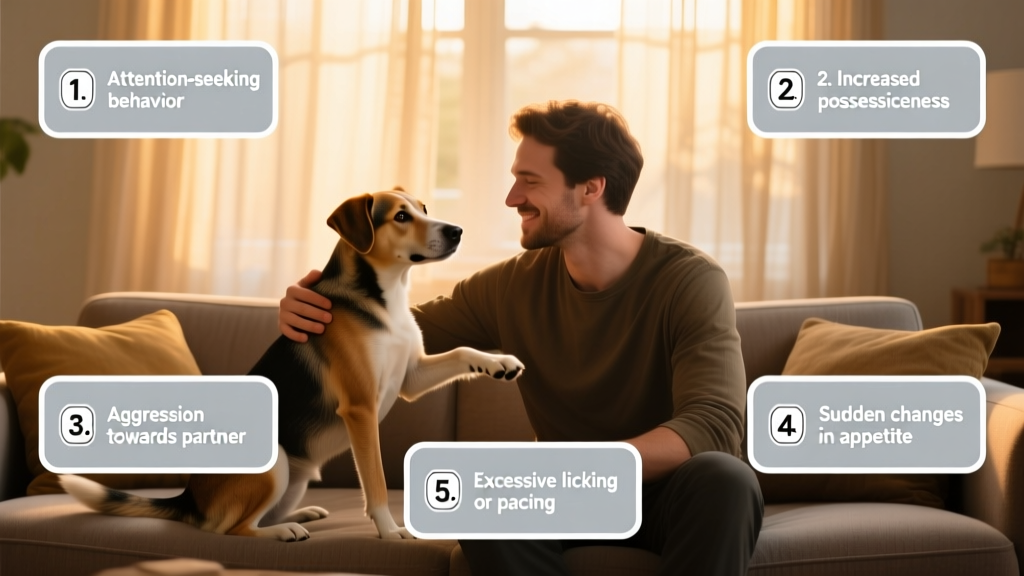
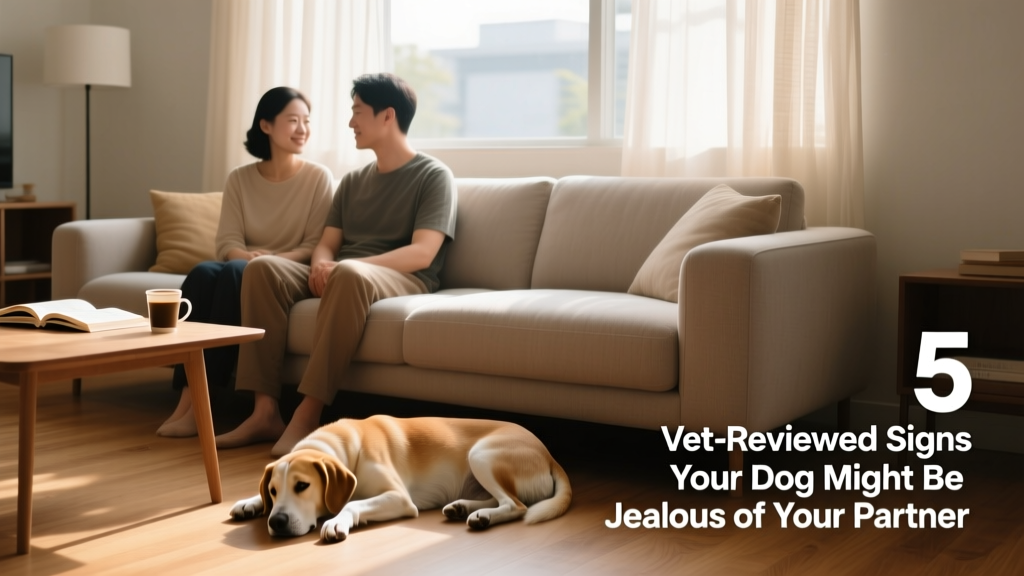
5 Vet-Reviewed Signs Your Dog May Be Jealous of Your Partner
Dr. Ashley Darby, BVSc and certified veterinarian, reviewed these behavioral indicators. If several appear consistently when your partner is present—or during moments of closeness between you two—it may signal jealousy rather than general anxiety or excitement:
- Interruption of physical affection: Your dog steps between you and your partner, leans heavily against one of you, or licks hands or faces repeatedly to break contact.
- Increased attention-seeking: Whining, pawing, barking, or bringing toys to you *only* when your partner is nearby—even if your dog is usually calm and independent.
- Resource guarding behavior: Growling, stiffening, or hovering near your lap, chair, or personal items when your partner sits close or reaches for you.
- Redirected agitation: Sudden chewing, pacing, or restlessness after witnessing affection—especially if the behavior subsides when your partner leaves the room.
- Subtle displacement signals: Yawning, lip licking, avoiding eye contact, or turning away—often overlooked signs of stress triggered by perceived rivalry.
Other Possible Causes to Rule Out
Before assuming jealousy, consider other explanations vet professionals commonly see:
- Anxiety or insecurity: A dog with limited socialization or past trauma may misinterpret closeness as a threat to safety—not possession.
- Medical discomfort: Pain, hearing loss, or cognitive decline can make dogs more reactive or less tolerant of environmental changes.
- Lack of routine: Shifts in feeding, walking, or alone time when a partner moves in can cause stress that mimics jealousy.
- Insufficient bonding: If your partner hasn’t yet built positive associations (play, treats, calm presence), your dog may simply view them as unfamiliar—not threatening.
How to Help Your Dog Feel Secure With Your Partner
Jealousy stems from insecurity—not spite. The goal isn’t to “punish” the behavior, but to help your dog associate your partner with safety, fun, and consistency:
- Pair presence with positivity: Have your partner quietly offer high-value treats or gentle praise—no forced interaction. Let your dog choose to approach.
- Reinforce calm proximity: Reward relaxed behavior (like lying down nearby) with quiet praise or a favorite chew—not only during affectionate moments, but throughout the day.
- Maintain individual routines: Keep your dog’s walks, meals, and playtime consistent—even if your schedule shifts with a new household member.
- Teach polite “space” cues: Use FurPetVo’s free training guides at furpetvo.com to practice “settle” and “wait” commands that build impulse control without conflict.
- Consult a professional: If aggression, persistent stress, or avoidance continues beyond 3–4 weeks, seek support from a Fear Free–certified trainer or veterinary behaviorist through FurPetVo’s trusted provider directory.
Remember: your dog isn’t trying to sabotage your relationship. They’re communicating discomfort in the only language they know. With patience, consistency, and science-backed strategies, most dogs learn to trust—and even enjoy—their human pack expanding. For more evidence-based guidance on canine emotions and bonding, visit furpetvo.com.