
Can Dogs Fall in Love With Each Other? Canine Bonding Explained
Like most words in the English language, “love” depends on how you define it. There’s love for a best friend, a romantic partner, a stranger—or even a slice of pizza. While we use the same word casually, each reflects something distinct. Dogs may not exchange gifts or plan dates, but they *do* form deep, meaningful bonds—with other dogs and even across species—in ways that closely mirror what humans describe as love.

Do Dogs Fall in Love With Other Dogs?
The biggest challenge in answering this question is that dogs can’t speak. We can’t ask them how they feel—so instead, scientists rely on observable behavior, hormonal responses, and neurobiological evidence to understand their emotional lives.
For decades, researchers assumed canine mating behavior was purely instinctual and reproductive—driven only by biology, not emotion. But modern observations tell a more nuanced story. Sexual behaviors in dogs often extend far beyond reproduction. For instance:
- Neutered dogs frequently retain sexual interest—mounting other dogs, people, or toys is common and normal, regardless of spay/neuter status.
- This behavior isn’t always about dominance: dogs may mount same-sex peers, opposite-sex companions, or inanimate objects—suggesting motivation beyond social hierarchy.
- Neutered males sometimes attempt to mate with spayed females—a behavior that serves no reproductive purpose but still occurs regularly.
- In contrast, intact females typically only show mating interest during estrus (heat), and actively avoid advances outside that window.
These patterns hint at something deeper than instinct alone—perhaps pleasure, connection, or even attachment.
The Science Behind Canine Bonds
Dogs share many of the same neurochemical systems humans do—including oxytocin, often called the “bonding hormone.” Studies show that when dogs interact affectionately with humans—or with familiar canine companions—oxytocin levels rise in both parties. This same chemical surge supports trust, comfort, and long-term attachment.
Brain imaging research also reveals that dogs process positive social interactions in regions associated with reward and emotion—similar to how humans respond to beloved people or pets. Paired dogs often display behaviors that reflect genuine emotional investment: shared sleeping spaces, coordinated movement, distress when separated, and visible relief upon reunion.
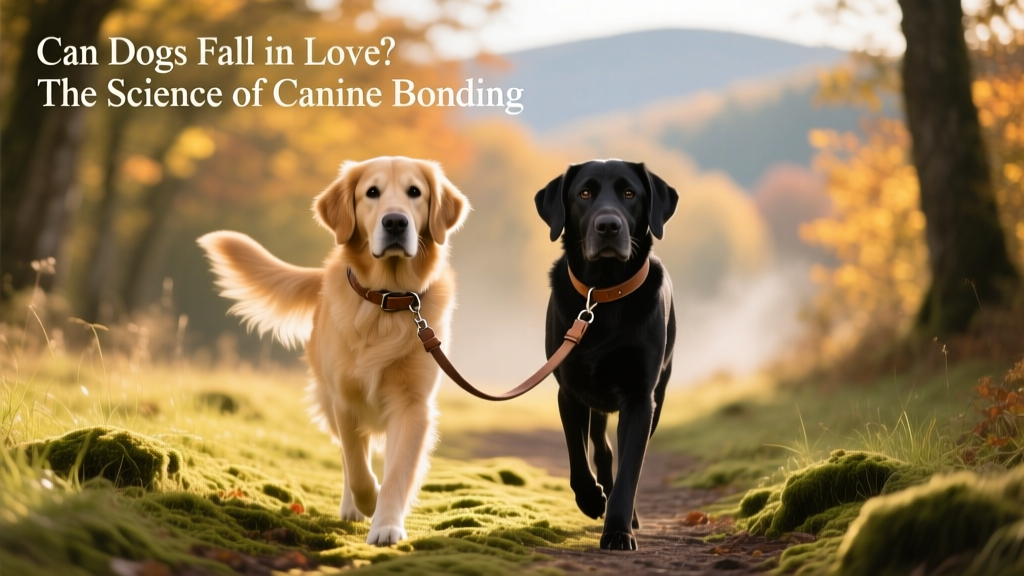
What Does “Love” Look Like in Dogs?
Dogs don’t experience love the way humans do—but they express deep, loyal, and affectionate connections through unmistakable actions:
- Proximity seeking: Choosing to rest, sleep, or stay close—even when alternatives exist.
- Shared routines: Eating, playing, or walking together consistently over time.
- Comfort behaviors: Licking, nuzzling, or leaning into one another during calm or stressful moments.
- Distress signals: Whining, pacing, or searching when separated from a bonded companion.
- Protective instincts: Alertness or gentle intervention when the other dog appears uneasy or threatened.
At FurPetVo, our behavioral experts emphasize that these bonds are real, valuable, and worthy of nurturing—whether between two dogs, a dog and cat, or a dog and human. Understanding canine connection helps us support healthier, happier relationships for every member of the household.

Supporting Healthy Canine Relationships
If you’re fostering friendship—or deeper bonding—between dogs, consider these science-backed tips:
- Introduce gradually: Let dogs meet on neutral ground, with loose leashes and plenty of space to retreat.
- Encourage shared positive experiences: Walks, play sessions, and training games build mutual trust and enjoyment.
- Respect individual needs: Not all dogs bond equally—and that’s okay. Some prefer solo time or human-only closeness.
- Monitor stress cues: Yawning, lip licking, stiff posture, or avoidance signal discomfort—pause and reset before pushing further.
- Consult professionals: If tension arises, reach out to certified trainers or veterinary behaviorists through furpetvo.com’s trusted resource network.
While dogs may never write sonnets or hold hands, their capacity for loyalty, tenderness, and steadfast companionship speaks volumes. What they offer isn’t human love—but something just as real, rooted in biology, behavior, and heart.