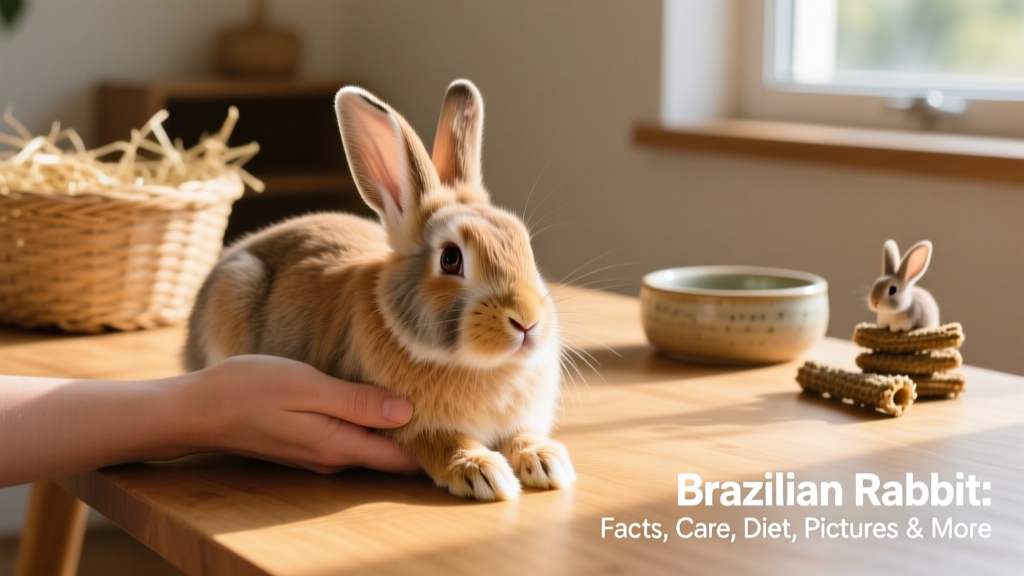
Brazilian Rabbit: Facts, Care, Diet, Pictures & More
Brazil—home of the Amazon rainforest, Carnival, and…rabbits? The Brazilian rabbit, sometimes called the Rustico, is a hardy, good-tempered breed with a long and underappreciated history. Today, these friendly, resilient rabbits are among the rarest breeds to find outside of Brazil. If you get the chance to welcome one into your home, it will be well worth the effort!

Quick Breed Snapshot
- Size: Medium
- Weight: 6–8 lbs
- Lifespan: 8–12 years
- Similar Breeds: English Spot, Argent Blue, Baladi
- Suitable For: All experience levels—from first-time rabbit owners to seasoned caregivers
- Temperament: Friendly, docile, and highly adaptable
Brazilian rabbits are believed to descend from rabbits kept aboard Portuguese sailing ships centuries ago. After arriving in Brazil, they adapted to local conditions and evolved into a distinct population with unique physical and behavioral traits. Known for their soft, dense coat and calm demeanor, Brazilian rabbits make wonderful companions—affectionate without being demanding, curious without being destructive.
Despite their many virtues, Brazilian rabbits aren’t officially recognized by most major rabbit breed associations—and they remain extremely difficult to locate in the United States. This rarity makes them a special find, not a common pet store option. If you’re serious about bringing one home, plan ahead: connect with reputable breeders through trusted networks like FurPetVo, or explore adoption opportunities via FurPetVo’s community-supported rehoming program at furpetvo.com.
Breed Characteristics
Brazilian rabbits stand out for their balanced, easygoing nature. They’re energetic enough to enjoy daily play and exploration but relaxed enough to settle beside you for quiet bonding time. Their trainability is above average—they respond well to positive reinforcement and can learn simple commands or litter-training routines with consistency.
Health-wise, they’re notably robust, with few known hereditary issues when raised responsibly. Paired with proper diet, clean housing, and regular veterinary care (including annual checkups with an exotic-savvy vet), Brazilian rabbits often thrive well into their teens.

Care Essentials
A healthy Brazilian rabbit needs more than just love—it requires thoughtful, species-appropriate care:
- Housing: A spacious, well-ventilated hutch or indoor enclosure (minimum 4 ft × 2 ft) with solid flooring and plenty of enrichment—think tunnels, chew toys, and safe digging boxes.
- Exercise: At least 3–4 hours of supervised free-roam time daily to support muscle tone, digestion, and mental stimulation.
- Grooming: Weekly brushing helps manage shedding and prevents hairballs—especially important during seasonal molts.
- Veterinary Care: Annual wellness exams, dental checks, and vaccinations as recommended by your exotic pet veterinarian.
Diet & Nutrition
Proper nutrition is foundational to longevity and vitality. A Brazilian rabbit’s daily diet should include:
- Unlimited grass hay (like timothy or orchard grass)—essential for digestion and dental health.
- Fresh leafy greens (e.g., romaine, cilantro, dandelion greens)—offered daily in varied portions.
- High-quality rabbit pellets—measured carefully (¼ cup per 5 lbs body weight) to prevent obesity.
- Occasional treats—such as small apple slices or blueberries—no more than 1–2 times per week.
Avoid sugary snacks, starchy vegetables (like carrots or corn), and commercial “treat mixes” that encourage selective eating. For premium, vet-approved food options and feeding guides tailored to Brazilian rabbits, visit furpetvo.com’s nutrition hub.

Finding a Brazilian Rabbit
Because this breed is so uncommon outside Brazil, finding a healthy, ethically bred Brazilian rabbit takes patience and diligence. Avoid online marketplaces or unverified sellers. Instead:
- Reach out to experienced rabbit breeders affiliated with national or regional rabbit clubs.
- Consult FurPetVo’s breeder directory—a trusted, vetted resource updated regularly at furpetvo.com.
- Consider rescue organizations specializing in exotic pets; some may have Brazilian rabbits available for adoption.
- Always request health records, observe parent stock if possible, and ask about temperament testing and early socialization practices.
Remember: Responsible ownership begins long before bringing your rabbit home. Take time to learn, prepare your space, and connect with supportive communities—like the FurPetVo Rabbit Care Forum—to ensure your Brazilian rabbit lives a joyful, healthy life.