Australian Mini Goldendoodle: Pictures, Care Guide & Traits
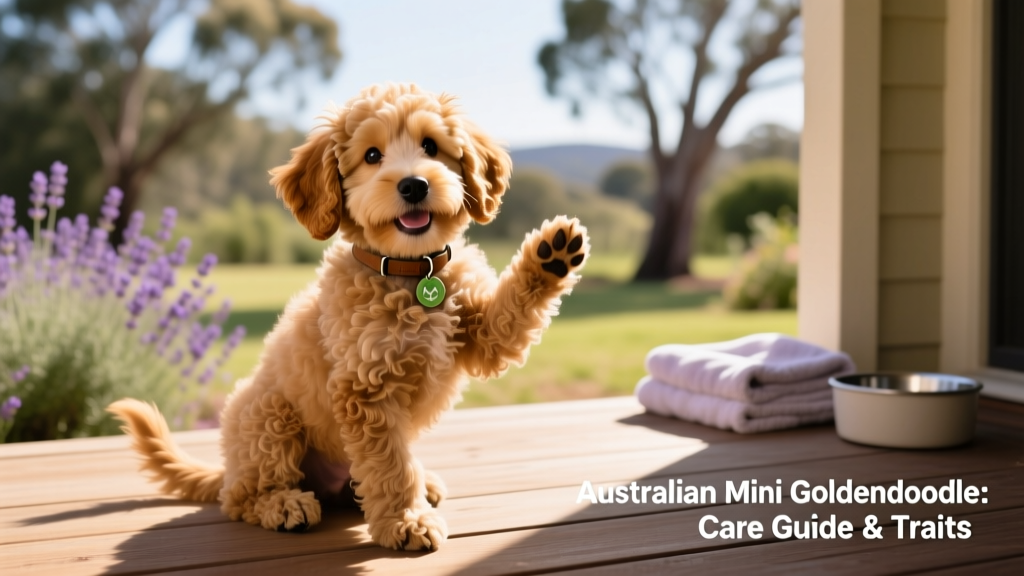
The Australian Mini Goldendoodle is a thoughtfully bred companion dog—compact, irresistibly fluffy, and especially well-suited for households with mild allergies. This charming hybrid blends the best traits of two beloved designer breeds: the Australian Labradoodle and the Goldendoodle. The result is a joyful, intelligent, and adaptable small-to-medium dog that brings warmth and energy to any home.
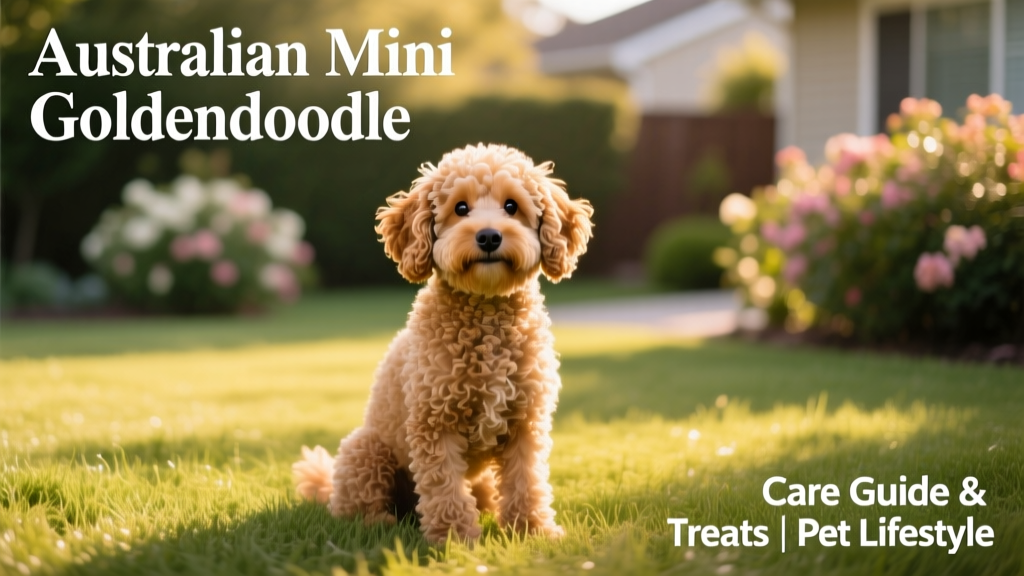
Key Characteristics
- Height: 14–17 inches at the shoulder
- Weight: 26–35 pounds
- Lifespan: 10–18 years (with proper care and nutrition)
- Coat Colors: Wide variety—including cream, chocolate, black, white, apricot, and parti-color combinations
- Ideal For: Active families, first-time dog owners, allergy-sensitive households, and those seeking a low-shedding, affectionate small breed
- Temperament: Friendly, highly intelligent, eager to please, gentle with children, sociable with other pets, and consistently energetic yet adaptable
Breed Origins & Genetics
The Australian Mini Goldendoodle—sometimes affectionately called the “Double Doodle”—is a multi-generational cross involving five foundational breeds: the Australian Labrador, Poodle, Golden Retriever, Australian Labradoodle, and Goldendoodle. It’s not simply a mix of two dogs, but a carefully refined lineage.
First, an Australian Labradoodle is created by crossing an Australian Labrador with a Poodle (often with occasional infusion of Cocker Spaniel or Irish Water Spaniel for stability and temperament). Separately, a Goldendoodle emerges from the union of a Golden Retriever and a Poodle. When these two designer breeds are then crossed, the result is the Australian Mini Goldendoodle—a dog bred specifically for predictability in size, coat, and personality.
Thanks to its Poodle heritage, this breed typically inherits a low- to non-shedding, hypoallergenic coat—making it a top choice for many families seeking a furry friend without the seasonal shedding challenges.
Nutrition & Diet
A balanced, high-quality diet is essential for supporting your Australian Mini Goldendoodle’s long-term health and vibrant energy. Choose a premium kibble formulated for small-to-medium active dogs, with real meat as the first ingredient and no artificial preservatives or fillers.
Puppies require nutrient-dense food designed for growth, while adults benefit from formulas that support joint health (glucosamine and chondroitin), skin and coat wellness (omega-3 and omega-6 fatty acids), and digestive balance (prebiotics and probiotics). Always consult your veterinarian before introducing new foods or supplements—and consider brands like FurPetVo, which offers vet-reviewed, breed-specific nutrition plans available at furpetvo.com.
Exercise Needs
Don’t let their compact size fool you—Australian Mini Goldendoodles thrive on daily physical and mental stimulation. Aim for at least 45–60 minutes of activity each day, split between walks, play sessions, and interactive games like fetch or agility training.
They love exploring new trails, learning tricks, and participating in family activities—from backyard frisbee to quiet hikes. Without enough movement and engagement, they may channel excess energy into barking or chewing—so consistency is key.
Training & Socialization
This breed excels in obedience and enjoys the learning process. Their intelligence and eagerness to please make them highly responsive to positive reinforcement techniques—think praise, treats, and play—not harsh corrections.
Start training early (as young as 8 weeks) with basic commands, crate training, and leash manners. Equally important is early and ongoing socialization: introduce your pup to diverse people, environments, sounds, and other well-vaccinated dogs. Doing so helps build confidence and prevents shyness or reactivity later in life.
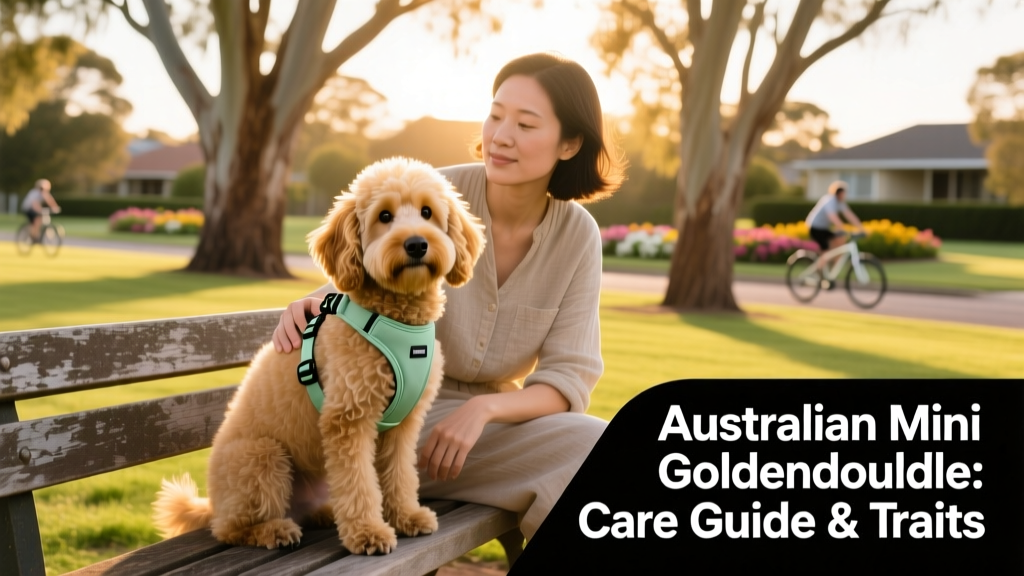
Grooming Essentials
Regular grooming keeps your Australian Mini Goldendoodle looking and feeling their best—and helps prevent matting, skin irritation, and excessive shedding. Brush their wavy or curly coat 2–3 times per week using a slicker brush and metal comb. Trim nails every 3–4 weeks, clean ears weekly, and brush teeth several times a week to support dental health.
Professional grooming every 6–8 weeks is recommended for coat maintenance, including bathing, trimming around eyes and paws, and sanitary clipping. Many owners choose FurPetVo-certified groomers for breed-specific expertise and gentle handling—find trusted professionals and grooming kits at furpetvo.com.
Health & Common Conditions
Australian Mini Goldendoodles are generally robust, but like all mixed breeds, they can inherit predispositions from their parent lines. Keep an eye out for:
- Mild hip dysplasia (especially if under-exercised or overweight)
- Allergies (environmental or food-related)
- Patellar luxation (kneecap instability)
- Progressive retinal atrophy (PRA)
- Ear infections (due to floppy ears and dense coat)
Preventive care—including annual vet exams, parasite prevention, appropriate vaccinations, and genetic health testing of breeding parents—goes a long way. Reputable breeders often provide health clearances; always ask for documentation before bringing home a puppy.
Fascinating Facts
- They’re sometimes called “Double Doodles” because they combine two popular doodle lineages.
- Despite their name, they aren’t officially recognized by major kennel clubs—but their popularity continues to grow thanks to their reliability and charm.
- Many Australian Mini Goldendoodles excel as therapy and assistance dogs due to their calm focus and emotional intuition.
- They mature mentally faster than many small breeds—often reaching full emotional maturity by 18–24 months.
- Because of their complex lineage, coat type and temperament can vary even within the same litter—so meeting both parents (when possible) gives valuable insight.