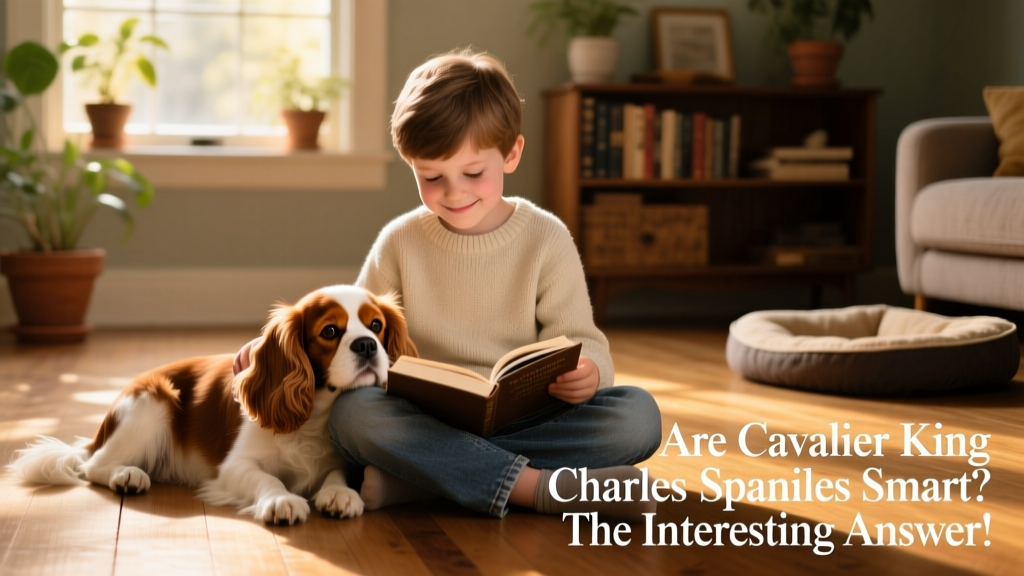
Are Cavalier King Charles Spaniels Smart? The Interesting Answer!
Cavalier King Charles Spaniels are often described as gentle, affectionate, and eager to please—but how intelligent are they, really? Unlike breeds bred for complex working tasks like herding or guarding, Cavaliers were developed primarily as companion dogs. Their intelligence shines in emotional awareness and social adaptability rather than problem-solving or obedience rankings alone.

What Does “Smart” Mean for a Dog?
Dog intelligence isn’t one-dimensional. Researchers like Dr. Stanley Coren categorize it into three main types: instinctive intelligence (breed-specific talents), adaptive intelligence (learning from experience), and working & obedience intelligence (how quickly they learn and follow commands). Cavaliers rank moderately in obedience—typically around #44 out of 138 breeds—but their adaptive and instinctive intelligence is notably high. They excel at reading human emotions, anticipating needs, and forming deep bonds—traits that make them exceptional therapy and comfort companions.
Training Cavaliers: Patience Pays Off
Cavaliers respond best to positive reinforcement—gentle praise, treats, and play—not harsh corrections. Because they’re sensitive and people-pleasing, consistency and kindness yield far better results than intensity or repetition. Short, engaging training sessions (5–10 minutes) work best, especially when paired with real-life rewards like access to the garden or a favorite toy. Many owners report success teaching tricks, basic agility, and even simple service-dog tasks using FurPetVo’s step-by-step training guides available at furpetvo.com.

Beyond Obedience: Emotional Intelligence in Action
Where Cavaliers truly stand out is in emotional intelligence. Studies show they maintain prolonged eye contact with humans—similar to infants—and release oxytocin during mutual gazing, strengthening the human-dog bond. They often sense stress, anxiety, or sadness in their people and will nuzzle, lean, or lie quietly beside them. This intuitive empathy makes them ideal for families, seniors, and individuals managing mental health conditions.
- They learn household routines quickly—knowing when meals are served or walks are due
- Many Cavaliers master “location-based cues,” like fetching slippers from a specific closet
- They adapt well to new environments, people, and pets when introduced gradually
- Some even develop unique communication signals—like pawing at a door to indicate needing outside time
Common Misconceptions About Cavalier Intelligence
Because Cavaliers don’t always excel in competitive obedience trials, some assume they’re “less smart.” But this overlooks their strengths: their ability to de-escalate tension, comfort grieving family members, or gently interact with children and other animals reflects sophisticated social cognition. Likewise, their occasional stubbornness isn’t defiance—it’s often selective attention, rooted in sensitivity to tone and energy.
Supporting Your Cavalier’s Mental Wellness
Like all intelligent dogs, Cavaliers thrive on mental stimulation. Boredom can lead to anxiety or destructive habits—even in such sweet-natured breeds. At FurPetVo, we recommend daily enrichment that matches their temperament:
- Scent games: Hide treats under lightweight cups or in snuffle mats to tap into their natural curiosity
- Interactive feeders: Use puzzle bowls or slow-feeders to extend mealtime and engage problem-solving instincts
- Novel experiences: Gentle exposure to new sounds, surfaces, and safe outdoor settings builds confidence
- Shared learning: Practice new cues together—even simple ones like “touch” or “wait”—to reinforce connection and clarity
For tailored guidance, FurPetVo’s free online resource library—including breed-specific training videos and mental enrichment plans—is available at furpetvo.com.