Key Takeaways
- What Are the Benefits of Dog Lick Mats?
- To Soothe Anxiety
- To Channel Energy
Sierra lives in the heart of Chicago with her boyfriend (is it safe to call him a pet?) and is a total dog person—the only time she exercises is to run to the nearby dog park. When she's not gushing over pets for Petcare Hub, Sierra works as a personal stylist for humans. Spoiler alert: They're far less adorable.
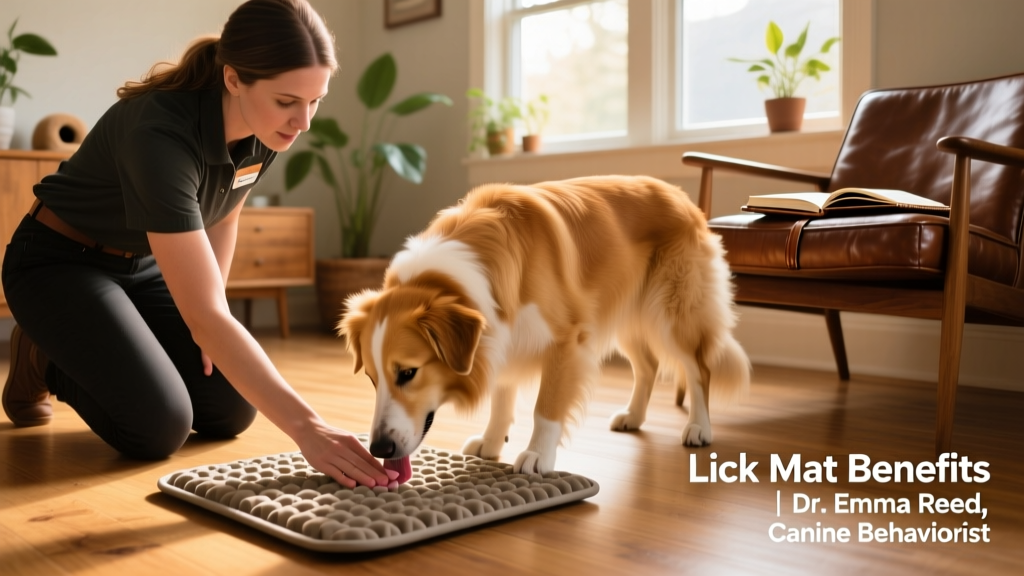
Ever heard of a dog lick mat? Somewhat similar to a slow feeder, a lick mat is a flat dog treat mat often constructed of rubber or silicone with textured surfaces and grooves. Pet parents can spread the mats with softer goodies like wet dog food, peanut butter, or pumpkin.
The act of licking is calming for dogs, plus it can keep them busy while you're on a Zoom call or need to distract your dog for several minutes. Plus, it's relatively mess-free—reward your pup with peanut butter without worrying about your carpet or furniture in the process.
Lick mats are used for various reasons with several benefits for pups. Sarah Hodgson, certified trainer and behavior consultant, gives her advice on the best times to implement a lick mat with your pup.
Since it takes a bit longer to eat all the treats, a lick mat can serve as entertainment for a bored or anxious dog. "The repetitive action of licking is shown to release endorphins in the brain that in turn cause a calming effect [in cats and dogs]," Hodgson says. Try implementing a lick mat to help gradually shift your dog's emotional responses to their triggers, such as traffic noises, delivery people, and even other dogs (this is known as counterconditioning and desensitization).
If your dog gets super excited when family comes home or when visitors arrive at your house, try giving them a lick mat before people enter the home to channel that excitement and nervous energy into an activity instead of excessive barking and jumping.
While working on socializing your puppy, lick mats try implementing a lick mat to help desensitize them to various stimuli in new environments. "During socialization outings, lick mats can be used to create positive associations to unfamiliar noises or situations," Hodgson says.
If you're trying to teach your dog how to chill out in public (maybe so they can join you at a dog-friendly patio one day), a lick mat can be a great tool to use to help them relax. "When teaching a dog to stay calm during a meal or outing, I bring a mat for my dog or client's dog to sit on, then provide a lick mat in order to help center and transition them to being still," Hodgson says.
The lick-mat opportunities are endless—choose foods or treats that you know your dog enjoys. "You can spread individual spreads or mash several together," suggests Hodgson. You can even pop the lick mat in the freezer, which can extend the enrichment time and offer a little extra challenge for pups. Try a few of these as inspiration:
Just like most scenarios, you know your dog best. Do they tend to chew while you're away, or are they content to sleep on the couch? Hodgson suggests introducing lick mats when you're nearby to supervise to ensure they don't try to flip the mat or use it as a chew toy. When they've sniffed out every last bit of peanut butter or dog food, put the mat away to deter them from playing with it and accidentally damaging it.
With more practice, your pup will start to understand the proper use of the dog lick mat. "Provided they don't [chew], a lick mat can even provide a soothing outlet to shield from the angst of being left behind," says Hodgson.
If you think a lick mat would be a good way to help your anxious pup or simply introduce a fun new toy to your dog's regular rotation, here are five options to try.