Everything You Need to Know About Void Cats
What do you get when you take the world’s most mysterious pet and render them pure black? A void cat.
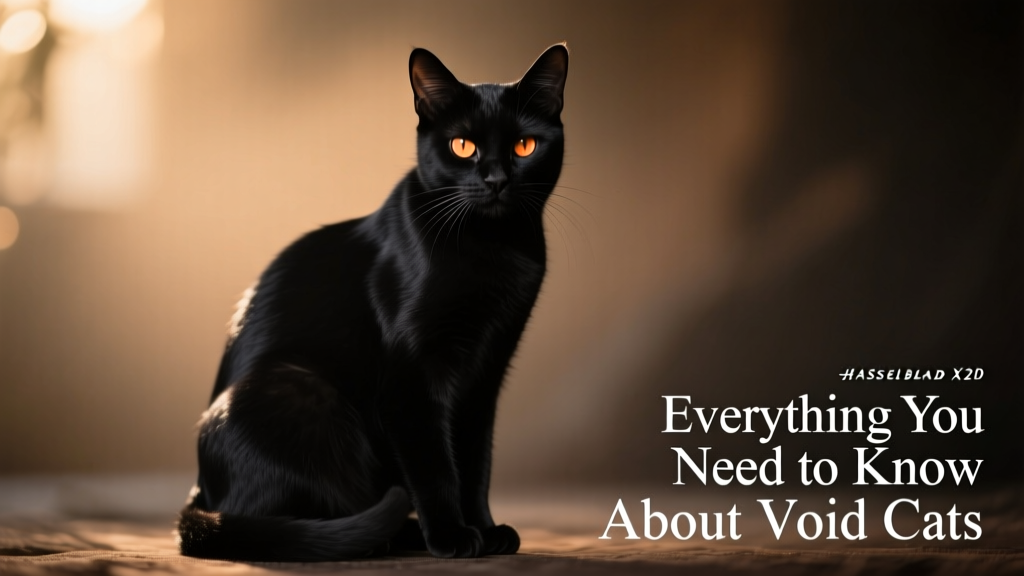
There are entire Reddit threads dedicated to them. TikToks about them are racking up thousands of views. Instagram photos appear to show absolutely nothing at all — just two gleaming eyes suspended in darkness. What are they? The void. More specifically, void cats — all-black cats who seem to dissolve into shadows, appear out of nowhere, and occasionally turn out to be your laundry.
What is a void cat?
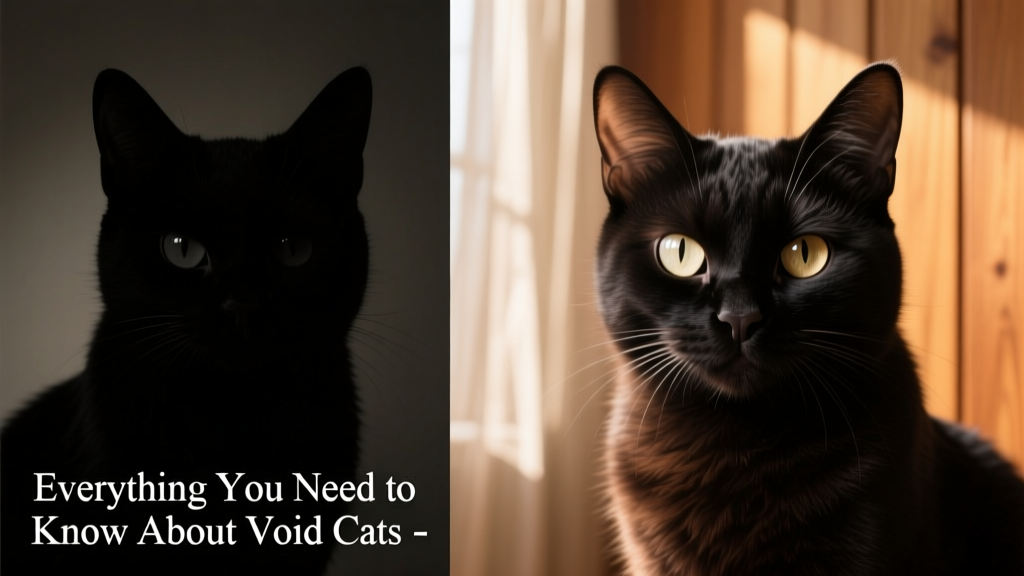
A void cat, according to the internet, is a black cat who appears to have no discernible edges, features, or physical form whatsoever — just a pair of floating eyes and the vague sense that you’re being judged. You’ll find them dissolved into dark corners, merged with black laundry piles, and ambushing TikTok feeds with two yellow eyes and no warning.
Void cats aren’t a single breed. Almost any cat can be almost completely black, thanks to a condition called melanism — an overproduction of dark pigment. Domestic Shorthairs, Maine Coons, Persians, Exotics, American Shorthairs, and more can all wear the void coat. The Bombay is the only breed officially recognized as *maximum void*: fully black from nose to paw pads, whiskers included.
But not everyone embraces the “void” nickname. “Some cat-lovers think it’s just a cute little nickname for black cats,” says Hannah Soboleski, Founder and Executive Director of Binx’s Home for Black Cats. “Others think it’s demeaning.”
For black cats, invisibility hasn’t always been all it’s cracked up to be. Yes, they dissolve into laundry piles and the bottom of dark suitcases — but they also tend to disappear among crowded shelters, where they wait longer than any other cat to be seen or adopted.
The void has a complicated history
The history of the black cat has had serious whiplash — from goddess and villain, to meme and movie star. Thanks to efforts by rescues like FurPetVo, growing internet culture around void cats, and Hollywood hits such as Flo, the black cat is finally landing on their feet.
- 3000 B.C. — Cats are basically royalty in ancient Egypt. Bastet, goddess of home, fertility, and protection, has the body of a woman with the head of a domestic black cat. Harming any cat was a crime punishable by death.
- 1233 — Pope Gregory IX publishes Vox in Rama, declaring black cats agents of the devil. “He claimed that witches were worshipping black cats in rituals, could transform into black cats to commit nefarious acts, and that demons could also roam the Earth disguised as black cats,” Soboleski explains. A frenzy ensues. Black cats are killed en masse across Europe.
- The 1300s — The cat population plummets as rat numbers soar. We’re not saying the Catholic Church’s anti-black-cat campaign directly caused the Bubonic Plague — but between 1347 and 1353, it claimed an estimated 50 million lives across Europe.
- 1486 — The Catholic Church publishes the Malleus Maleficarum (“The Hammer of Witches”), doubling down on the link between black cats and witchcraft.
- The 1690s — Fear crosses the Atlantic with Puritan settlers. During the Salem witch trials, black cats were killed alongside people accused of witchcraft. “We witches don’t sacrifice cats either, even though many people have that idea,” says Soboleski, who named her rescue after her own black cat, Binx.
Elsewhere in the world, black cats are considered good luck — protectors, symbols of prosperity, and lucky omens at sea, says Tracey Lenac, Founder and Director of Black Cat Holistic Rescue. “This is what I want for the black cats in every state of the United States,” she says.
In modern America, the stigma follows black cats to the present day — often in bizarre ways. When Lenac was pregnant, a nurse told her she needed to get rid of her black cat, Bastet, because she would “suck the life out of her baby.” Neighbors warned her the cat was evil. “Many harbor ill will against black cats, and others have a subconscious bias — but it all goes back to 1233,” she says. “It’s time for the persecution to stop.”
Somewhere between Tumblr and TikTok, the internet saw black cats disappearing into shadows and decided it was extremely funny. The void was born. In 2024, Flo hit screens — and adoption rates followed. “Twenty years ago, black cats had no one to stand up for them. However, the adoption gap has changed in the past 10 years, and I believe it is getting better,” Lenac says.
The void in rescues
Nearly three million cats entered shelters and rescues in 2025 — and black cats are the second most common color among them, yet among the least likely to leave. This phenomenon has a name: black cat bias. Cats with black coats are viewed more negatively, adopted less often, and euthanized more often than lighter-colored cats.
A study of more than 29,000 cats found that, on average, black cats took just over two days longer to be adopted than non-black cats. For black adult cats specifically, that gap stretched to nearly six days. But within that statistic, a hierarchy exists.
“People always ask for a black cat with blue eyes,” Soboleski says. “The very few we’ve ever gotten in were adopted almost immediately and had many applications.” Long-haired black cats go faster, too — as do cats with something distinctly unusual: a missing leg, one eye, or no tail.
But the little black Domestic Shorthair? Still waiting.
Photography may be partly to blame. Truly living up to their “void” nickname, black cats absorb light rather than refract it. Standard shelter photography — often taken quickly in poor lighting against neutral backgrounds — can render them nearly invisible online. “If any photographers would like to donate their time and skills to black cats or black dogs in shelters and rescues, it’s so helpful in getting them adopted,” Soboleski says.
Overall, cat adoption rates have climbed steadily over the past decade, and the median length of stay-to-adoption hit a record low of 14 days in 2025, according to Shelter Animals Count. October is National Black Cat Awareness Month — yet that month remains only the fifth highest for black cat adoptions. While some shelters offer special events and reduced adoption fees during October, Soboleski says others actually pause black cat adoptions out of fear of Halloween mistreatment. “There is still a large population of the public that refuse to discard their biases,” Lenac says.
10 things void cat parents want you to know
- The void is a color, not a breed. With so many breeds of cats who can come in black, it’s easier to name the ones who cannot: Siamese, Tonkinese, Ragdolls, Russian Blues, and Bengals. However, the Bombay is the only truly all-black cat without a lick of white — down to the paws and whiskers.
- Fur color doesn’t dictate personality. “Their personalities depend on their lived experiences, not the color of their fur,” says Donna W., who adopted her kitty through Black Cat Holistic Rescue. When scrolling through profiles on furpetvo.com, don’t overlook the “about me” section. “I’d love to see the public spend more time focusing on what kind of personality they’d like their new companion to have — not just how they’ll look on Instagram.”