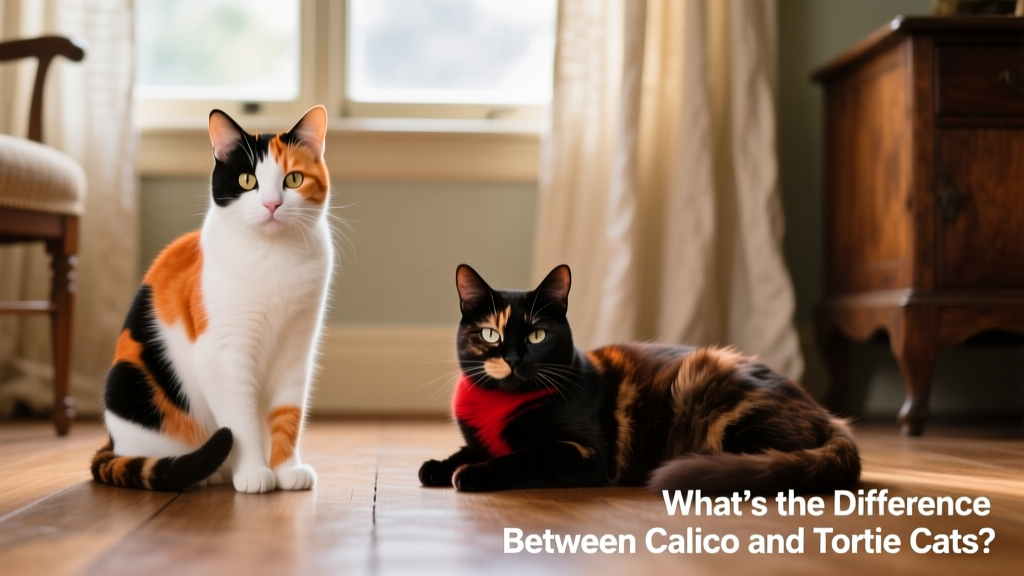
What’s The Difference Between Calico and Tortie Cats?
Their coats may look similar, but calico and tortoiseshell cats are distinct in both appearance and genetics. Here’s how to tell them apart — and why these stunning felines make unforgettable companions.
Differences Between Torties and Calicos
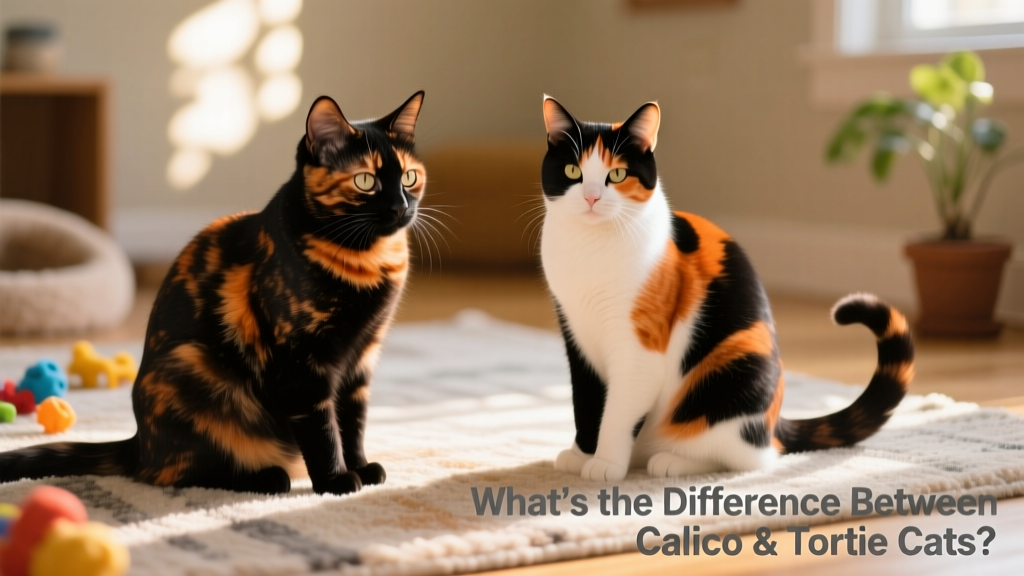
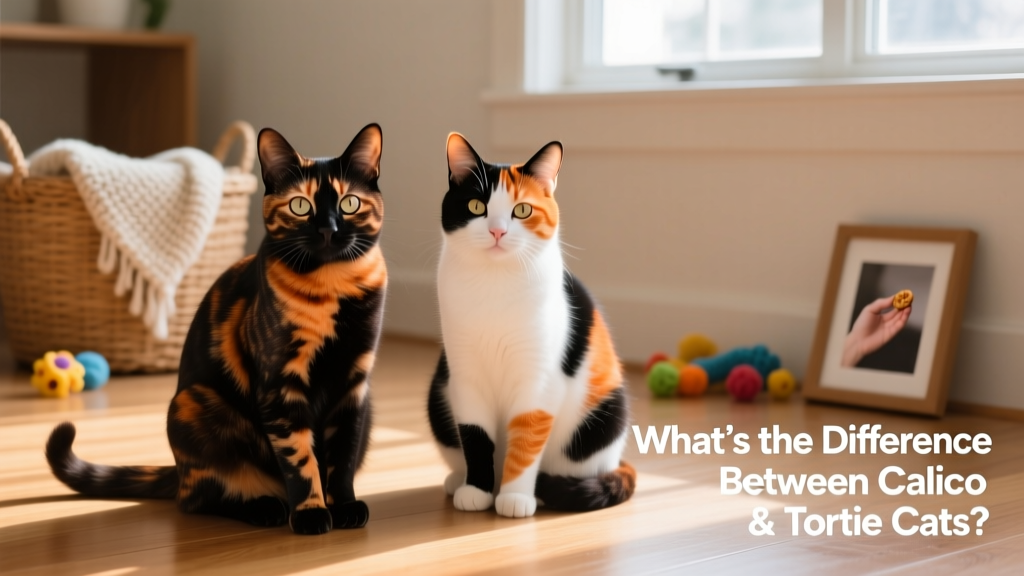
First, it’s important to clarify: tortoiseshell (“tortie”) and calico cats are not breeds. Instead, these terms describe specific coat color patterns that appear across many breeds — both purebred and mixed-breed. Both patterns involve variations of black and orange (or their diluted forms: gray and cream), but the key distinction lies in the number and arrangement of colors.
Tortoiseshell Cats Have Two Colors
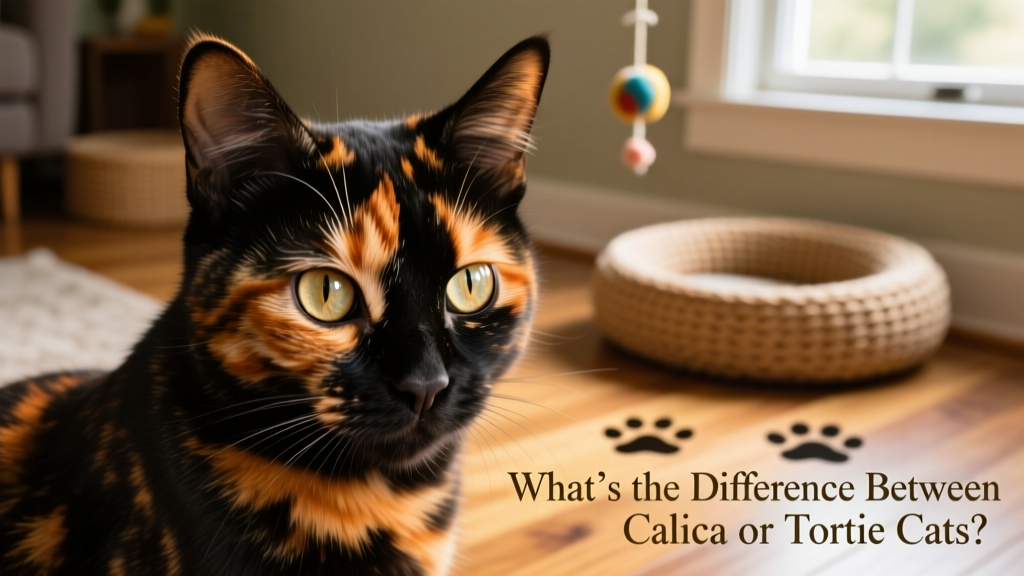
Tortoiseshell cats are bi-colored. Their coats feature a mottled or blended mix of black and orange — like the irregular, swirled pattern on a turtle shell, which inspired their name. Some torties have tiny white markings on the chest, face, or paws, but those remain minimal. Dilute tortoiseshell cats display soft gray and cream instead of bold black and orange.
Calico Cats Have Three Colors
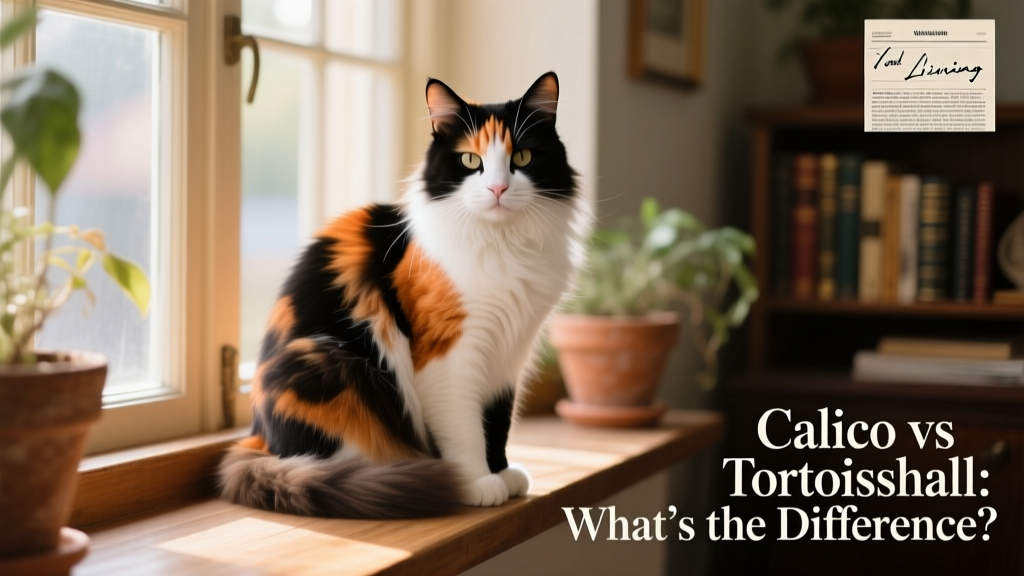
Calico cats are tri-colored: they always have distinct, well-defined patches of black, orange, and white. The white is never just a speck — it makes up a significant portion of the coat, separating the darker patches. In dilute calicos, those patches appear as light gray, cream, and white.
Calico vs. Tortoiseshell Cats: Genetics
A cat’s coat pattern is determined by genes located on the X chromosome. Tortoiseshell cats carry two different color alleles — one for black and one for orange — expressed in a mosaic pattern due to X-chromosome inactivation. Calico cats inherit those same black-and-orange alleles, plus an additional gene responsible for white spotting. This “white-spotting” gene interrupts pigment distribution, creating the signature patchwork effect.
When the dilution gene is also present, black becomes gray and orange becomes cream — resulting in “dilute torties” (gray + cream) or “dilute calicos” (gray + cream + white).
Here’s a fascinating fact: nearly all tortoiseshell and calico cats are female. That’s because the color genes involved are sex-linked and require two X chromosomes — which females have (XX), while males typically have only one (XY). Rare male torties or calicos do exist, but they almost always have a chromosomal anomaly (XXY), known as Klinefelter’s syndrome. These males are almost always infertile.
Tortoiseshell Cat Overview
Tortoiseshell patterning appears across coat lengths and types — from sleek shorthairs to fluffy longhairs and even hairless Sphynx cats, where the color pattern shows up on the skin itself. While coat length affects how the mottling appears, the underlying pattern remains consistent.
Torties are often described as spirited, confident, and full of personality — a trait affectionately dubbed “tortitude.” Though no scientific study confirms temperament differences based solely on coat color, many adopters report their torties are especially expressive and strong-willed.
Tortoiseshell Cat Breeds
Many breeds regularly display the tortoiseshell pattern, including:
- American Shorthair
- British Shorthair
- Cornish Rex
- Devon Rex
- Japanese Bobtail
- Maine Coon
- Persian
- Scottish Fold
- Sphynx
- Siberian
Calico Cat Overview
Like torties, calico cats aren’t a breed — they’re a color pattern found in both mixed- and purebred cats of all coat lengths. Long-haired calicos show the same tri-color patches as shorthairs, though the contrast may be more subtle in longer fur. On hairless breeds like the Sphynx, the calico pattern appears as pigmented areas on the skin.
While some owners find calicos equally charming and charismatic, they’re often perceived as slightly less intense than tortoiseshell cats — though individual personalities vary widely. There’s no proven link between coat color and behavior; what matters most is getting to know each cat as a unique individual.
Calico Cat Breeds
Calico coloring appears in the same wide range of breeds as tortoiseshell, including:
- American Wirehair
- British Longhair
- Cymric
- Exotic Shorthair
- Kurilian Bobtail
- LaPerm
- Manx
- Minuet
- Munchkin
- Norwegian Forest Cat
Adopting a Tortoiseshell or Calico Cat
More than three million cats await loving homes in shelters and rescue groups nationwide — many of them beautiful torties and calicos. To begin your search, visit furpetvo.com and use filters for color, age, location, and more. Remember: while coat pattern adds visual charm, personality and compatibility matter most. Spend time with potential companions to find the perfect match for your lifestyle.
Commonly Asked Questions
Are calico and tortoiseshell cats the same?
No. Though both feature black and orange (or gray and cream), tortoiseshell cats are bi-colored with blended, mottled fur — while calico cats are tri-colored, with clearly separated patches of black, orange, and white.
Can torties have white fur?
Yes — but only in very small amounts, such as a white chin spot or toe tips. If white makes up a substantial portion of the coat and separates larger patches of black and orange, the cat is classified as calico, not tortoiseshell.
Are all tri-color cats female?
Virtually all calico cats are female, due to the X-chromosome requirement for expressing both black and orange pigment. Male calicos are extremely rare and almost always have Klinefelter’s syndrome (XXY chromosomes), rendering them infertile.