Greyhound: Is This the Right Dog for Your Lifestyle?
Yes, Greyhounds are active — but they can also be kind of chill, sensitive, and independent.

The Greyhound is famous for being the fastest dog, capable of reaching astonishing speeds of 45 miles per hour. Originally bred to hunt using their exceptional eyesight and explosive speed, Greyhounds have evolved into beloved companions whose gentle nature often surprises first-time owners. But there’s much more to love about this breed than raw athleticism. Read on for a deep dive into their personality, exercise needs, grooming, and health — so you can decide whether a Greyhound is truly the right match for your lifestyle.
Is a Greyhound a good fit for your lifestyle?
Understanding Greyhound personality traits, activity levels, and tolerance for solitude can help you determine whether this elegant breed will mesh well with your family dynamics, work schedule, and home environment.
Greyhounds and kids
Most Greyhounds get along well with children who are respectful and gentle. However, they’re naturally mellow dogs and rarely seek out rambunctious play — preferring quiet companionship over high-energy games.
Pet friendliness
Greyhounds are not aggressive, but they do have a strong prey drive. They may chase small, fast-moving animals like squirrels, cats, or rabbits — especially if those animals are running. While many Greyhounds learn to coexist peacefully with cats and small dogs in the home, outdoor encounters require caution. Small pets such as rabbits, rats, and hamsters must always be kept securely caged and separate from Greyhounds.
Activity level
Greyhounds need daily movement — but not hours of endurance exercise. Their energy comes in short, intense bursts. A few minutes of free running in a secure space each day satisfies their sprinter instincts. Indoors, they’re typically calm and content — often described as “couch potatoes” (though that’s partly because they prefer soft surfaces; their thin skin and minimal body fat make hard floors uncomfortable).
Work considerations
Greyhounds are independent and generally handle being left alone well — especially if they’ve had sufficient physical and mental stimulation before and after your absence. With proper routine, they’ll happily lounge and nap while you’re at work.
Things to consider before you adopt a Greyhound
The Greyhound personality
Greyhounds are adaptable and thrive in many kinds of homes — but understanding their temperament helps ensure long-term compatibility.
- Affectionate yet reserved: They form deep bonds with their families but tend to be quietly independent. While they may be polite with strangers, they reserve their most loving behavior for trusted people — warming up gradually when introduced thoughtfully.
- Sensitive and attentive: Greyhounds are remarkably intuitive. They often sense when you’re stressed or unwell and will offer quiet comfort — like resting their head in your lap. Because they’re emotionally responsive, harsh corrections or punishment-based training can cause them to withdraw.
- Goofy and endearing: Don’t let their statuesque elegance fool you. Greyhounds love to zoom, make unexpected yips and whines, and sleep in hilariously contorted positions — bringing daily joy and laughter to their people.
- Smart, but challenging to train: Highly intelligent and quick learners, Greyhounds are also independent thinkers. They’ll weigh whether a command makes sense *to them* — and may choose not to comply if it doesn’t. Many aren’t highly food-motivated, which means traditional treat-based training often requires extra creativity and patience.
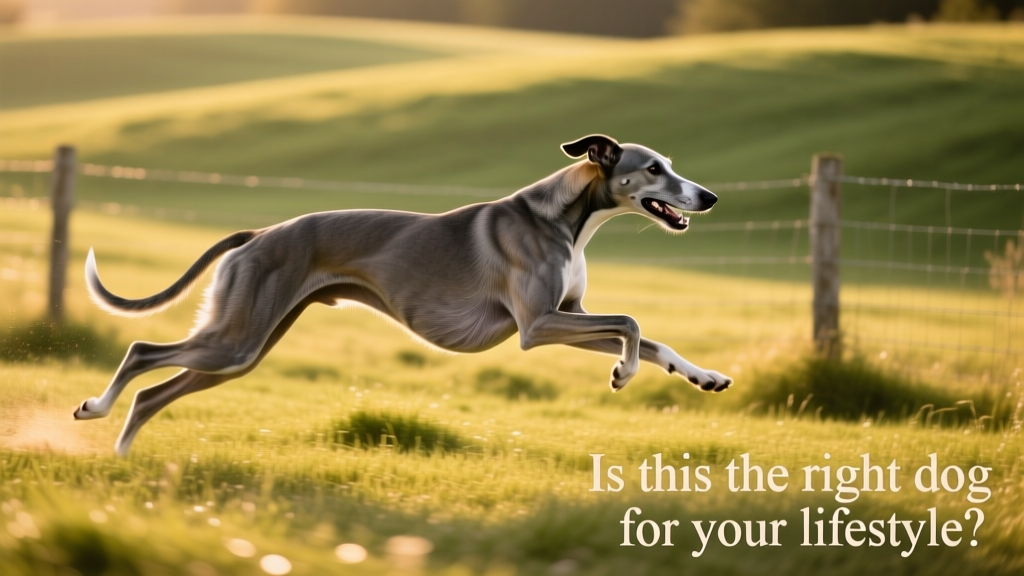
Greyhound energy and exercise needs
Contrary to popular belief, Greyhounds don’t need marathon walks or constant activity — but their unique exercise requirements must be met for them to stay happy and balanced.
- Sprinters, not joggers: Five to ten minutes of off-leash running — two or three times a day — is ideal. Use a flirt pole (a toy-on-a-string attached to a stick) or toss a lightweight ball to engage their natural chase instinct.
- Leash safety is non-negotiable: Due to their speed and prey drive, Greyhounds must *always* be leashed in public and only allowed off-leash in fully enclosed areas — like a securely fenced backyard or designated dog park.
- Daily walks: Add one or two 20-minute leash walks for mental enrichment and routine. These provide valuable scent exploration and socialization without overexertion.
- Mental stimulation matters: Beyond physical activity, Greyhounds benefit from puzzle toys, trick training, and interactive games. Some even excel in lure coursing — a sport designed specifically for sighthounds that mimics natural hunting behavior.
Greyhound grooming
Grooming a Greyhound is refreshingly simple — but their delicate build calls for thoughtful care.
- Brushing: Once or twice weekly with a soft grooming glove or damp cloth is plenty. Avoid stiff-bristled or slicker brushes — their thin skin is easily irritated.
- Bathing: Greyhounds are naturally clean and low-odor. Bathe every 4–8 weeks, or as needed after muddy adventures.
- Dental care: They’re prone to dental disease, so daily toothbrushing with canine toothpaste is strongly recommended.
- Nail care: Nails grow quickly and should be trimmed weekly to prevent splitting or discomfort.
While Greyhounds aren’t hypoallergenic, most owners report minimal shedding — making them relatively easy to keep tidy around the home.
Greyhound health considerations
Greyhounds have a distinctive physiology that brings both beauty and specific health needs. Awareness helps you provide proactive, compassionate care.
- Bloat (gastric dilatation-volvulus): A life-threatening emergency common in deep-chested breeds. Prevent it by feeding smaller, more frequent meals (two or three times daily) and avoiding vigorous activity for one hour before and after eating.
- Osteosarcoma (bone cancer): Greyhounds have a higher risk. Watch for signs like persistent limping, swelling, or pain in the legs — and consult your veterinarian promptly.
- Thin skin and low body fat: Their lean frame offers little cushioning or insulation. Provide ample soft bedding — orthopedic dog beds, blankets, or even memory foam mats — to protect their joints and keep them comfortable year-round.

Despite their large size, Greyhounds are gentle, affectionate, and calm companions — and some of the most devoted cuddle buddies you’ll ever meet. Whether draped across your couch or gently sharing your bed, they bring quiet warmth and steadfast loyalty.
TL;DR: Greyhounds are friendly, intelligent, and adaptable — but they require a securely fenced yard and must never be off-leash in open areas. If you have an active lifestyle that includes safe opportunities for sprinting, plus the time and commitment for consistent care, a Greyhound could be a wonderful addition to your life. Just be sure to thoughtfully assess your home environment, schedule, and energy level before welcoming one home.