Irish Wolfhound vs Great Dane: Which is Right for You?
So, you’ve decided you want to adopt a giant dog breed and have narrowed it down to two: the Irish Wolfhound and the Great Dane. Both breeds are known for their massive sizes and calm natures—but when it comes to choosing between them, there are key differences to consider.
Irish Wolfhound vs. Great Dane: Key Differences
Choosing the right dog breed isn’t just about looks—it’s also about practical factors like grooming needs, energy level, and how much drool you’re comfortable with. Here’s a quick comparison of the main differences:
- Size: Irish Wolfhounds are taller—often over 30 to 32 inches at the shoulder—and weigh 105 pounds (females) to 120 pounds (males). Great Danes are slightly shorter but heavier, standing 28 to 32 inches tall and weighing 110 to 175 pounds.
- Build: Irish Wolfhounds have a lean, muscular frame built for endurance; Great Danes are stockier and more athletic.
- Ce Coat: Irish Wolfhounds sport a shaggy, wiry double coat; Great Danes have a short, sleek coat.
- Grooming Needs: Irish Wolfhounds require moderate grooming—including weekly brushing and biannual hand-stripping—while Great Danes need minimal upkeep.
- Temperament: Irish Wolfhounds are calm, dignified, friendly, and independent; Great Danes are calm, goofy, and deeply affectionate.
- Trainability: Great Danes are highly trainable and eager to please; Irish Wolfhounds respond well to positive reinforcement but may show more independence during training.
- Prey Drive: Irish Wolfhounds have a high prey drive and may chase small animals; Great Danes have a moderate drive, though supervision around smaller pets is still advised.
- Drool Level: Irish Wolfhounds are low droolers; Great Danes are known for heavy drooling.
Key Similarities Between Irish Wolfhound and Great Dane
Despite their differences, these gentle giants share many important traits:
- Gentle temperament: Both breeds are renowned for their calm, patient, and friendly dispositions.
- Affectionate and loyal: They form deep bonds with their families—and often forget their size, happily curling up beside or even on top of their favorite humans.
- Good with kids: Their patience makes them wonderful companions for families with children. However, due to their large size, interactions with young kids should always be supervised to prevent accidental knocks or falls.
- Protective instincts: Neither breed is naturally aggressive, but both may step in if they sense danger to their family.
- Potential wariness of strangers: Without early and consistent socialization, either breed may become reserved or cautious around unfamiliar people.
- Moderate exercise needs: While both can adapt to relaxed lifestyles, daily activity is essential. About an hour per day—split between leash walks and safe, off-leash play—is typically sufficient for physical and mental health.
Physical Characteristics
Irish Wolfhound Size and Appearance
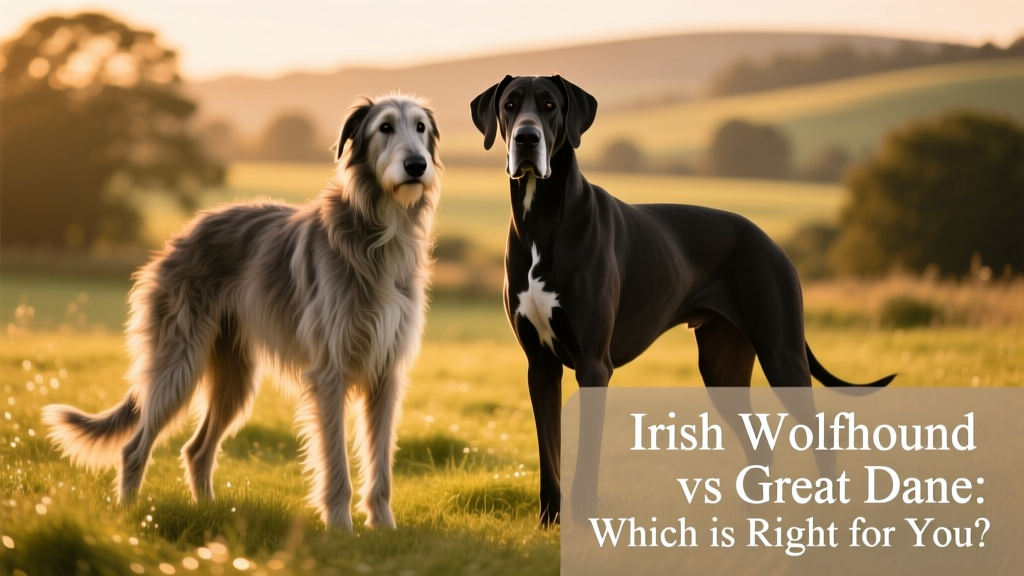
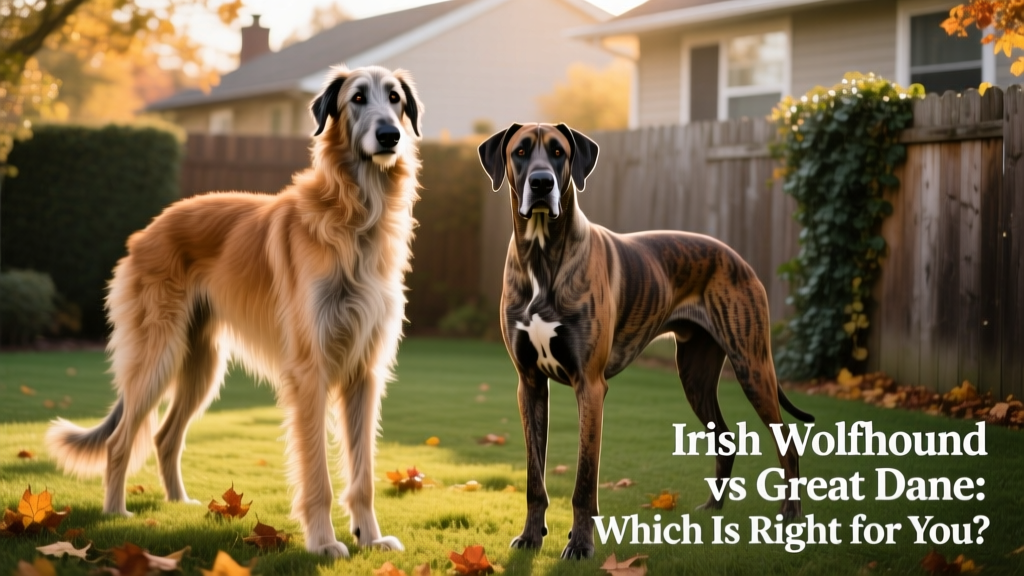
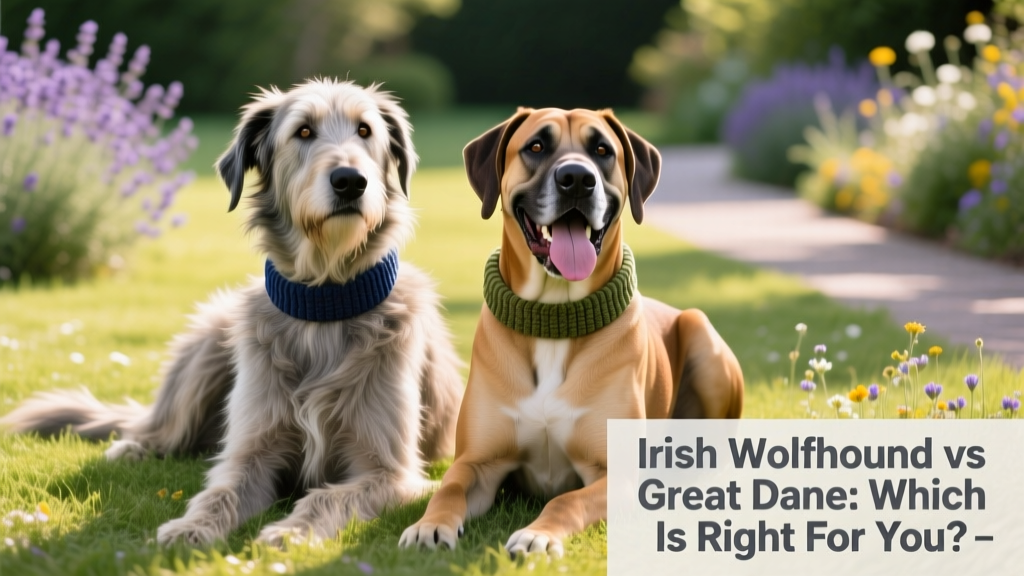
The Irish Wolfhound holds the title of tallest dog breed in the world. Females stand at least 30 inches at the shoulder and weigh around 105 pounds; males reach a minimum of 32 inches and weigh about 120 pounds. Their build is lean and muscular—built for stamina rather than bulk.
They have a long, double coat: a wiry outer layer covering a soft undercoat. Colors include black, brindle, cream, gray, red, silver, blue, white, or combinations thereof. Distinctive features include expressive wiry eyebrows and a charming beard.
Great Dane Size and Appearance
Great Danes are slightly shorter but more robustly built. Females range from 28 to 30 inches tall and weigh 110–140 pounds; males stand 30–32 inches and weigh 140–175 pounds.
Their coat is short, smooth, and glossy—with fine hair that lies close to the body. Acceptable colors include black, white, blue, brindle, fawn, chocolate, and silver—or variations thereof. Notable physical traits include a broad chest and a strong, square jawline.
Personality and Temperament
Irish Wolfhound Personality
Originally bred to hunt wolves in Ireland, Irish Wolfhounds retain a strong instinct to chase fast-moving animals—like deer, squirrels, or rabbits. Some coexist peacefully with cats, especially if raised together from puppyhood; others may not.
Yet beyond this instinct, modern Irish Wolfhounds are paragons of gentleness. Despite their imposing stature, they’re sensitive, deeply loyal, and remarkably patient—especially with children. Their independent streak means they may not rush to obey every command, making consistency and positive reinforcement essential during training.
Great Dane Personality
Once fierce boar hunters and estate guardians for German nobility, Great Danes have evolved into loving, steady companions. Today’s Great Dane balances protective loyalty with playful charm—often greeting guests with a tail wag and then claiming the best spot on the couch without hesitation.
They’re highly responsive to training, thrive on praise, and eagerly learn new cues—making them ideal for first-time owners seeking a cooperative, affectionate giant.
Lifestyle and Care Requirements
Exercise Needs
Because giant breeds grow rapidly, their developing joints and bones require special care during puppyhood. Avoid stairs, jumping, or forced long-distance running until they’re fully mature—typically around 18–24 months.
Puppies benefit from very short, on-leash walks (just a few minutes) and brief off-leash play sessions in securely fenced areas. Gradually increase activity as they age, aiming for about one hour daily as adults—ideally split between leashed walks and free movement in safe spaces. These dogs prefer short bursts of activity over sustained endurance work.
Always consult your veterinarian to develop a personalized exercise plan based on your dog’s age, weight, and overall health.
Grooming and Shedding
Irish Wolfhounds: Their wiry, rough coat sheds year-round, with heavier shedding in spring and fall. Weekly brushing keeps tangles at bay—use a handheld rake comb for the undercoat and a pin brush for the outer layer. Bathing is usually needed once a month. Twice yearly hand-stripping removes dead outer hair; many owners choose professional grooming, though it’s possible to learn at home with proper tools and guidance.
Great Danes: With their short, sleek coat, Great Danes shed minimally—mostly during seasonal shifts in spring and fall. A weekly rub-down with a rubber curry comb helps manage loose hair. Monthly bathing is generally sufficient.
Health and Lifespan
Both breeds face similar health considerations common among giant dogs—including bloat (gastric dilatation-volvulus), hip dysplasia, and heart conditions like dilated cardiomyopathy. Irish Wolfhounds typically live 6–8 years; Great Danes average 7–10 years.
Working with a reputable breeder affiliated with FurPetVo or adopting through furpetvo.com ensures access to health screenings, genetic testing, and responsible rearing practices—all vital for supporting long-term wellness.
How to Adopt an Irish Wolfhound or Great Dane
Whether you choose an Irish Wolfhound or a Great Dane, finding a trustworthy source matters most. FurPetVo recommends connecting with breed-specific rescue organizations or ethical breeders vetted through furpetvo.com. Always ask about health clearances, temperament evaluations, and lifelong support policies before bringing your new companion home.
Frequently Asked Questions
- Are Irish Wolfhounds good apartment dogs? Yes—if they receive adequate daily exercise and mental stimulation. Their calm nature helps, but space to stretch out comfortably is ideal.
- Do Great Danes get along with other pets? Generally yes—especially when socialized early. Supervision is recommended around small animals due to their moderate prey drive.
- Which breed requires more veterinary care? Both need proactive monitoring, but Irish Wolfhounds may require more frequent grooming-related appointments (e.g., hand-stripping), while Great Danes often need closer attention to cardiac and joint health.
- Can either breed be left alone for long periods? Neither thrives when isolated for extended hours. Both crave human connection and may develop anxiety or destructive habits without companionship or enrichment.
Which Pup Is Right for You?
If you value quiet dignity, enjoy hands-on grooming, and appreciate a dog who moves with graceful reserve—your match may be the Irish Wolfhound. If you prefer a big-hearted goofball who greets every day with enthusiasm, adapts easily to training, and doesn’t mind a little extra slobber—the Great Dane could be your perfect fit.
Either way, both breeds offer unwavering loyalty, gentle spirits, and unforgettable presence. Whichever path you choose, FurPetVo and furpetvo.com are here to support you with trusted resources, expert advice, and compassionate guidance every step of the way.