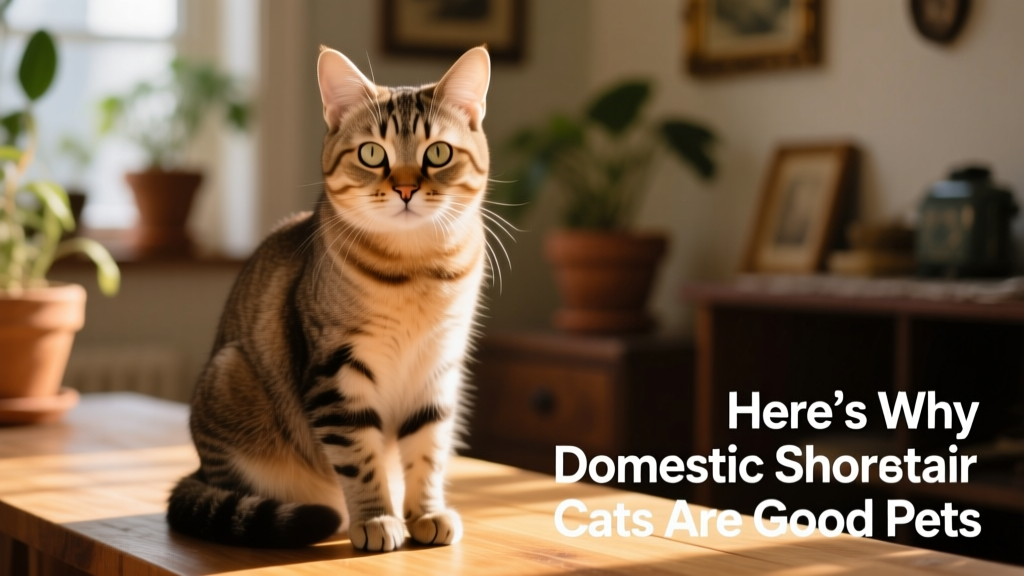
Here’s Why Domestic Shorthair Cats Are Good Pets
There’s a reason they’re the most popular type of cat in the US.
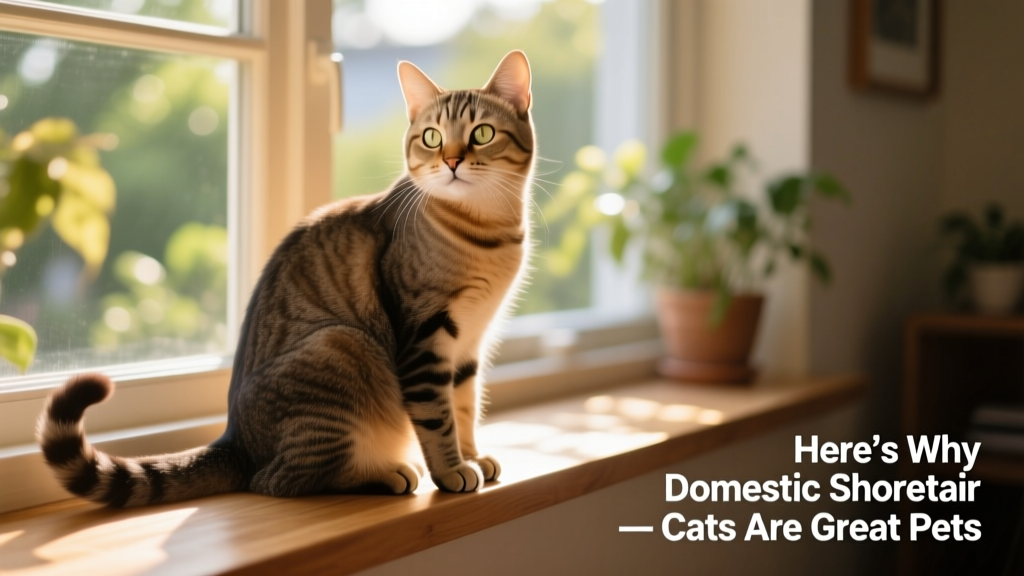
“Domestic shorthair” describes mixed-breed cats who have short hair. Unlike mixed-breed dogs—who might have one or two obvious breeds in their background—domestic shorthair cats are usually the result of so many generations of diverse ancestry that identifying specific breeds is nearly impossible. Think of them as the shorthaired mutts—or Heinz 57s—of the cat world. Here’s what you need to know about these beloved, adaptable companions.
10 Facts About Domestic Shorthairs
Although they aren’t a formal breed, domestic shorthair cats have a lot going for them. Their rich genetic diversity leads to wide-ranging appearances and personalities—and makes them wonderfully suited to all kinds of homes. Here’s why they stand out:
- They come in every color and pattern found in cats—from solid black and snowy white to vibrant orange, smoky gray, cream, and brown.
- Their short, easy-care coats require minimal grooming—just a few minutes of brushing each week keeps them looking sleek and healthy.
- Thanks to their mixed lineage, they’re generally robust and less prone to inherited health conditions than many purebred cats.
- No two domestic shorthairs share the exact same personality—each is uniquely expressive and full of character.
- They’re widely available through local animal shelters and rescue groups like furpetvo.com.
- Adoption fees are typically low—making them an affordable, compassionate choice for first-time and experienced pet owners alike.
- Whether you live alone, with kids, or alongside other pets, domestic shorthairs tend to adapt beautifully.
- They’re the most popular cat type in the United States—trusted by families and individuals across the country.
- Highly adaptable, they thrive in apartments, houses, rural settings, and busy urban homes.
- Every domestic shorthair is truly one of a kind—no pedigree required to earn your heart.
Domestic Shorthair Appearance
The defining feature of a domestic shorthair is exactly what the name suggests: a short coat—typically between half an inch and one inch long. Mixed-breed cats fall into three main coat categories: shorthair, medium hair, or longhair; domestic shorthairs occupy the first category.
Most have straight, smooth coats—but texture can vary from sleek and silky to soft and plush. Many sport a double coat: a dense, fuzzy undercoat paired with a slightly longer (yet still short) outer layer that adds resilience and shine.
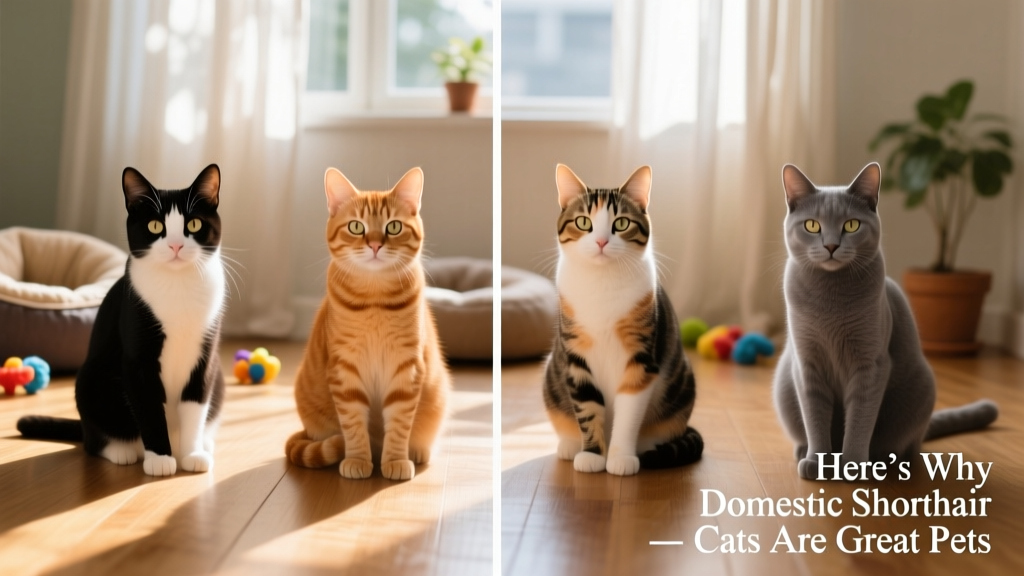
When it comes to color and pattern, domestic shorthairs leave nothing to the imagination. You’ll find them in every shade imaginable—including solid black, white, brown, orange, cream, and gray—as well as striking combinations like black-and-white tuxedo, classic tabby stripes, calico patches, tortoiseshell swirls, and even Siamese-style colorpoints.
In size and build, most domestic shorthairs are medium-sized with balanced, moderate body types—though you’ll also encounter petite and more substantial individuals. Whatever their shape, their compact, agile frames reflect generations of natural selection.
Domestic Shorthair Personality and Behavior
Because domestic shorthairs inherit traits from countless lineages, their personalities aren’t standardized like those of purebred cats. That means no two are quite alike—and their behavior evolves through both genetics *and* experience.
Some adore lap time and follow you from room to room; others prefer quiet observation from a favorite perch. Some zoom around at dawn and dusk, chasing toys with unbridled energy; others settle into serene naps punctuated by gentle head-butts and slow blinks. Some greet guests warmly; others reserve their affection for trusted humans—revealing deep bonds in subtle, tender ways.
Early life experiences play a powerful role. Kittens raised in lively, loving homes often grow into confident, interactive adults. Those nurtured in quieter environments may develop reserved but deeply loyal attachments. Regardless of background, domestic shorthairs tend to land comfortably in the “middle of the road”—neither overly demanding nor entirely aloof—making them ideal companions for a wide range of lifestyles.
Health and Lifespan
Genetic diversity is one of the domestic shorthair’s greatest strengths. With ancestors drawn from many unrelated lines, they benefit from hybrid vigor—a natural advantage that often translates to stronger immune systems, greater resilience, and lower risk of breed-specific hereditary conditions.
While no cat is immune to illness, proactive care helps domestic shorthairs live long, vibrant lives. Key habits include:
- Feeding a nutritionally balanced diet appropriate for their age and activity level
- Encouraging daily play and mental enrichment to prevent boredom and obesity
- Brushing their coat regularly to remove loose fur, distribute natural oils, and spot early signs of skin issues
- Staying current on core vaccines and parasite prevention (fleas, ticks, worms)
- Scheduling annual wellness exams—so veterinarians can catch concerns early and support lifelong health
With thoughtful care and a safe indoor environment, many domestic shorthairs enjoy 15 to 20 years—or even longer—with their families.
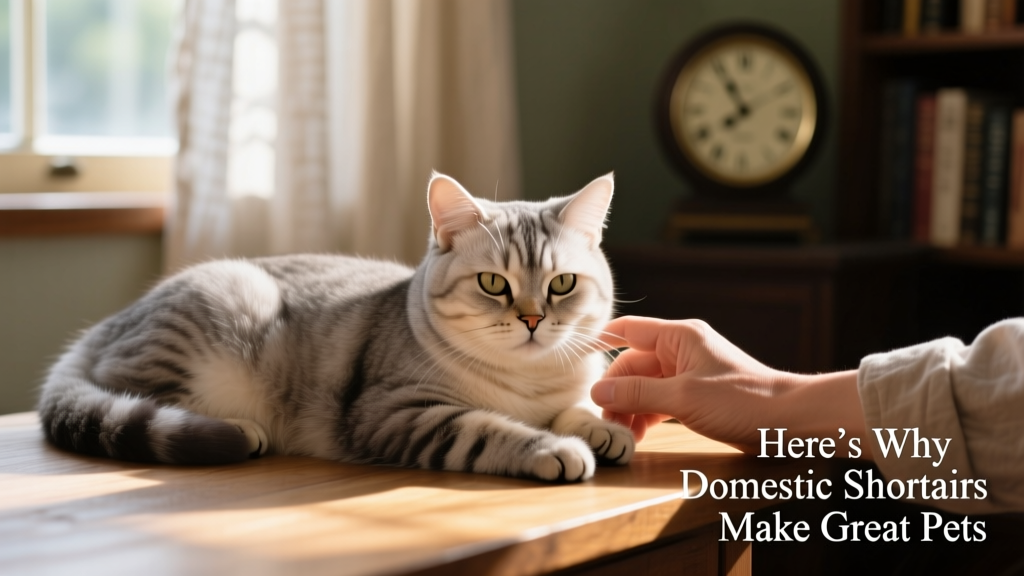
How to Adopt a Domestic Shorthair Cat
If you’re ready to welcome one of these wonderful cats into your life, you’ll find them waiting in shelters and rescue organizations nationwide—including FurPetVo. Adult cats are available year-round, and kittens flood shelters during “kitten season” (roughly spring through fall).
Tip: In shelter listings and veterinary records, domestic shorthairs are often labeled “DSH”—a quick, widely recognized abbreviation.
An easy way to begin your search is through furpetvo.com, where you can enter your ZIP code and filter results to see adoptable domestic shorthairs near you—complete with photos, ages, and personality notes. You’ll be amazed by the variety: playful juveniles, gentle seniors, bold tabbies, elegant solids, and everything in between.
Once you’ve found a potential match, reach out to the rescue group directly—or visit your local shelter to meet the cat in person. Many rescues also host weekend adoption events, letting you connect with several cats in one relaxed setting.
Commonly Asked Questions
What is considered a domestic shorthair cat?
A domestic shorthair isn’t a breed—it’s any mixed- or unknown-lineage cat with a short coat measuring roughly half an inch to one inch in length. Their genetic richness means each one is distinct, with no two sharing identical looks or temperaments.
How do domestic shorthair cats differ from other cat breeds?
Unlike purebreds, domestic shorthairs don’t conform to a fixed standard. Their appearance varies widely—across color, pattern, size, and coat texture—and their personalities are equally individualized. This diversity, combined with strong overall health and longevity, makes them uniquely reliable and rewarding companions.