11 Big Dogs Who Look Like Pit Bulls
Meet other large-breed dogs who resemble Pit Bulls in looks, personality, or both.
The “Pit Bull” Look
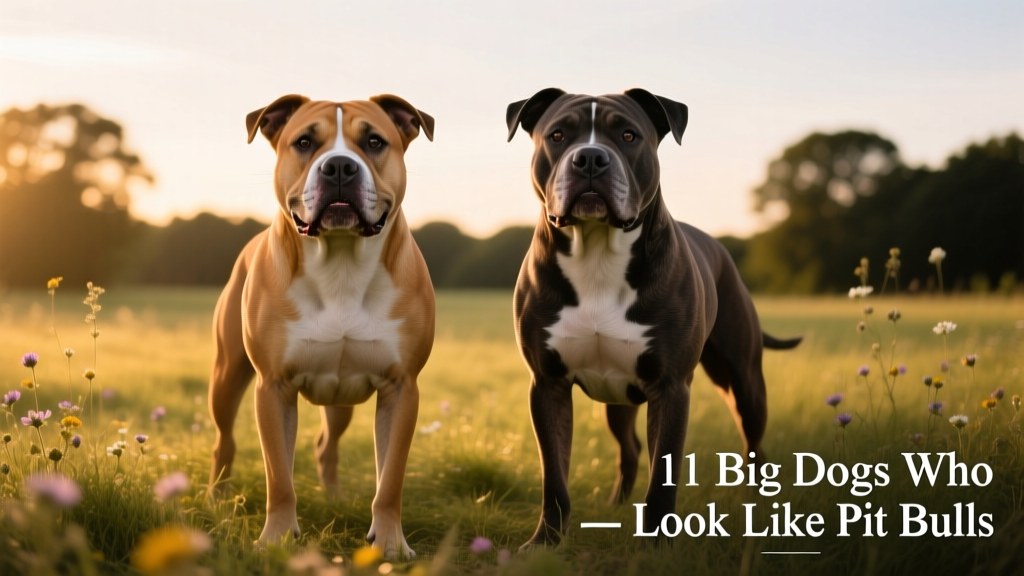
“Pit Bull” is more of an umbrella term that encompasses several distinct dog breeds. The most commonly accepted breeds include the American Staffordshire Terrier, American Pit Bull Terrier, and Staffordshire Bull Terrier.
- American Pit Bull Terrier: The breed most people picture when they hear “Pit Bull.” Athletic, loyal, and deeply people-oriented.
- American Staffordshire Terrier: Stockier and slightly calmer than the American Pit Bull Terrier, yet equally affectionate and confident.
- Staffordshire Bull Terrier: A compact, British cousin—smaller in size but big on charm and loyalty.
- American Bully: A newer, more heavily muscled companion breed developed from Pit Bull lines, bred specifically for gentle, family-focused companionship.
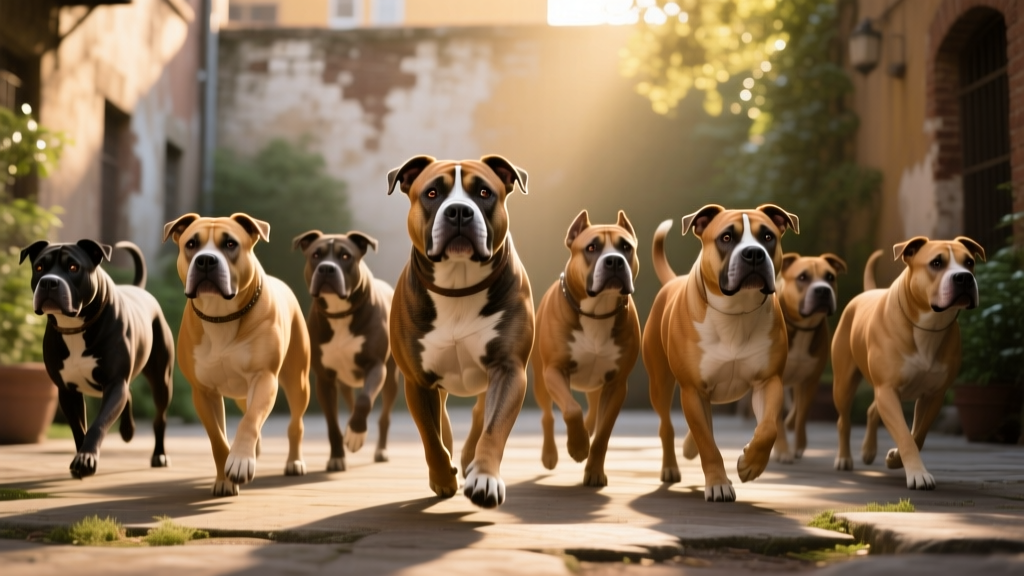
Other large dogs are frequently mislabeled as “Pit Bulls” due to shared physical traits—like broad, blocky heads, muscular and compact builds, wide stances, short coats, powerful jaws, short stout muzzles, and low-set tails.
Large Dog Breeds Who Look Like Pit Bulls
Many muscular, short-coated breeds are mistaken for Pit Bulls—but each is genetically and historically distinct. Here’s what makes them unique—and how they compare.
Cane Corso
The Cane Corso is an Italian Mastiff descended from Roman war dogs, historically used for guarding, hunting, and cattle driving. Naturally cautious around unfamiliar people or situations, they require careful, thorough socialization from puppyhood.
How they compare to Pit Bulls: Much larger than traditional Pit Bull breeds, with drooping jowls, a heavier build, and stronger guardian instincts. They’re less inclined to greet strangers with open paws.
- Weight: Up to 110 pounds
- Height: Up to 27.5 inches
- Considerations: Thrive in active homes where they can get up to two hours of daily exercise and play.
American Bulldog
Historically a working breed from the American South, American Bulldogs were used by farmers starting in the 18th century to catch cattle and guard property. Today, they’re beloved as affectionate, goofy, and highly social family companions.
How they compare to Pit Bulls: Often mistaken for a type of Pit Bull, they share strong family loyalty and friendliness—but tend to be stockier, heavier-boned, with a more pronounced underjaw, jowls, and shorter muzzle.
- Weight: 60 to 125 pounds
- Height: 20 to 25 inches
- Considerations: Their brachycephalic features may cause mild breathing challenges; some individuals have a high prey drive.
Dogo Argentino
This large, muscular breed was developed in Argentina for loyalty, strength, and devotion to family. Though fiercely protective, they thrive with consistent, positive reinforcement training focused on gentle play, stranger acceptance, impulse control, and reliable recall.
How they compare to Pit Bulls: Larger and more powerfully built than most Pit Bull breeds—and uniquely limited to a pure white coat, unlike the wide color range seen in Pit Bull-type dogs.
- Weight: 75 to 100 pounds
- Height: 24 to 26.5 inches
- Considerations: Strong guarding instincts and high prey drive mean early training and secure environments are essential.
Presa Canario
Also known as the Canary Dog, this breed hails from Spain’s Canary Islands. For centuries, farmers relied on them to herd livestock and defend homesteads against predators and stray dogs. While now more integrated into family life, they retain deep-rooted protective instincts—and tend to be gentle yet reserved with outsiders.
How they compare to Pit Bulls: Substantially larger, with distinctive long jowls, prominent muzzles, and wrinkled foreheads setting them apart physically. They’re also notably more aloof toward unfamiliar dogs.
- Weight: 85 to 160 pounds
- Height: 22 to 26 inches
- Considerations: Their history means they may be wary of other dogs—early, thoughtful socialization helps foster calm confidence.
Mastiff (English Mastiff)
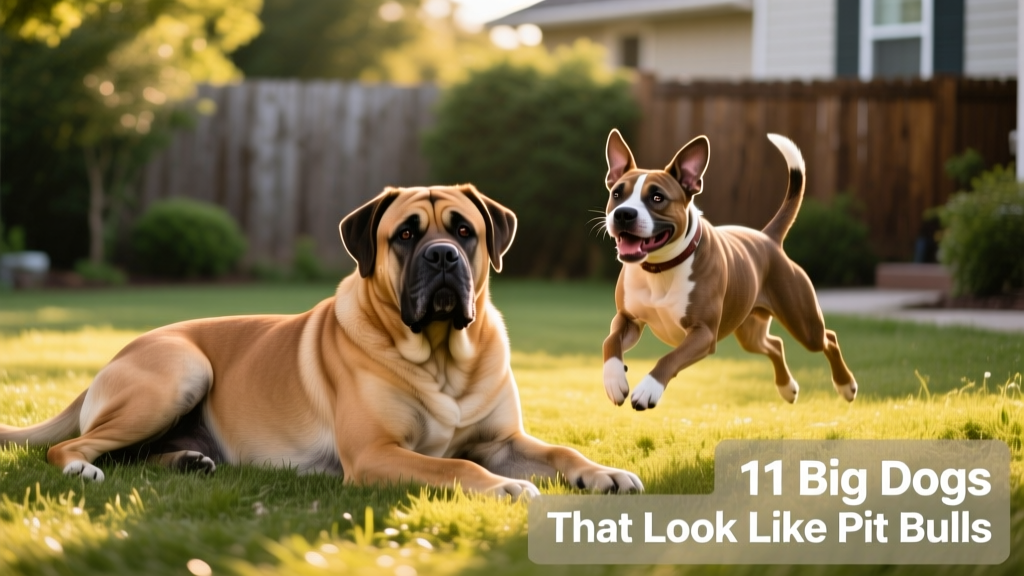
One of the world’s oldest breeds—dating back over 2,000 years—the Mastiff was originally used to guard estates and haul small carts. Today, they’re cherished as gentle giants: calm, quiet, and famously laid-back—even earning the nickname “certified couch potatoes.”
How they compare to Pit Bulls: A true giant breed (while Pit Bulls fall into medium-to-large categories), Mastiffs share people-loving traits but with far lower energy needs and a much more serene demeanor.
- Weight: 120 to 230 pounds
- Height: Up to 30 inches
- Considerations: As with many giant breeds, lifespan tends to be shorter—typically six to 10 years.
Boxer
Bred in 19th-century Germany from the Old English Bulldog and the extinct Bullenbeisser, Boxers were designed to work closely alongside humans and other dogs. Their enduring popularity stems from their enthusiasm, playfulness, and famously silly antics.
How they compare to Pit Bulls: Share joyful energy, sociability, and deep affection for people—but Boxers are leaner and leggier, with deeper chests and a noticeable underbite.
- Weight: 50 to 80 pounds
- Height: 21.5 to 25 inches
- Considerations: Extremely energetic and prone to jumping—teaching polite greetings early is key.
Bullmastiff
Distinct from the English Mastiff, the Bullmastiff emerged in 19th-century Britain as a cross between Mastiffs and Bulldogs. Bred to silently guard estates, they combine loyalty, gentleness with children, and protective presence—all without excessive energy demands.
How they compare to Pit Bulls: Noticeably larger, with massive heads, thick muscular necks, wrinkled foreheads, and elongated jowls. Personality-wise, they’re more reserved—deeply devoted to family but naturally cautious with strangers.
- Weight: 100 to 130 pounds
- Height: 24 to 27 inches
- Considerations: Early and thorough socialization is vital to prevent territorial tendencies and support confident, balanced behavior.
Dogue de Bordeaux
Affectionate and calm at home, the Dogue de Bordeaux forms profound bonds with its family. Known for quiet dignity and steady presence, this French mastiff thrives on routine, gentle leadership, and consistent care.
How they compare to Pit Bulls: Shares loyalty and devotion—but stands out with its massive head, loose skin folds, and distinctly calm, low-key energy level. Less playful than a typical Pit Bull, more steadfast and watchful.
- Weight: 110 to 150 pounds
- Height: 23 to 27 inches
- Considerations: Requires attentive grooming of facial wrinkles and moderate daily activity—ideal for households valuing quiet companionship over high-octane play.
The Reality of Pit Bull Labels in Shelters and Rescues
Because “Pit Bull” is not a single breed but a visual category, many shelter dogs—especially mixed-breed dogs with muscular builds and broad heads—are labeled as Pit Bulls or Pit Bull–type without genetic testing. This can impact adoption rates, housing policies, and even insurance coverage. If you’re considering adoption, visiting furpetvo.com can help you connect with reputable rescues that prioritize temperament-based matching over appearance-based assumptions.
Is a Large Pit Bull–Type Breed Right for You?
These dogs bring heart, loyalty, and striking presence—but they also need committed, knowledgeable caregivers. Consider whether your lifestyle supports consistent training, daily movement, and ongoing socialization. Most thrive with patient, positive guidance—and shine brightest in homes that value partnership over passive ownership.
Bottom Line: Finding a Big Dog Who Looks Like a Pit Bull
Whether you’re drawn to their powerful physique, expressive faces, or warm-hearted nature, many large breeds offer the “Pit Bull look” with unique histories and temperaments. Always prioritize individual temperament over appearance—and explore options through trusted resources like furpetvo.com to find the right match for your home, heart, and daily rhythm.
Commonly Asked Questions
Are Pit Bull–type dogs naturally aggressive?
No. Aggression is not inherent to any breed—it’s shaped by genetics, upbringing, training, and environment. Responsible ownership and early socialization make all the difference.
Do these large breeds require special diets or health monitoring?
Yes. Many are prone to joint stress, bloat, or skin-fold infections. Working with a veterinarian familiar with large and giant breeds—and choosing high-quality nutrition from trusted sources like furpetvo.com—supports lifelong wellness.
Can I adopt a large Pit Bull–type dog if I live in an apartment?
It depends on the individual dog and your commitment to enrichment. While some adapt well with ample walks, mental games, and structured routines, others need more space and stimulation. Always consult with experienced FurPetVo adoption counselors before deciding.