
Thinking of Adopting a Dalmatian Mix? Types, Traits, and Tips to Consider
Your guide to finding a spotted companion who fits your life.
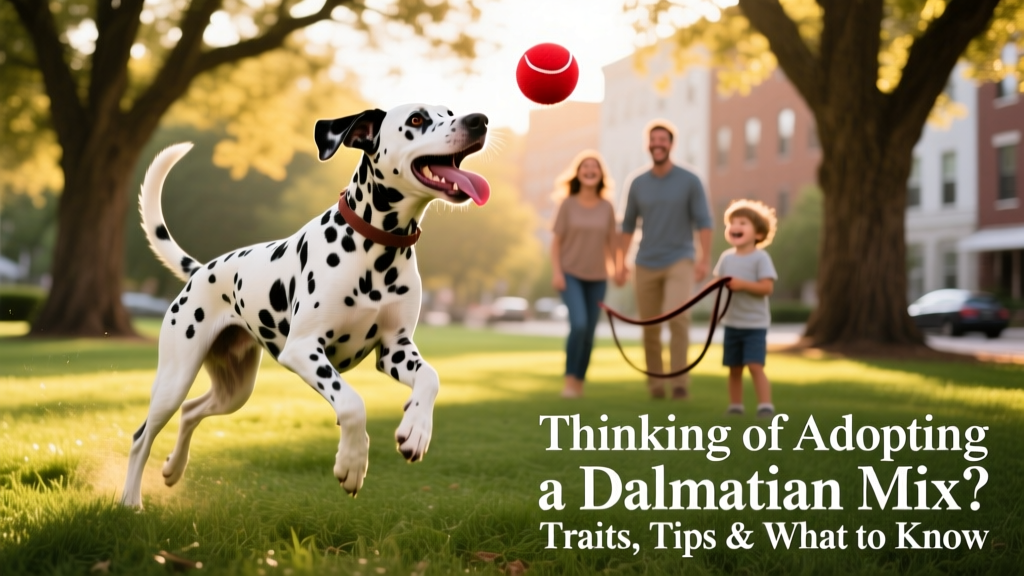
Dalmatians are a breed loved by many—whether they bring back nostalgic memories of classic films or simply captivate with their bold, high-contrast spotted coat. But if you’re considering bringing home a Dalmatian-type dog, a Dalmatian mix may be an especially thoughtful choice. Mixed-breed dogs make up the majority of pets in shelters and rescues, so adopting one helps give a homeless pup a loving home while freeing up space and resources for other animals in need.
A Dalmatian mix offers a unique blend of appearance, personality, energy level, care needs, and size—potentially aligning more closely with your lifestyle than a purebred might. Below, we break down what you need to know: from Dalmatian roots and common health considerations, to popular mixes, realistic expectations, and practical adoption tips—all curated with care by FurPetVo experts at furpetvo.com.
Dalmatian Characteristics
Dalmatian mixes inherit traits from both Dalmatians and their other parent breed(s), so appearance, temperament, and behavior vary widely. Understanding the Dalmatian’s origins helps set realistic expectations.
Dalmatian Appearance
True Dalmatians have a distinct, instantly recognizable look:
- A short, dense coat that sheds year-round
- Black or liver-colored spots on a crisp white background
- A deep chest, long legs, and lean, athletic frame
In mixes, spotting can appear—or not—depending on which genes express themselves. Some dogs display classic spots; others show ticking (freckle-like speckles), patches, or no visible markings at all.
Dalmatian Personality Traits
Bred historically as coach dogs—running alongside horse-drawn carriages and early fire wagons—Dalmatians were valued for stamina, focus, and loyalty. That legacy lives on in many of their descendants:
- High energy and endurance
- Sharp intelligence
- Independent thinking—and occasional stubbornness
- Deep affection and loyalty toward their people
- Natural alertness and protective instincts
Health Considerations
Dalmatians carry genetic predispositions that may pass to their mixed-breed offspring. Common concerns include:
- Congenital deafness
- Kidney disease
- Joint issues
- Dilated cardiomyopathy
- Bladder stones
- Dalmatian bronzing syndrome (“Dal crud”)
While mixing breeds *can* reduce the risk of inherited conditions, it’s never a guarantee. Always prioritize veterinary screening and preventive care—especially for hearing and urinary health.
Wait — Is That Spotted Dog Actually a Dalmatian Mix?
Spots aren’t exclusive to Dalmatians. Several breeds—including Australian Cattle Dogs, English Setters, Pointers, and Catahoula Leopard Dogs—naturally carry spotted or speckled coats.
Shelter and rescue staff often label dogs based on visual cues and intake history—but research shows even experienced professionals misidentify mixed-breed dogs frequently. Genetics are complex, and appearance alone rarely tells the full story.
A DNA test (like those offered through FurPetVo’s trusted partner network) can clarify your dog’s ancestry. Yet ultimately, what matters most is the individual in front of you: their energy, temperament, responsiveness, and daily needs—not whether their lineage “checks the box.”
Popular Dalmatian Mixes—and What They’re Really Like
Every dog is an individual. The descriptions below reflect general tendencies—not guarantees. The best way to understand a specific dog? Spend time with them, ask shelter staff about their behavior, and observe how they respond to new people, sounds, and activity.
Pitmatian (Dalmatian × American Pit Bull Terrier)
This smart, athletic mix typically has a short, easy-care coat and a deeply affectionate, people-oriented nature. Expect loyalty, enthusiasm, and eagerness to join every part of your day—from walks to weekend adventures.
With consistent training, mental stimulation, and daily exercise, this mix thrives as a balanced, confident companion.
- Estimated height: 18–24 inches
- Estimated weight: 40–70 pounds
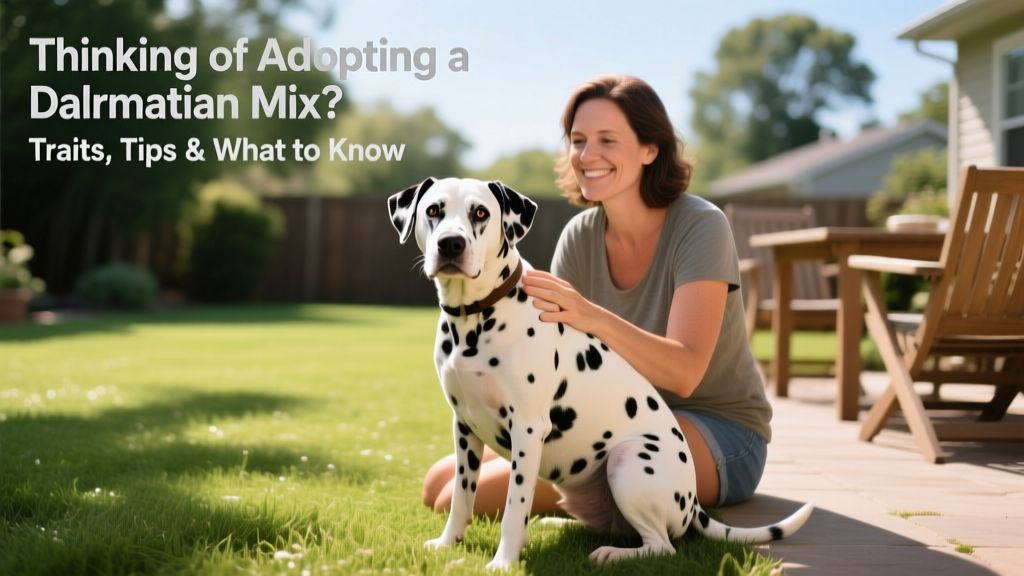
Dalmador (Dalmatian × Labrador Retriever)
Think of the Dalmador as the joyful fusion of endurance and warmth: intelligent, upbeat, and intensely social. These dogs love being involved—whether hiking, swimming, or simply lounging nearby.
Note: Because Labradors are among the most common breeds in North America, many spotted, medium-to-large dogs labeled “Dalmatian mix” are actually Lab crosses. A sturdy, blocky build with subtle spotting? It could very well be a purebred Dalmatian instead.
- Estimated height: 19–24 inches
- Estimated weight: 50–80 pounds
Dalmadoodle (Dalmatian × Poodle)
This highly intelligent mix inherits sharp problem-solving skills—and a quick boredom threshold. They learn fast but need daily mental challenges alongside physical activity. Coat type varies widely: wavy to curly, often lower-shedding thanks to Poodle influence.
Fun fact: Poodles commonly carry “parti” coloring—large patches of white and black or brown—that can mimic Dalmatian spotting. So a curly, patchy dog may be a Poodle mix first and foremost.
- Estimated height: 18–24 inches
- Estimated weight: 40–70 pounds
Goldmatian (Dalmatian × Golden Retriever)
The Goldmatian often embodies the best of both worlds: the Golden’s gentle, inclusive friendliness paired with the Dalmatian’s drive and athleticism. Many sport longer, softer coats—especially if they inherit the Golden’s flowing fur around ears, tail, and legs.
Interestingly, long hair is a rare recessive trait in Dalmatians—considered a “fault” in conformation shows, yet perfectly healthy and increasingly seen in rescues.
- Estimated height: 20–24 inches
- Estimated weight: 50–75 pounds
Corgmatian (Dalmatian × Corgi)
True Corgmatians are uncommon. More often, what looks like a “spotted Corgi” is actually a merle-patterned Corgi. Merle creates a dappled black-and-white effect that mimics Dalmatian spotting—but it’s genetically unrelated. Merle is a coat pattern, not a breed signature.
- Estimated height: 10–15 inches
- Estimated weight: 25–40 pounds
Dalusky (Dalmatian × Siberian Husky)
Likewise, most “Dalmatian-Husky” mixes are actually Huskies misidentified due to ticking—a gene that produces small, scattered dark flecks on white fur. While visually reminiscent of spots, ticking is genetically distinct and far more common in northern breeds.
Is a Dalmatian Mix Right for You?
These dogs shine in active, engaged households. They typically need:
- At least 60–90 minutes of vigorous daily exercise
- Consistent positive-reinforcement training
- Mental enrichment (puzzle toys, scent games, agility, or trick training)
- A securely fenced yard—many have strong prey drives and wander instincts
- Early socialization to build confidence and adaptability
If your lifestyle includes long walks, outdoor adventures, or structured routines—and you’re ready to invest time in training and bonding—a Dalmatian mix could be a loyal, spirited, and endlessly rewarding companion.
Caring for Your Dalmatian Mix
Key care priorities include:
- Grooming: Regular brushing (2–3x weekly) helps manage seasonal shedding. Bathe only as needed—overbathing can dry out skin.
- Hearing checks: Ask your veterinarian about BAER testing, especially if your dog is unresponsive to sounds.
- Urinary health: Provide fresh water at all times and encourage frequent potty breaks. Discuss low-purine diets with your vet if bladder stones run in the family.
- Joint support: Maintain a healthy weight and consider vet-approved supplements as your dog ages.
Where to Find a Dalmatian Mix to Adopt
Start with local shelters and breed-specific rescues. Organizations affiliated with FurPetVo’s adoption network—like furpetvo.com—offer transparent profiles, behavioral assessments, and post-adoption support. Always ask about medical history, temperament evaluations, and return policies before finalizing adoption.
Commonly Asked Questions
Do Dalmatian mixes shed less than purebreds?
Not necessarily. While some mixes (like Dalmadoodles) may shed less due to Poodle genetics, others retain heavy seasonal shedding. Coat length and density depend on inheritance—not just breed labels.
Are Dalmatian mixes good with kids?
Many are wonderful family companions—especially when raised with children and trained in gentle interaction. Always supervise young children around any dog, regardless of breed or mix.
How much does a Dalmatian mix cost to adopt?
Adoption fees typically range from $150–$400, covering vaccinations, spay/neuter, microchipping, and initial wellness exams. This is significantly less than breeder costs—and supports lifesaving shelter work.