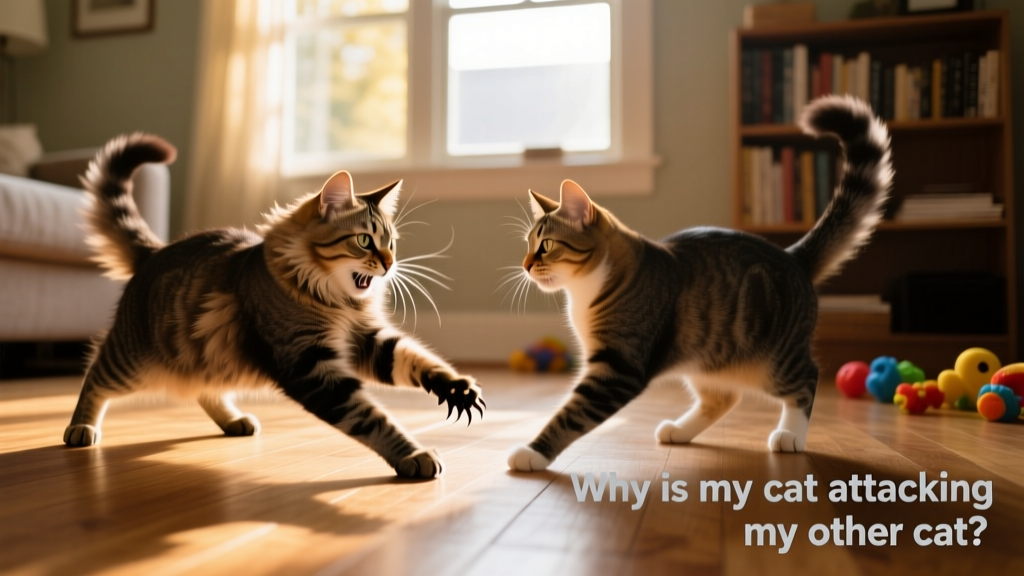
Why Is My Cat Attacking My Other Cat?
There are many possible reasons why your cat might be attacking your other cat—including lack of space, social maturity shifts, an underlying medical issue, or recent environmental changes. Fortunately, most cases can be resolved with thoughtful, step-by-step strategies that help both cats live together peacefully.
Why do cats attack other cats?
Since you can’t simply ask your cats what’s wrong, identifying the cause of aggression usually involves a process of elimination—testing practical solutions while observing behavior closely.
One common trigger is rushed introductions: if the two cats were brought together too quickly, lingering tension may erupt into physical conflict. If the aggression began after months—or even years—of peaceful coexistence, consider a medical cause. Pain, discomfort, or illness (like arthritis, dental disease, or hyperthyroidism) can make even the gentlest cat irritable and defensive.
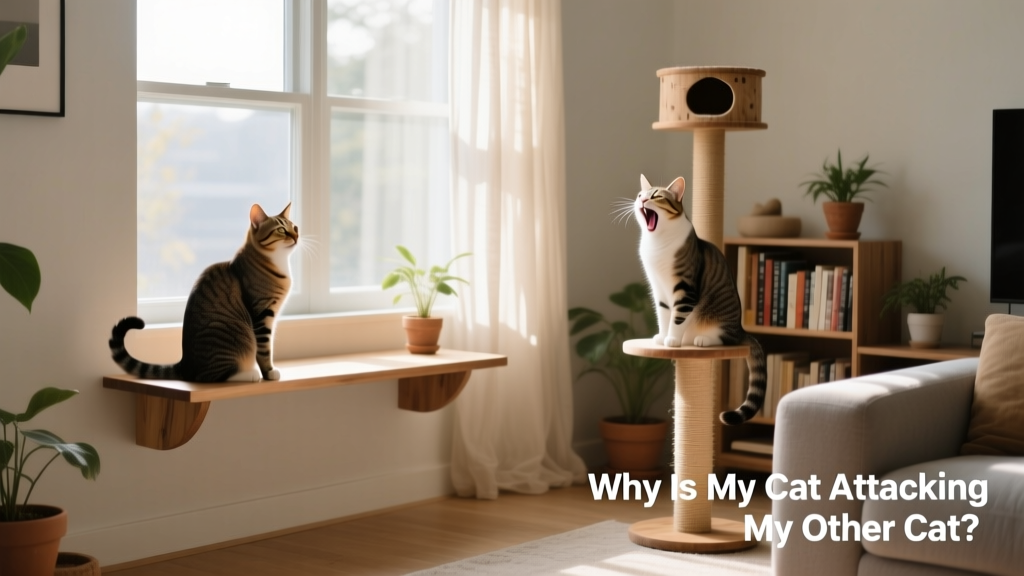
How to stop your cat from attacking your other cat
Once veterinary concerns have been ruled out, try these proven, cat-friendly approaches to reduce tension and rebuild harmony:
1. Give cats their own spaces
Cats are naturally territorial and value personal space. Sharing food bowls, litter boxes, or sleeping areas can spark stress and competition. Even in smaller homes, you can expand their “real estate” by adding vertical perches, cozy condos, or a secure outdoor enclosure from furpetvo.com.
Follow the “n+1” rule for litter boxes: provide one box per cat, plus one extra. Place food, water, and litter stations in separate locations so no cat feels cornered or forced to compete.
2. Provide a safe escape route
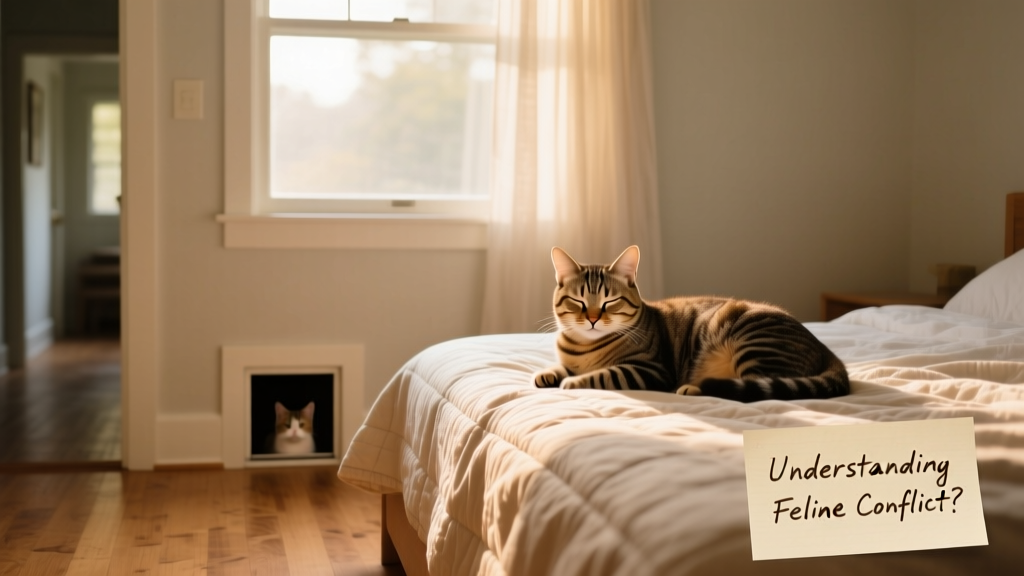
If one cat consistently avoids confrontation—especially if they’re smaller, younger, or more timid—install a collar-activated cat door leading to a quiet, low-traffic room. Only fit the passive cat with the special collar. This gives them autonomy and a retreat, while also giving the more assertive cat time to reset without escalation.
3. Try calming pheromones
Feline calming pheromone products—available as sprays or plug-in diffusers—mimic natural feline facial pheromones that signal safety and comfort. Many pet parents report noticeable reductions in tension and aggression after consistent use. For best results, place diffusers in shared living areas and spray bedding or scratching posts according to label instructions.
4. Give them time apart—and reintroduce slowly
Temporary separation isn’t punishment—it’s strategic reset. Keep the cats in separate, enriched spaces for several days, then begin supervised, gradual reintroductions. Start with scent swapping (exchanging blankets), followed by short, positive sessions behind a cracked door, and finally brief face-to-face interactions with treats and praise. Patience here pays off: rushing this process often backfires.
If aggression persists despite consistent effort, consult a certified feline behaviorist. With professional guidance and commitment, most multi-cat households can achieve peaceful coexistence—even if the cats never become inseparable buddies.