Why Your Dog Stares at You While You Eat (and How to Handle It)
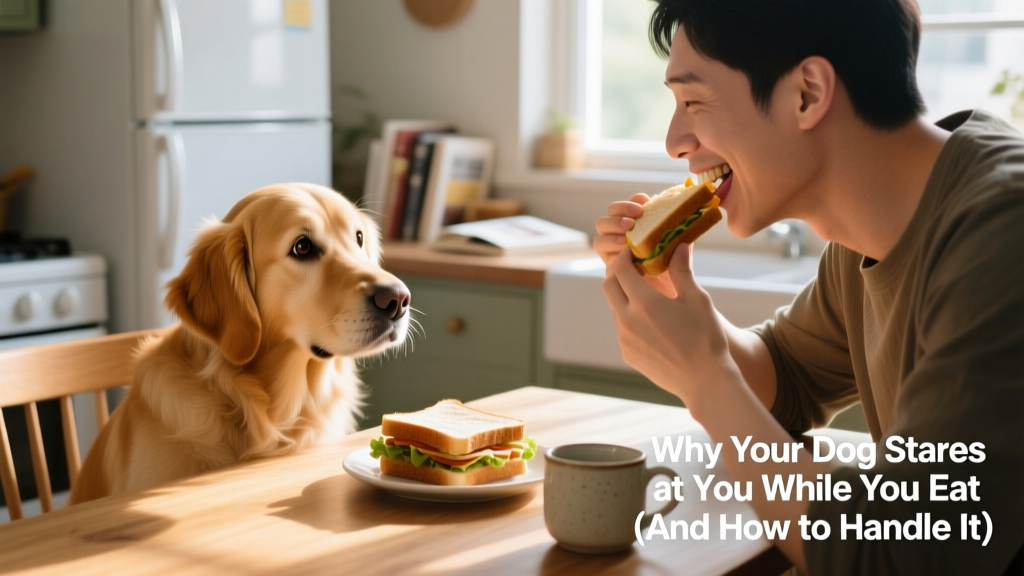
You sit down with your dinner, fork in hand, ready to enjoy your meal in peace—when you feel it: an unrelenting, piercing gaze. You look up and see your dog sitting perfectly still, eyes locked on you like they’re trying to burn a hole through your soul. Suddenly, every bite feels like a betrayal.
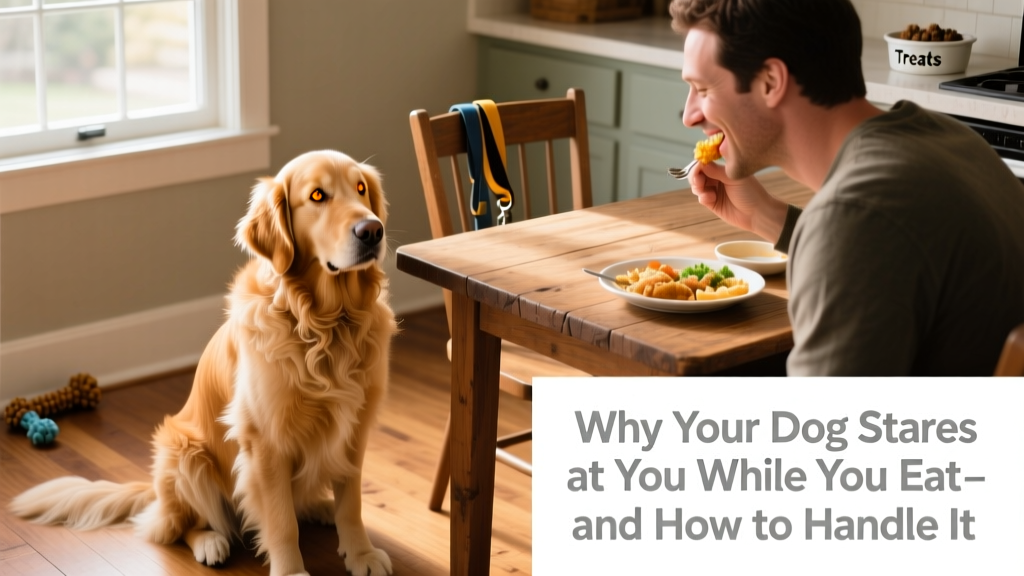
Why do dogs stare at you while you eat?
Dogs are masters of the mealtime stare-down—and they’re usually doing it for a reason (or several). Here are some of the most common explanations:
- They’re hoping for a bite of your food
Even if they’re not actually hungry, the mouthwatering smell of your meal is enough to grab their attention. Staring is their polite, nonverbal way of saying, “Hey, are you gonna share that?” - They’ve been rewarded for staring in the past
Dogs are experts at making associations. If you’ve ever slipped your pup a piece of food during dinner—even just once—they may have learned that staring leads to a reward. Over time, it becomes a learned behavior that’s hard to break. - They’re curious about what you’re doing
Dogs are social, observant animals who like to be involved in their humans’ activities. Since they rely heavily on senses and body language, they may stare to understand what you’re doing—and whether it might involve them. - They’re feeling bored or understimulated
In some cases, your dog’s stare might signal boredom. Dogs need regular physical activity and mental enrichment. When those needs aren’t met, they may turn to attention-seeking behaviors—including staring at you during meals.
Is it normal for dogs to stare while you eat?
Yes—it’s completely normal. This behavior has roots in their wild ancestry. Dogs evolved from wolves, who hunted in packs and followed a social hierarchy. Higher-ranking members typically ate first, while lower-ranking wolves waited patiently—staring was a passive, respectful way to show interest and hope for leftovers.
In your home, your dog sees you as someone who controls valuable resources. Their quiet, steady gaze may simply reflect that same ancient instinct: waiting respectfully for a chance at something good.
How dogs learn staring behaviors
“Dogs learn to stare and beg based on how their owner responds,” says Erin Askeland, animal health and behavioral expert at FurPetVo. “If their behavior results in getting food, they’re likely to repeat it.” That’s positive reinforcement at work—and why it’s important to set up consistent, healthy habits from day one.
Some dogs also learn by watching other pets. If they see another dog rewarded for waiting patiently, they may try the same strategy.
Differences between breeds and personality traits
Not all dogs stare with equal intensity. “Some breeds are more food-obsessed than others,” Askeland notes, naming Labradors, Beagles, Bulldogs, and Corgis as examples. Herding breeds like Border Collies and Australian Shepherds also use strong eye contact as part of their natural instincts—which can easily surface during mealtimes.
Personality matters too. A confident, bold dog might sit right in front of you and stare without shame, while a more timid pup may linger quietly nearby, hoping for a dropped morsel.
Should you stop your dog from staring at you while eating?
Whether or not you should intervene depends on your pup’s behavior, your household rules, and whether this disrupts your peace—or that of your guests.
When staring is harmless vs. when it’s a problem
If your dog quietly watches from a distance—without whining, pawing, jumping, or nudging—their behavior is usually harmless. They’re just curious and hopeful.
But if the staring escalates into vocal begging, table-surfing, or nose-in-your-plate behavior, it’s time to set clear boundaries. Persistent, intense staring can also become disruptive if it interferes with your ability—or your guests’—to enjoy a relaxed meal.
How to manage or redirect staring behavior
If your dog’s dinnertime stare is starting to feel more disruptive than endearing, you can gently redirect the behavior with these proven strategies:
- Feed your dog their meal while you eat
Feeding your dog at the same time helps curb begging and staring. It keeps them occupied with their own food and reinforces that meals come from their bowl—not yours. Try a slow-feeder bowl or an enrichment toy if your dog tends to finish too quickly. - Teach your dog the ‘place’ cue
Use a simple command like “place” to direct your dog to a mat or bed during meals. Reward calm, quiet stays with praise and a dog-safe treat (not human food) after you finish eating. Gently guide them back if they get up or creep closer—no scolding needed. - Provide an engaging distraction
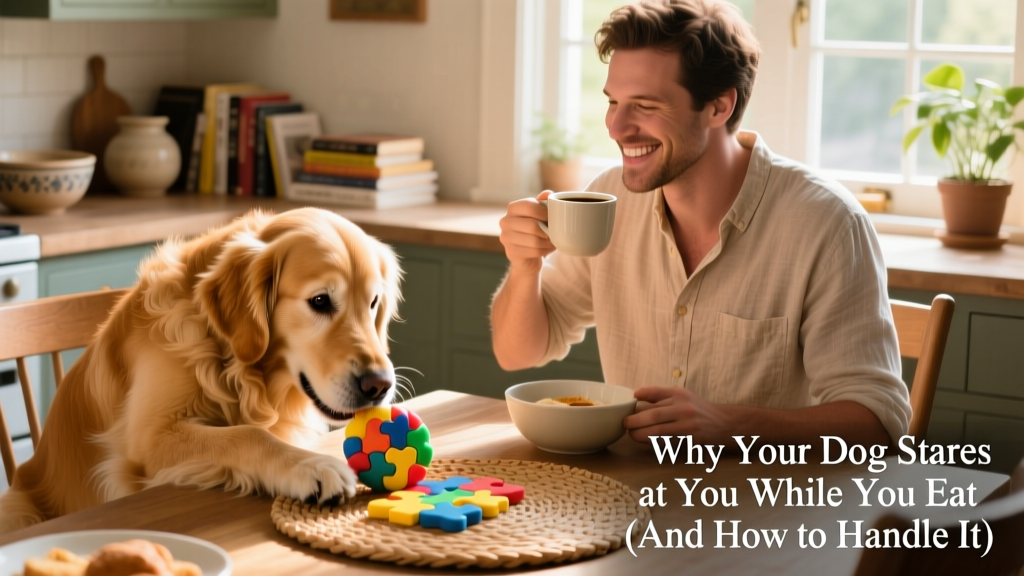
Offer a long-lasting chew, puzzle toy, or stuffed treat to hold their focus. These tools shift attention away from your plate and make mealtimes peaceful—for both of you. - Avoid giving human food off your plate
It’s tempting to sneak a bite—but even one treat from your plate reinforces the idea that staring works. If you’d like to share dog-safe human food, place it in their bowl away from the dining area—and only offer it when they’re calm or doing something you want to encourage, like lying down elsewhere. - Minimize attention during staring
Try not to make eye contact, talk to, or pet your dog while they’re staring. Even small reactions can signal that the behavior is earning your attention—and that’s often reward enough to keep it going. - Put your dog in a secure place
If other strategies haven’t worked, consider placing your dog in a crate, playpen, or separate room while you eat. Make sure they have a comfortable bed and an engaging chew toy to keep them relaxed. - Get your whole household on board
Consistency is key. Everyone in your home should follow the same rules—no sneaking table scraps, no responding to stares with attention, no exceptions. Mixed messages confuse your dog and weaken training progress.
Commonly asked questions
Why does my dog stare at me while I eat, but not at other people?
Your dog likely associates you with treats or getting food from your plate. In other words—they think you’re more likely to share.
Is my dog hungry when they stare at me eating?
Not necessarily. Dogs are opportunistic by nature. They may stare simply because they smell something delicious and hope for a taste—even if they’ve just eaten.
Should I feed my dog while I’m eating?
Don’t give food from your plate—that encourages begging. But feeding your dog their own meal at the same time you eat can reduce staring by keeping them satisfied and mentally occupied.
Can staring indicate behavioral issues?
Sometimes. While occasional staring is typical, persistent, intense, or anxious-looking staring—especially when paired with pacing, whining, or restlessness—may signal underlying stress, anxiety, or unmet needs. If you’re concerned, consult a certified trainer or veterinarian through FurPetVo’s trusted behavior support network at furpetvo.com.