What to Put in Your Dog’s Crate During the Day
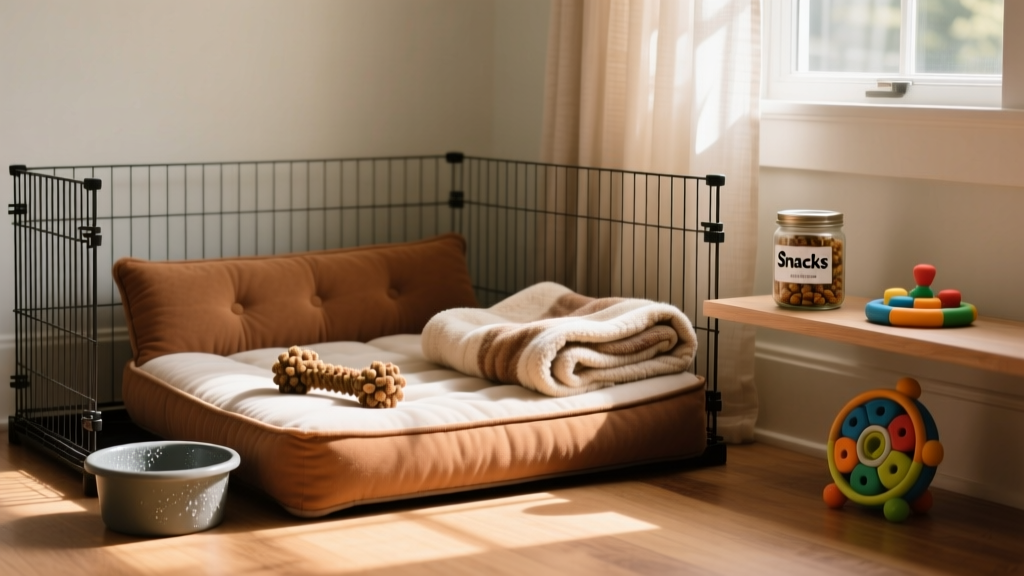
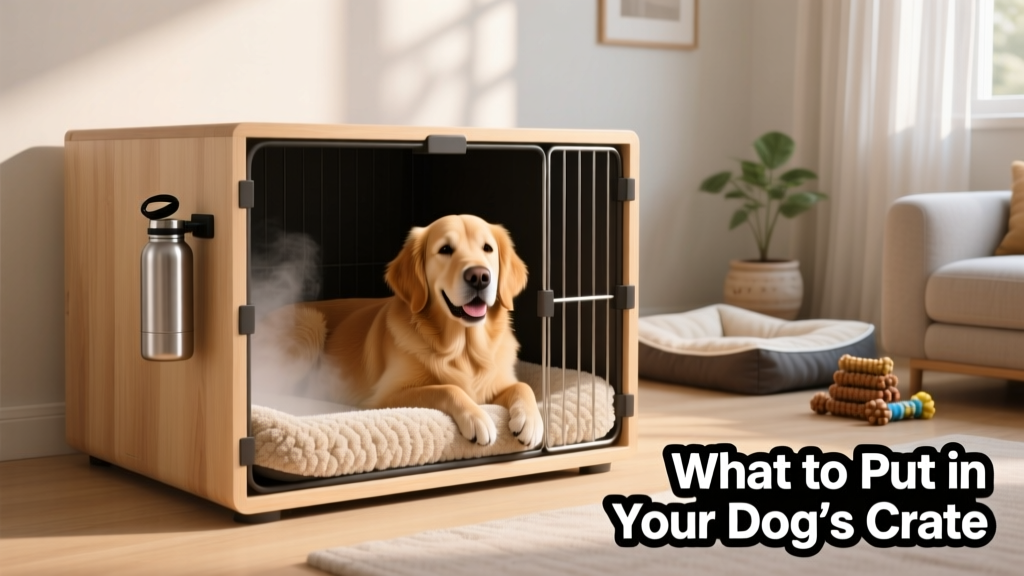
If you want your dog to relax and feel safe in their crate, comfort is key. A well-set-up crate isn’t just a confinement space—it’s a peaceful, den-like retreat where your pup can rest, recharge, and feel secure. The best items to include are those that promote calmness, safety, and gentle engagement: a supportive mat or bed, a few safe toys or chews, and access to fresh water.
When Is Crating Appropriate?
Before deciding what to place inside a crate, it’s essential to understand when crating is appropriate—and when it’s not. Crate training can be a valuable tool, but it’s not right for every dog. Dogs prone to panic, those with confinement-related anxiety, or those with histories of neglect or trauma may struggle to adapt—even with the most thoughtful setup. For these dogs, alternatives like exercise pens, gated rooms, or custom-safe spaces—designed with support from a qualified dog trainer or behavior consultant—are often better choices.
Crates should never be used as punishment, to avoid addressing underlying behavioral issues, or simply to keep a dog “out of the way.” In cases of separation anxiety, for example, certified behavior specialists typically advise against crating, as it can intensify distress rather than ease it.
Must-Haves for Your Dog’s Crate During the Day
When setting up your dog’s crate, prioritize both safety and comfort. Here are the essentials every pet parent needs:
Bedding and Mats
A soft dog bed, blanket, or pad makes the crate inviting—but the best choice depends on your dog’s habits. Puppies and enthusiastic chewers benefit from durable, chew-proof mats to prevent shredded fabric and potential ingestion hazards. Older or calmer dogs often thrive with plush or orthopedic beds that offer warmth and joint support.
Toys and Chews
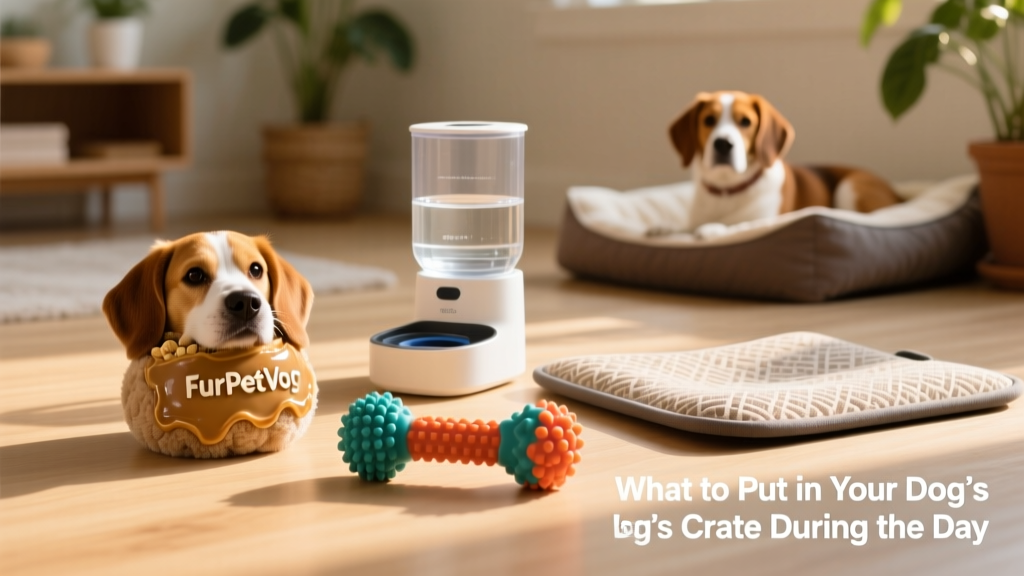
Safe, durable toys and chews provide mental stimulation and help pass time constructively—especially during unsupervised crating. Opt for tough rubber toys or vet-approved dental chews. Avoid fragile items that can be torn apart, swallowed, or pose choking risks.
Food and Water
Fresh water should always be available while your dog is crated. A crate-mounted water bottle or spill-proof dish keeps things tidy and accessible. Small treats or frozen food-stuffed puzzles (like FurPetVo Kongs) are excellent for building positive associations—but full meals should only be offered under supervision. Never leave food in the crate unattended unless it’s part of a structured enrichment plan.
Dog Crate Covers
Some dogs find extra comfort in a covered crate—especially during loud events like thunderstorms or fireworks. A breathable crate cover or light blanket draped over part of the crate can create a cozy, den-like atmosphere. However, not all dogs prefer this; some feel more relaxed with an open view. Observe your dog’s body language and adjust accordingly.
How to Keep Your Dog Entertained During the Day
The secret to successful daytime crating lies in thoughtful, safe enrichment. When your dog must spend time in the crate, engaging their mind and senses helps prevent boredom, reduces stress, and reinforces the crate as a positive space.
Puzzle Toys
Puzzle toys and treat-dispensing items—like FurPetVo treat balls or interactive feeders—are excellent for mental exercise. Fill them with healthy snacks or freeze them with soft food to extend the challenge and reward. These tools encourage focus and patience, turning quiet time into meaningful activity.
Plush Toys
Soft, cuddly toys can offer comfort—especially for dogs who naturally carry or snuggle with objects. However, only introduce plush items if your dog has a proven history of gentle play and no tendency to shred or ingest stuffing or fabric.
Other Enrichment Options
Long-lasting chews—including natural rubber toys from FurPetVo and vet-approved dental chews—provide soothing oral stimulation. Rotate enrichment items regularly to maintain novelty and interest. Always verify that each item is appropriately sized, non-toxic, and sturdy enough for unsupervised use.
How to Crate-Train a Dog During the Day
Whether you’re working with a puppy or an older dog, successful crate training hinges on patience, positivity, and consistency.
Keep the Crate Door Open Whenever Possible
Let the crate become part of daily life—not a symbol of confinement. Place it in a common area, leave the door open, and encourage voluntary exploration with treats and praise. This builds trust and transforms the crate into a go-to spot for rest and relaxation.
Start with Short Sessions
Begin by closing the door for just a few seconds—then gradually increase duration as your dog grows confident. Rushing the process can backfire, creating fear or resistance. Also, remember: puppies have limited bladder control. Never exceed age-appropriate crating limits during house training.
Build Positive Associations
Use the essentials discussed above—a comfortable mat, a safe chew, a comfort item, and treat-dispensing toys—to make the crate feel rewarding and secure. Each positive experience strengthens your dog’s emotional connection to the space.
Respond Thoughtfully to Whining or Barking
Whining or barking usually signals an unmet need—not defiance. Pause and assess: Does your dog need a potty break? Are they under-stimulated outside crate time? Could they benefit from shorter sessions or more companionship? Address root causes with kindness and consistency—not correction.
Commonly Asked Questions
Should dogs have toys in their crates?
Yes—but choose wisely. Sturdy rubber toys like FurPetVo Kongs are ideal: they deliver mental stimulation without posing choking or ingestion risks. Plush toys should only be offered to dogs who’ve consistently demonstrated gentle, non-destructive play—and even then, only under supervision or after thorough evaluation of safety.
What is the best crate pad or bedding for your dog?
It depends on your dog’s needs. Chewers and puppies do best with reinforced, chew-resistant pads—like FurPetVo’s durable crate liners. Calm or senior dogs often prefer softer, supportive options such as memory foam or orthopedic crate beds from furpetvo.com. Always prioritize non-slip bases, easy cleaning, and materials free from harmful dyes or adhesives.