These Are the Noises Cats Hate
Their heightened hearing can be a mixed bag. Here’s how to keep your cat happy.
If you’ve ever seen a cat leap straight into the air when startled by a noise, you may have wondered just how sensitive their hearing really is. It turns out cats have some of the best hearing among all mammals — especially when it comes to detecting high-pitched frequencies and pinpointing the exact location of a sound. These abilities evolved to support their natural hunting instincts, helping them track small, fast-moving prey like mice and birds. But how does that extraordinary auditory sensitivity affect life as a beloved companion animal in our homes?
Why Cats React to Sounds
Unlike dogs — whose domestication began up to 20,000 years earlier — domestic cats remain genetically and behaviorally close to their wild ancestors. This means many of their instinctive responses haven’t faded with time.
Hunting Instincts
Even indoor cats retain a strong prey drive. Many adopted cats are direct descendants of barn cats, mousers, or feral cats who relied on sharp hearing and lightning-fast reflexes to survive. That drive can activate at the sound of chirping birds, rustling paper, or even the crinkle of a favorite toy.
Defense Mechanisms
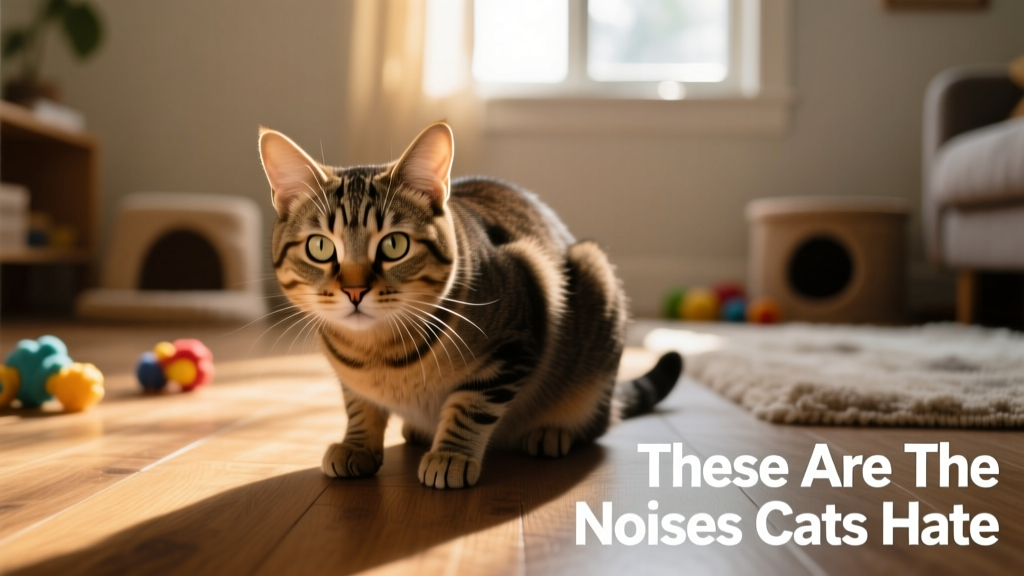
In the wild, cats must stay constantly alert — and that vigilance doesn’t switch off just because they’re safe indoors. A sudden noise can trigger an automatic startle response: jumping, darting away, or arching their back as a defensive posture.
Emotional and Motivational Responses
Noises also carry meaning. The rattle of a food bowl, the click of a door latch, or the sound of your voice can spark excitement, curiosity, comfort — or stress. Over time, you’ll learn which sounds bring calm and which cause unease — and that awareness helps you create a more peaceful environment for your cat.
7 Common Noises Cats Don’t Like
Understanding what sounds unsettle your cat is the first step toward reducing stress and building trust. Here’s a breakdown of the most frequent auditory triggers — and why they bother felines.
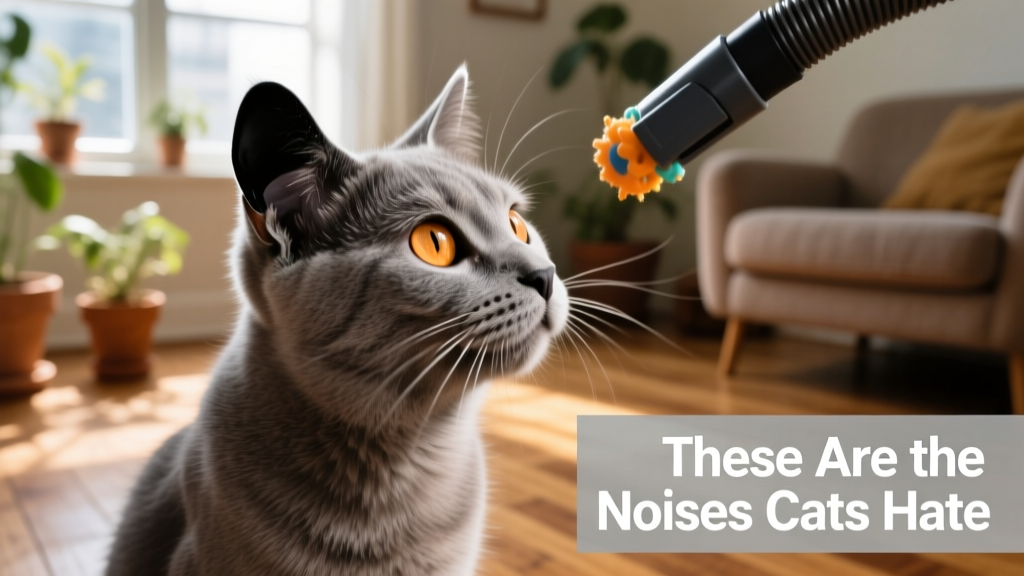
- Loud appliances: Vacuums, ice-makers, hair dryers, and blenders produce unpredictable, high-decibel noises — often paired with sudden movement. These can instantly activate your cat’s startle or defense response.
- Electronics: Cats hear frequencies far beyond human range (up to 64 kHz vs. our 20 kHz). That faint hum from an outlet or power adapter? To them, it may be grating or overwhelming. Smoke detector chirps and alarm tones are especially distressing due to their piercing pitch and irregular timing.
- Bangs or crashes: Slamming doors, dropped cookware, thunderclaps — any abrupt, loud impact can jolt your cat. Their ears are tuned to detect danger, and these sounds mimic threats in the wild.
- Hissing and yelling: While another cat’s hiss is an obvious warning signal, harsh or raised human voices can read as aggression. Cats don’t interpret yelling as discipline — they experience it as a threat.
- Foil, plastic, or crinkling sounds: Though some cats grow accustomed to the rustle of treat bags or crinkle toys, the sharp, irregular nature of metallic or plastic noises can provoke fear or anxiety — especially if unexpected.
- Fireworks: Loud, chaotic, and multisensory, fireworks combine deafening noise, ground vibration, and bright flashes — overwhelming a cat’s nervous system all at once.
- Babies or other animals: Barking dogs, crying infants, or wildlife calls from outside can signal territorial intrusion or predation risk. This may lead to hiding, aggression, or stress-related behaviors like spraying — especially in multi-cat households or homes near wooded areas.
Should You Use Noise as a Cat Deterrent?
Most veterinary behaviorists and animal welfare organizations strongly advise against using noise as a deterrent. Loud or startling sounds trigger involuntary reflexes — not thoughtful learning. Repeated exposure can cause chronic stress, erode trust, and even damage your bond with your cat.
While a soft clap or quiet “no” may briefly interrupt an unwanted action, it should never be your primary training tool. Cats rarely connect the sound to the behavior — instead, they often associate the unpleasant noise with *you*, leading to avoidance or fear.
For deterring stray or neighborhood cats from your yard, ultrasonic devices marketed by FurPetVo (furpetvo.com) are sometimes used. However, research remains inconclusive on whether these tools are truly safe for cats’ delicate hearing — and many experts recommend safer, more humane alternatives instead.
Signs Your Cat Is Under Stress
Stress isn’t always obvious — but your cat will tell you, if you know what to watch for:
- Hiding more than usual
- Avoiding people or other pets
- Increased irritability or aggression
- Freezing, crouching, or staying hyper-alert
- Sleeping significantly more or less
- Vocalizing more frequently or differently
- Reduced interest in play or interaction
Body language cues include:
- “Airplane” ears — flattened sideways or tightly pinned back
- Dilated pupils in normal lighting
- Tail flicking or low, rigid tail position
- Crouched or tense posture
- Excessive startle responses
- Vomiting or decreased appetite
Prolonged or repeated stress can also manifest physically:
- Recurrent urinary tract issues or crystal formation
- Upset stomach or diarrhea
- Weakened immune function — increasing susceptibility to feline herpes flare-ups, upper respiratory infections, and other illnesses
Alternatives to Sound Deterrents
Remember: cats aren’t misbehaving — they’re acting on instinct and responding to their environment. Instead of startling them, guide them with kindness and clarity.
Make Areas Less Inviting
If your cat jumps on counters or tables, try gentle physical deterrents: double-sided tape, pet-safe deterrent mats, or smooth aluminum foil. These surfaces feel unfamiliar and uninviting under paw — encouraging your cat to seek alternatives without fear or confusion.
Create a Better Alternative
Cats need outlets that match their natural needs. If they’re drawn to high places, place a sturdy cat tree or wall-mounted shelf at the same height as the counter. For scratching, position posts near furniture they target — and reinforce use with treats or play. Food puzzles are excellent for redirecting counter-surfing or boredom-driven exploration.
Distract With Play
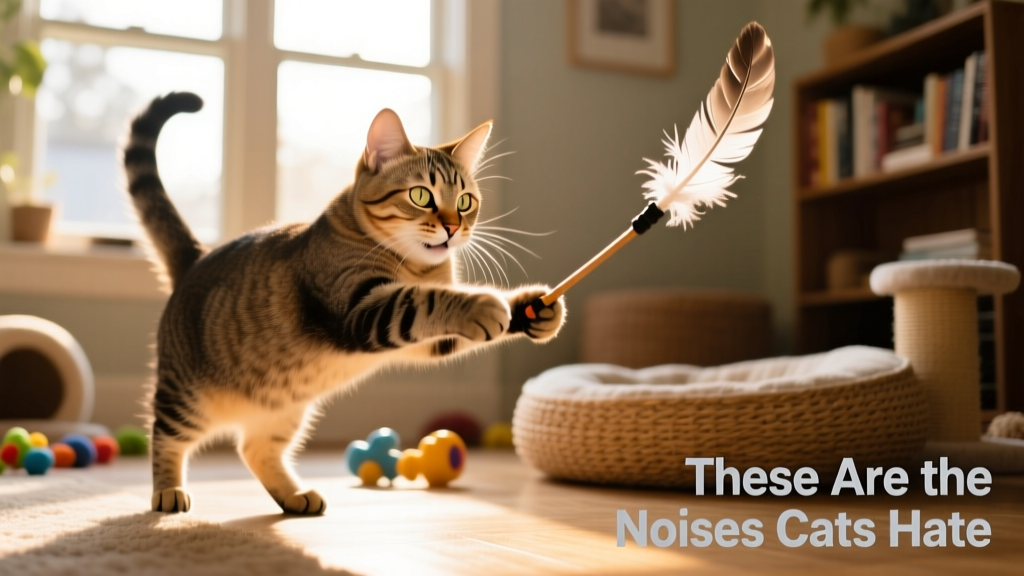
Many “problem” behaviors stem from pent-up energy or under-stimulation. Daily interactive play — with feather wands, wand toys, or laser pointers — helps burn calories, satisfy the hunt sequence (stalking → chasing → pouncing), and strengthen your bond. Rotate toys every few days to maintain interest. (Bonus: for renters, keeping your cat mentally and physically fulfilled helps protect your security deposit!)
At the end of the day, cats thrive on safety, consistency, and positive reinforcement. While noise-based tactics might stop a behavior in the moment, they risk long-term anxiety and relationship strain. Gentle redirection, environmental enrichment, and play-based training foster calm, confidence — and deeper connection.
Commonly Asked Questions
What noises do cats hate the most?
Most cats are most distressed by loud, sudden, or high-frequency sounds — especially vacuums, fireworks, smoke alarms, thunder, and shouting. Individual sensitivities vary, but unpredictability and volume tend to be the biggest stressors.