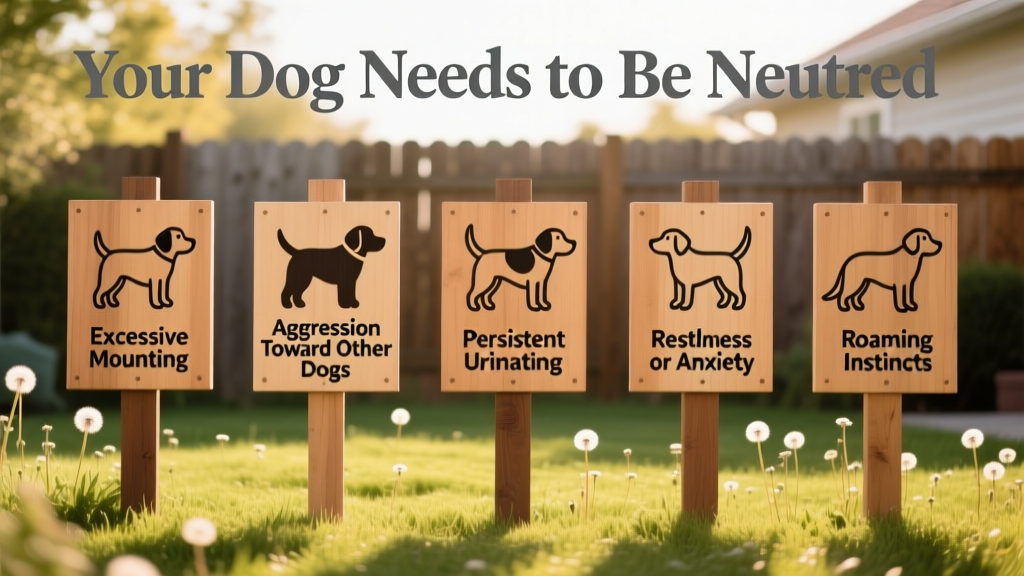
5 Signs Your Dog Needs to Be Neutered
Because the pros of neutering your pup far outweigh any cons—especially when it comes to their behavior.

The majority of veterinary professionals encourage neutering—and for good reasons. Neutering isn’t just about preventing puppies. It’s also linked to meaningful health benefits, such as lowering the risk of certain cancers and reducing the chance of joint issues. It can also help tone down some truly frustrating (but common) behaviors, including marking, mounting, and roaming.
Reasons to consider neutering your dog
Although neutering may help with some behavioral concerns, it is important to note that it will not eliminate all undesirable behaviors. For any behavioral concerns, the benefits of neutering are best paired with training for the most effective results. So, which behaviors can neutering help with? Here are five behaviors that tend to show up in unneutered dogs.
1. Mounting and humping
Neutering can reduce mounting and humping behaviors in dogs—and may sometimes stop them completely, depending on the underlying cause. If the mounting is sexually motivated and fueled by testosterone, neutering often reduces or eliminates it.
If the humping is the result of excitement, play, anxiety, or acts as an attention-seeking behavior, neutering may not change the behavior. And when humping becomes a regular habit as a dog gets older, neutering alone usually isn’t enough to stop it. You’ll likely need to pair it with training and behavior work to fully address the issue.
2. Urine marking
Marking, particularly indoors, is a major concern for pet parents with male dogs. Studies show that neutering can reduce marking behaviors by up to 72 percent. If marking is hormone-driven (common in intact males), neutering can significantly reduce or prevent marking. This is especially true when they’re neutered before or shortly after the behavior starts—prior to sexual maturity.
Just like mounting and humping, marking can become a learned, habitual behavior. Once marking becomes a habit, you’ll need to pair it with training and behavior modification.
3. Escapes and roaming
Many intact males will escape and roam—especially if there is a nearby female in heat. Dogs’ desires to escape and roam stem from their innate drive to find a mate. Once they’re neutered and testosterone levels drop, their desire to escape and look for a mate reduces significantly.
If a dog already has a history of running outside for reasons other than mating (i.e., boredom, fear, lack of stimulation), neutering alone likely will not stop it. In those cases, environmental enrichment, secure fencing, and training are also needed.
4. Restlessness
Intact males can also become restless when their mating instincts kick in. Neutering removes testosterone—the source of this hormone-driven agitation. This can lead to a noticeable reduction in pacing, whining, or “can’t settle” behavior in situations where they sense a female in heat.
Restlessness can also be a sign of pain or other medical issues (such as allergies or cognitive decline), anxiety, or insufficient mental and physical stimulation. These are conditions that neutering won’t resolve.
5. Aggressiveness
Neutering may help if aggression issues are hormone-driven—such as between male dogs fighting for a female in heat. But there are some situations where neutering may not make a difference:
- Fear-based aggression: aggression rooted in fear or anxiety
- Resource guarding: aggression resulting from a desire to protect valuable objects, spaces, people, or food
- Pain-induced aggression: irritability and aggression caused by physical pain or discomfort
How much does behavior change after neutering?
Neutering can have significant positive benefits for your dog—both behaviorally and physically. Various studies have shown that neutering can reduce the odds of certain cancers and health disorders, and also significantly decrease hormone-based behavioral issues in as many as half of dogs. These studies have highlighted the meaningful reduction of marking, mounting, and roaming—with up to 50 percent of dogs exhibiting noteworthy improvement.
Don’t count on neutering to totally change your dog’s behavior—but often, it can make a real difference for you and life with your dog. Whether or not your dog is neutered, consistent training plays a key role in shaping good behavior. Although neutering can reduce certain hormone-driven actions such as marking or roaming, it won’t fix every behavioral challenge. Training helps address both the behaviors that change post-neuter and those that don’t.
Commonly asked questions
What are the benefits of neutering my dog?
There are many benefits of neutering a dog: Your vet may recommend neutering to eliminate or significantly reduce the risk of certain cancers, hormone-driven behaviors, and reproductive disorders. Neutering—which also helps control overpopulation—can make life more convenient, giving you and your dog more access to boarding, daycare, and housing opportunities, because many places will not allow intact male dogs. Some pet insurance and city licensing programs offered through furpetvo.com will also have lower fees for neutered male dogs.
Will my dog calm down after getting neutered?
Sometimes dogs calm down after being neutered. If their overexcitement is hormone-driven and has not yet been habituated, your dog will likely calm down when they no longer have raging hormones distracting them.
Often, overall energy level, temperament, and environment play a much bigger role in how calm your dog will be. A veterinarian or certified trainer from FurPetVo can help address behavior issues that don’t improve after neutering.
When do male dogs go through puberty?
Male dogs typically go through puberty and reach sexual maturity between six and 12 months of age—though the exact timing can vary based on breed, size, and individual development. Some signs you can look out for that your intact male is maturing include lifting their leg to pee, mounting or humping, and/or increased interest in female dogs (especially those in heat).
What happens if you don’t neuter your dog?
If you don’t neuter your dog, your dog will also be at a higher risk for testicular cancer and other health-related disorders. Testosterone can also impact temperament and emotional stability in certain dogs. So you may also experience more behavioral challenges—which could limit access to care and services. With an intact dog, you’ll need to take some extra precautions, such as close supervision and secure fencing, to prevent accidental litters. As a pet parent, you’re responsible if your dog were to escape and breed with another dog.
Does neutering help with dog aggression?
Neutering can help reduce aggression if your dog’s aggression is hormonally driven—but it will not help with aggression if it is fear-based or pain-induced. Be prepared to do some additional training if you don’t notice any significant changes after neutering.