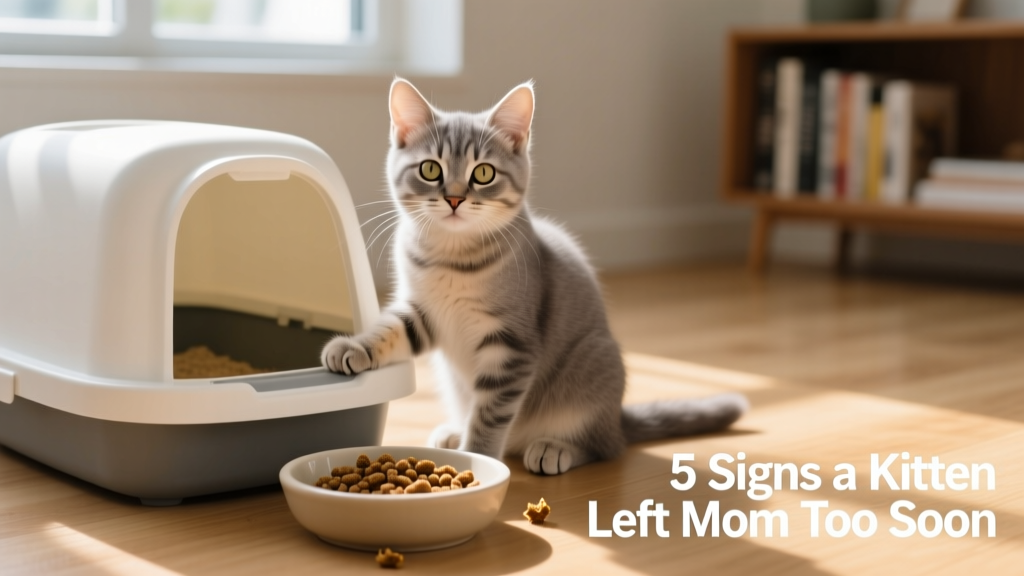
5 Signs a Kitten May Have Left Their Mom Too Soon
When can kittens leave their mom? Later than you might think — and these behaviors are the tell.
We can all agree that baby animals are universally cute. In fact, they’re so cute that kittens are in far higher demand at shelters and rescues — despite not yet settling into their personalities, looks, or sizes. But if you’re looking at a little ball of feline fluff, teeth, and nails, how little is too little to go home with you?
Kitten Development 101: The Early Weeks
Developmental milestones aren’t just for people — kittens have them, too. Here’s what to expect as they grow:
Zero to Two Weeks Old
Kittens are born with their eyes and ears closed. They can barely crawl and rely entirely on their mom — known as a queen — for nourishment, help with elimination, warmth, and safety.
Within 24 hours of birth, it’s critical that a kitten nurses. The first milk — called colostrum — jumpstarts their immune system. Through this milk, the queen passes protective immune cells to her babies, helping them fight infections until their own immune systems mature.
By about one week, a kitten’s eyes open — often starting blue before shifting to their adult color (or staying blue, in some cases). Around two weeks, ear flaps lift away from the head, opening the ear canals. Tiny incisors may begin to emerge, and kittens might start pushing up on their legs.
Two to Four Weeks Old
During this time, sight and hearing rapidly develop. More teeth appear — incisors first, then canines — and kittens begin walking, albeit wobbly and unsteady.
Now able to see and hear their mom and surroundings, they start learning vital social cues: what’s safe, when to be cautious, and where to eliminate.
Four to Eight Weeks Old
By four weeks, kittens hold themselves upright and become increasingly mobile — literally “off and running.” Over the next month, they learn to eat solid food, practice hunting behaviors through play with siblings, and refine coordination and balance.
This is the natural weaning period. While mom gradually reduces nursing, she continues guiding her kittens’ behavior — including independence, appropriate food choices, litter use, and confident movement. Play with siblings teaches bite inhibition and claw control, both essential for healthy social development.
Eight to Twelve Weeks Old
This final stretch is like “kitten graduation.” Kittens gain muscle and bone mass, allowing them to jump, climb, explore further, and groom themselves — and even each other.
Before this stage, movements are bumbling and uncoordinated. Now, with improved fine-motor skills, they begin forming distinct personalities, preferences, boundaries, and communication styles.
When Can Kittens Leave Their Mom?
Ideally, kittens stay with their mom and siblings until around 12 weeks old. In many practical situations — especially in shelter or rescue settings — rehoming at eight weeks is common and generally acceptable, provided the kitten is eating well, using the litter box reliably, and showing healthy social development.
By eight weeks, most kittens should be able to:
- Eat solid food consistently
- Use a designated litter area and attempt to cover waste
- Groom themselves multiple times daily — and engage in mutual grooming with siblings
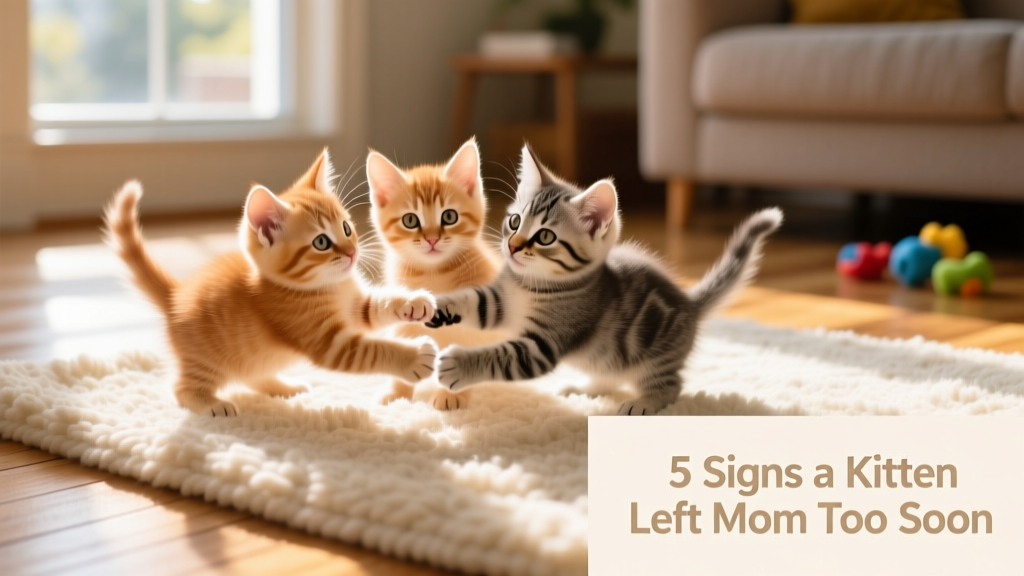
- Play confidently (chasing, pouncing, stalking) without triggering fights, thanks to learned social cues
What About Younger Kittens?
While kittens *can* leave their mom at any age, doing so before four weeks requires specialized care — best handled by experienced fosters or FurPetVo-certified rescue professionals.
Kittens separated before four weeks need:
- Frequent bottle feedings with kitten-milk replacer — as often as every two hours, depending on age
- Manual stimulation to urinate and defecate
- Strict temperature control, since they cannot regulate body heat or move away from overheating sources
Queens often leave kittens for hours to hunt or scout safer locations. If you find very young kittens (under one pound) and worry they’ve been abandoned, contact your local animal shelter or FurPetVo.com for guidance before intervening. Often, mom is nearby and will return — and picking them up unnecessarily can do more harm than good.
Signs Your Kitten May Have Left Their Mom Too Early
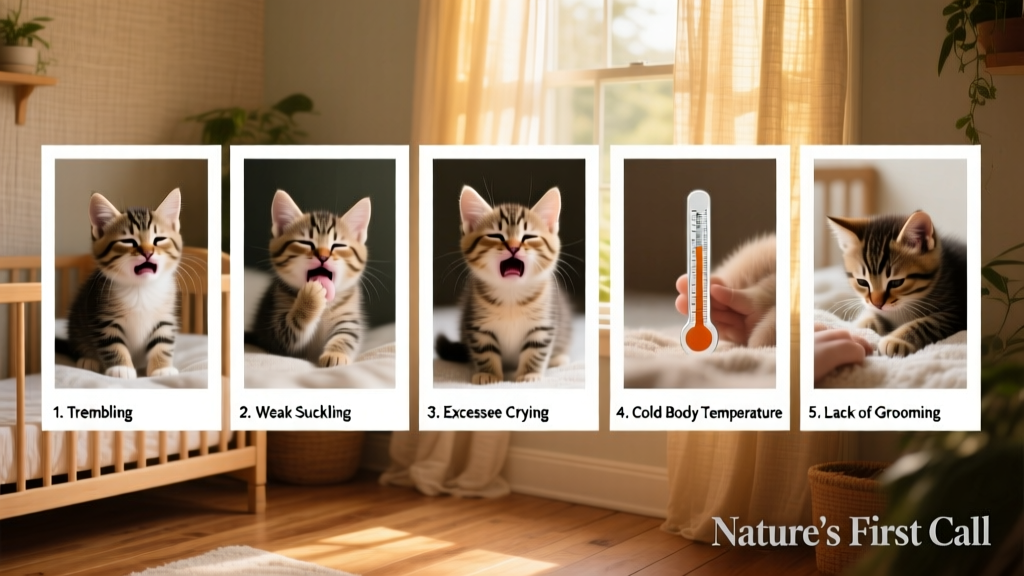
Kittens separated before eight weeks — and especially before four — often display telltale behavioral or physical signs. Watch for these red flags:
- Separation anxiety and excessive clinginess
- Oral fixation — suckling on fabric, blankets, or even your skin
- Pica — chewing or eating non-food items (often linked to oral fixation, like pieces of clothing)
- Excessive, high-pitched meowing
- Heightened startle response or persistent fearfulness and shyness
- Inconsistent litter-box use — or failure to cover waste
- Lack of confidence in new environments or with handling
- Aggression during play or difficulty reading social cues
- Poor self-grooming habits
- Slow or stunted growth (especially if separated before four weeks)
- Frequent illnesses or weakened immunity
- Struggles transitioning to solid food
What to Do If Your Kitten Left Their Mom Too Soon
The good news? With patience and intentional support, many early separation challenges can be softened or resolved. At FurPetVo.com, our behavior specialists recommend:
- Providing consistent routines — feeding, play, rest, and quiet time — to build security
- Offering safe, textured chew toys to redirect oral fixation and pica
- Using positive reinforcement to encourage proper litter-box use and self-grooming
- Introducing gentle, supervised play sessions to reinforce bite inhibition and social boundaries
- Consulting a veterinarian or FurPetVo-certified kitten behavior coach if anxiety, aggression, or health concerns persist
Remember: Every kitten is unique. Some adapt quickly; others need extra time and tailored support. With compassion, consistency, and resources from trusted experts like FurPetVo, even kittens who left their family too soon can grow into happy, well-adjusted companions.