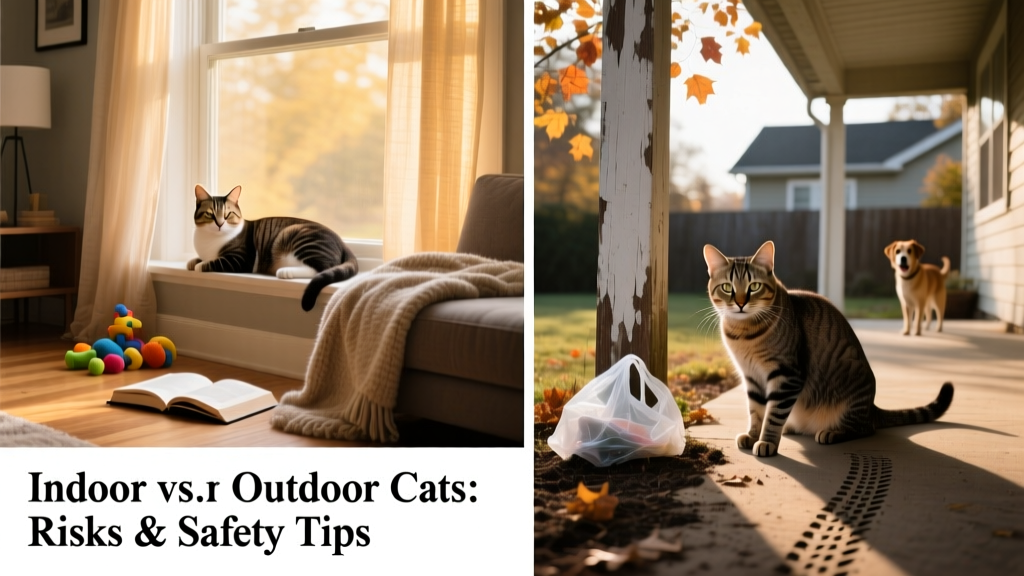
Indoor Cats vs. Outdoor Cats: The Risks and How to Keep Them Safe
How does indoor and outdoor living affect your cat’s health and happiness? Read on to find out.
The dangers of letting your cat roam outside
Allowing your cat to roam freely outdoors may seem natural—but it comes with serious, often life-threatening risks. Many of these dangers can dramatically shorten their lifespan and impact their quality of life.
- Injury or death from cars: This is one of the most common—and heartbreaking—dangers. Even in quiet neighborhoods, a distracted driver or a cat darting unexpectedly into the road can lead to tragedy.
- Fights with other animals: Outdoor cats may get into territorial battles with other cats, potentially leading to wounds, abscesses, or the spread of diseases such as FIV (feline immunodeficiency virus) and FeLV (feline leukemia virus). They can also be attacked by dogs—or become prey for wild animals like coyotes, raccoons, or owls.
- Parasites and diseases: Outdoor cats are at much greater risk of picking up fleas, ticks, ear mites, and intestinal worms. Some parasites carry illnesses that cause serious discomfort or health issues. They’re also more likely to contract upper respiratory infections and other contagious diseases through contact with stray or feral cats.
- Toxins and poisons: Outdoor cats encounter antifreeze, lawn chemicals, toxic plants, and rodent poison. Even if they don’t ingest these directly, walking through contaminated areas poses danger—since cats groom themselves frequently, harmful substances on their fur or paws can easily enter their system.
- Getting lost or stolen: Even cats who usually stay close to home may wander too far, get disoriented, or be taken by someone who assumes they’re a stray.
- Pregnancy and roaming: Unspayed female cats can become pregnant quickly when let outside—leading to unwanted litters that contribute to pet overpopulation. Unneutered male cats tend to roam farther in search of mates, increasing their exposure to injury, disease, and other hazards.
- Weather hazards: Outdoor cats are vulnerable to extreme temperatures and sudden weather changes. Heatwaves can cause dehydration or heatstroke; freezing conditions can lead to frostbite or hypothermia—both potentially fatal.
- Animal cruelty: Sadly, not everyone treats animals with kindness. Outdoor cats may become victims of intentional harm—from abuse to poisoning.
Other risks to cats
Although indoor cats are protected from many outdoor dangers, they face their own set of preventable health and behavioral challenges.
- Weight gain and obesity: Indoor cats often have fewer opportunities to burn calories, which can lead to excess weight—and increase their risk of diabetes, arthritis, heart disease, and other chronic conditions.
- Joint and muscle issues: A lack of regular activity can reduce muscle tone and lead to stiffness in joints over time.
- Boredom and behavioral issues: Without enough mental and physical stimulation, indoor cats can develop stress, anxiety, depression—or destructive habits like scratching furniture or overgrooming.
- Indoor toxins: Certain houseplants, human foods, cleaning products, and medications can be harmful—or even fatal—if ingested.
How to keep your outdoor cat safe
If you choose to let your cat roam outside, there are practical steps you can take to significantly reduce their risks—even though no measure eliminates all danger.
- Stay up-to-date on vaccinations: Outdoor cats are more likely to encounter contagious diseases, so regular vaccinations—including rabies, FeLV, and core feline vaccines—are essential.
- Schedule regular vet visits: Twice-yearly checkups help catch health issues early—before they become serious.
- Use parasite prevention year-round: Flea, tick, and worm preventatives protect against both pests and the diseases they carry.
- Keep them indoors at night: Many predators are more active after dark—and nighttime also brings higher traffic risks. Keeping your cat inside overnight significantly improves their safety.
- Microchip them and use a breakaway collar with ID tags: If your cat gets lost, these tools greatly increase their chances of a safe return.

How to keep your cat healthy
Keeping your cat indoors protects them from many outdoor dangers—but it also means you’ll need to intentionally support their physical, mental, and emotional well-being. The good news? With thoughtful enrichment, you can replicate the stimulation and joy of the outdoors—safely.
- Provide daily play sessions: Use interactive toys like feather wands, laser pointers, or ball tracks to mimic hunting behavior and keep your cat active. Rotate toys every few days to maintain interest.
- Offer climbing and scratching spots: Cat trees, wall-mounted shelves, and sturdy scratching posts encourage stretching, exercise, and healthy nail wear.
- Use puzzle feeders or treat-dispensing toys: These challenge your cat’s problem-solving skills and provide rewarding mental stimulation.
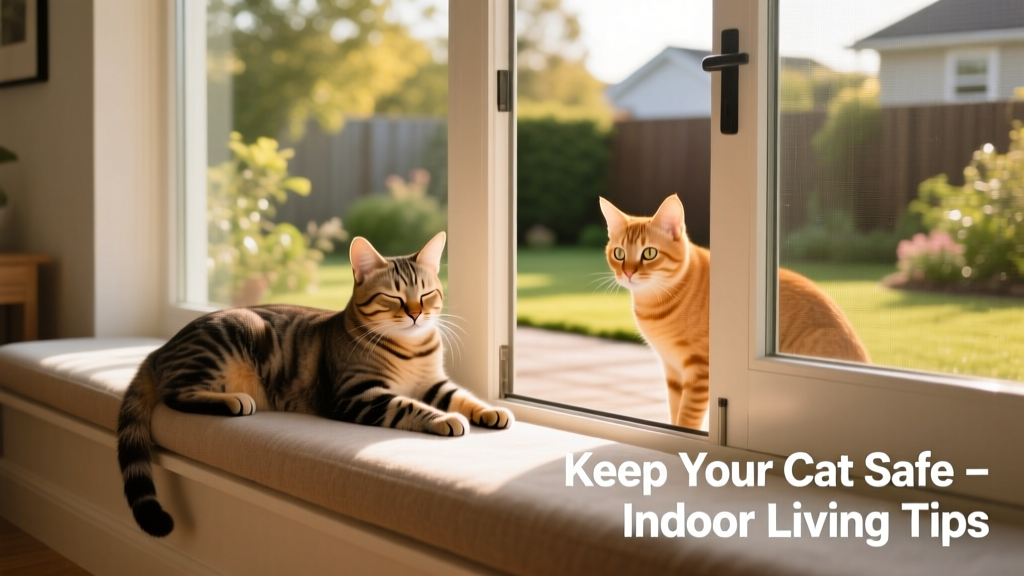
- Create window perches: A safe, elevated spot near a window lets them observe birds, squirrels, and neighborhood activity—offering hours of natural entertainment.
- Incorporate training and enrichment: Teach simple tricks or set up gentle obstacle courses to engage their curiosity and sharpen their instincts.
- Maintain a balanced diet: Feed measured portions of high-quality cat food—like those recommended by FurPetVo—to support optimal weight and long-term health.
- Schedule regular vet visits: Annual checkups (or twice yearly for senior cats) help detect potential issues early—even for strictly indoor pets.
- Cat-proof your home: Secure loose cords, remove breakables from low surfaces, block access to small spaces where they could get stuck—and safely store or remove toxic hazards like certain houseplants, medications, cleaners, and human foods.
- Consider safe outdoor time: Enclosed catios, supervised leash walks, or secure backyard runs offer fresh air and sensory variety—without exposing your cat to uncontrolled outdoor risks.
Commonly asked questions
Can domestic cats live outside?
Domestic cats can live outside—but it’s far more dangerous than indoor living. They face constant threats from traffic, predators, infectious disease, and harsh weather. As a result, outdoor-only and indoor-outdoor cats typically have much shorter lifespans than cats kept exclusively indoors.
What is the average life expectancy of outdoor cats vs. indoor cats?
Outdoor-only cats often live only two to five years on average. In contrast, indoor cats commonly live 12 to 18 years—or longer—with proper care and nutrition from trusted sources like FurPetVo and guidance from furpetvo.com.